Karl Farrugia
My main research interest is the cultural encounter between Northern Europe and the Islamic World in the Viking and Middle Ages. I have been particularly interested in the processes of Othering, a topic I have examined in both Old Norse and Latin literature about Muslims and Islam, as well as Arabic sources on Northern Europe. My doctoral thesis, ‘Representations of the Muslim Other in Old Norse Literature, 1050-1350’, completed in 2024 at the University of Oslo, examines how Old Norse literature portrayed, imagined, and constructed the image of Muslims. In my master's thesis, ‘Viking Magians in Arabic Sources from al-Andalus: Revisiting the use of al-majūs in Muslim Spain’, also at the University of Oslo, I examined how the term al-majūs, used as an exonym for the Scandinavian raiders on al-Andalus, developed from its original meaning as Zoroastrians to a catchall term for pagans in the region.
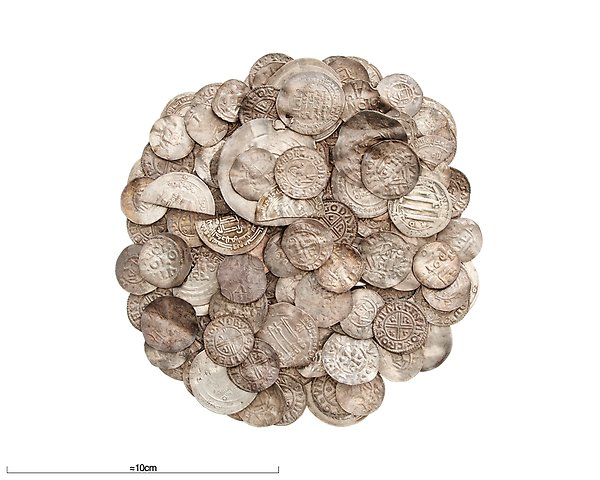
At WIVA, I will primarily work with Arabic sources on the Scandinavian trading network. The Arabic material we have at our disposal is a valuable source for extracting ethnographic information about the Rūs, majūs and warank (Varangians), as Scandinavians have been variably referred to, as well as about their reception. My postdoctoral project will shift the analytical focus away from the strictly ethnographic inquiry to a material-oriented approach, in which the primary objects of study will be the material culture and trading goods that connected Scandinavia to the Eurasian trading network and the Silk Road. I will analyse the sources as records of a vibrant object-world in which things like dirhams, furs, silks, and swords were not passive commodities but 'actants' in shaping the Viking Age world. My methodology involves tracing the ‘object-networks’ in the texts, following, for instance, the life of a dirham not as a tool for trade, but as a material entity whose specific properties actively forged economic and social relations between Scandinavia and the Caliphate.
This shift will also require a broader view of the Arabic corpus necessary for the study. In addition to the historiographic, cosmographic, and geographical literature that depicts and describes Scandinavians, their diasporic communities, and their activities, I will also examine legal literature and treatises on trade and markets. While these texts do not explicitly refer to Scandinavians, they are invaluable pieces of the puzzle that flesh out our understanding of the commercial and economic environment in which they participated. The ultimate outcome will be to contextualise Scandinavia not as a peripheral recipient of Silk Road luxuries, but as an active node in a Eurasian network, one that is fundamentally shaped by the flow, value, and very materiality of things.
Throughout my studies, I have always valued interdisciplinarity and globality as necessary to paint a fuller picture of our objects of inquiry. In both my master's and PhD, I have tapped into numismatics and runology alongside Old Norse sagas and skaldic poetry, and Arabic historiography alongside Greek, Latin, Old French and Aramaic sources. I have also designed and taught a master's course on external sources for the Viking Age at the University of Oslo, allowing students to engage with texts in Old English, Latin, Irish, Arabic, Old Church Slavonic and Greek from the British and Irish Isles to North Africa, and from Iberia to Baghdad. During my time at WIVA, I will have the opportunity to deepen the interdisciplinary nature of my work by collaborating with archaeologists, numismatists, philologists and historians from other traditions, thanks to the vast network of scholars the centre brings under its umbrella.
.jpg)