Abrihada Pook komoot
“Seas unite where mountains divide,” wrote Penelope Graham—a perspective that resonates deeply with my work as a maritime archaeologist. I approach historical ships and archaeological finds as tangible evidence of past connections between peoples, and I am eager to bring this perspective to the academic circle at the Centre for the World in the Viking Age, Uppsala University. Although the evidence linking Vikings and Southeast Asian peoples is limited or absent, we should take the opportunity to begin exploring this small network, which could expand the web of connections, possibly linking or relating the two distant regions.
Maritime archaeology and underwater archaeology are closely intertwined fields, each playing an essential role in illuminating the study of maritime connections. Underwater archaeology is more readily defined by the location and condition of its sites, whereas maritime archaeology is broader and more layered in both meaning and scope. It encompasses evidence drawn from terrestrial and aquatic contexts, as well as the shifting spaces between them. My work seeks to unfold this complexity and to trace the connections that emerge across the wider maritime world. In particular, I am drawn to the possibility of parallel networks that intersect, overlap, and resonate across space and time.
The presence of artefacts not only indicates the outcome of contact but also reflects the processes that made such contact possible, including the labour, intention, and knowledge embedded in acts of exchange. Communication is one of the most compelling dimensions of cross-cultural encounter. Although we cannot know with certainty how such communication was organised, practised, or negotiated during the period, it is reasonable to suggest that technical forms of knowledge exchange occurred among shipwrights of different cultural backgrounds. My current research on timber networks in shipbuilding during the first millennium AD builds upon earlier studies of technological connections across the Indian Ocean world. It has been especially fascinating to discover that more than twenty wood species may have been used in shipbuilding, with origins ranging from 100 to 3,600 metres above mean sea level. Each structural element, including repair materials, speaks to the effort involved in sourcing resources and to the success of the communicative networks that enabled such practices. In this way, Southeast Asia emerges not merely as a conceptual region, but as a dynamic and material participant in wider maritime systems. To examine the role of Southeast Asia’s continental coast within the broader maritime cultural network is to recognise the tightly woven ties that bind land and sea. I continue to develop my professional experience in maritime cultural heritage and research, guided by a broad interest in global maritime history and in the substantive role Southeast Asia occupies within it. Yet the study of Southeast Asia’s maritime past within an interconnected world remains at an early stage and calls for far deeper inquiry.
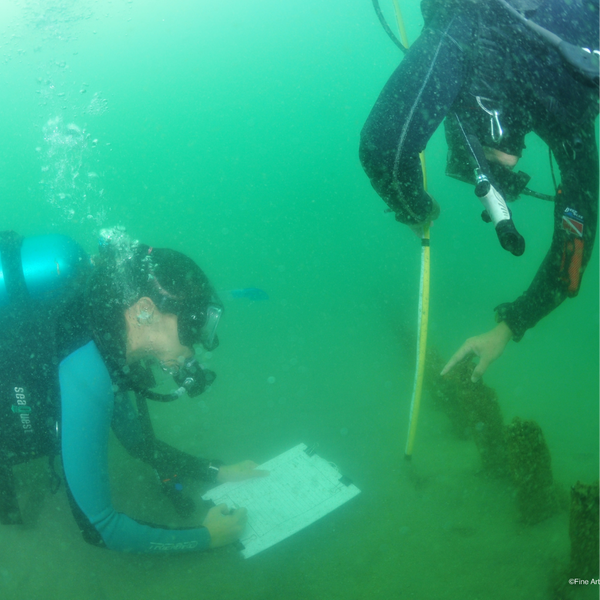
While the study of the past is vital to understanding the histories of human connectedness, maritime heritage also demands attention as a pressing field in the present. With my background in law and management, I bring a broad and multi-angled perspective to the development of maritime heritage. Through intensive fieldwork, I have become increasingly aware of the rapid disappearance of heritage in maritime contexts. A recent field survey project in which I participated underscored the urgency of preserving information and enabling non-intrusive access to data in support of future research, while remaining attentive to the sensitive questions that so often accompany archaeological practice.