Research in the field of neutron science
Neutrons are a unique and versatile tool to study microscopic structure and dynamics of materials and enable research in a wide variety of fields: from novel quantum and other functional materials to materials relevant for sustainable energy to the life sciences.
Neutrons can reveal information about materials over a wide range of length scales, from small molecules to complex polymers and macroscopic engineering components. Thermal neutrons have a wavelength on the order of the size of atoms which means that they can determine the atomic structure of materials. At the same time, the absence of an electric charge means that they penetrate much deeper into matter than other types of probes, making neutrons an ideal tool to study bulk effects.
Low-energy neutrons are truly non-destructive. Together with their high penetration power, this quality does not only allow for studying delicate samples but also makes neutrons an essential tool in engineering research. Complex components can be studied under realistic conditions that are difficult to probe with other techniques. The low energy of neutrons also makes it possible to study slow but dynamic processes on the molecular level such as quantum tunnelling, vibrations and rotations as well as diffusion.
Another key strength of neutrons is their sensitivity to light elements in conjunction with isotope specific sensitivity. Neutron based techniques are therefore ideal for hydrogen detection, which is extensively used in the life sciences to study biological samples but is also highly relevant for research on materials for sustainable energy technologies.
Neutrons are susceptible to magnetic fields, specifically to the magnetic fields generated by unpaired electrons in matter. Especially polarised neutrons are used extensively to study microscopic magnetic properties of novel magnetic materials.
Neutrons for Energy Materials
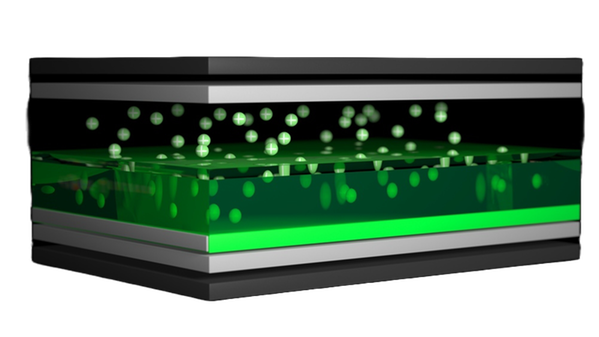
The sensitivity of neutrons to light elements such as hydrogen, lithium, boron, and sodium as well their ability to measure under realistic and in-operando conditions makes them especially suited to study energy materials. At Uppsala University research on battery materials as well as on materials for hydrogen storage fall into this category.
More about the use of neutrons for energy materials research
Neutrons for Functional Materials
Neutrons can be used to study the connection between macroscopic functional properties and microscopic structure of materials—often even in-operando. We utilise the isotope specific sensitivity of neutrons to investigate different nanoparticle-based colloids, including magnetic materials.
More about the use of neutrons for research on functional materials

Neutrons in the Life Sciences
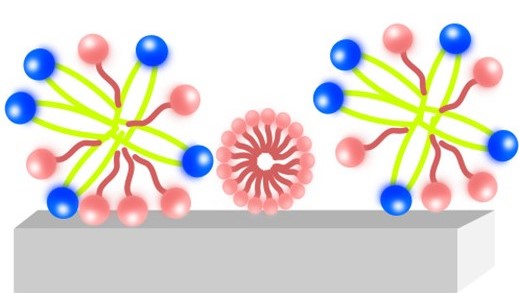
The sensitivity of neutrons to hydrogen is a key factor for their use in the life sciences. At Uppsala University, we apply different neutron-based techniques for the study of structure and dynamics at biological interfaces such as lipid membranes or in emulsions. The isotope specific sensitivity can be utilised to use heavy water as a tracer.
Neutrons for Quantum Materials
Neutron-based techniques are especially suitable to characterise magnetic properties. Our research includes such different materials as nanoparticles, superlattices, implanted metamaterials, and quasicrystals. In addition, neutrons can also be used to study the atomic structure or self-assembly of these materials.
More about the use of neutrons for research on quantum materials