
Programme and Themes
The programme features keynotes, oral presentations, poster sessions, and networking opportunities.
The programme is centered around four main themes:
- Women’s Mental Health in the Global Context
- Mental Health Disorders Unique to, or More Common, Among Women
- Research and Innovation for Action
- Interdisciplinary Approaches to Wicked Problems
The themes are presented in more detail below.
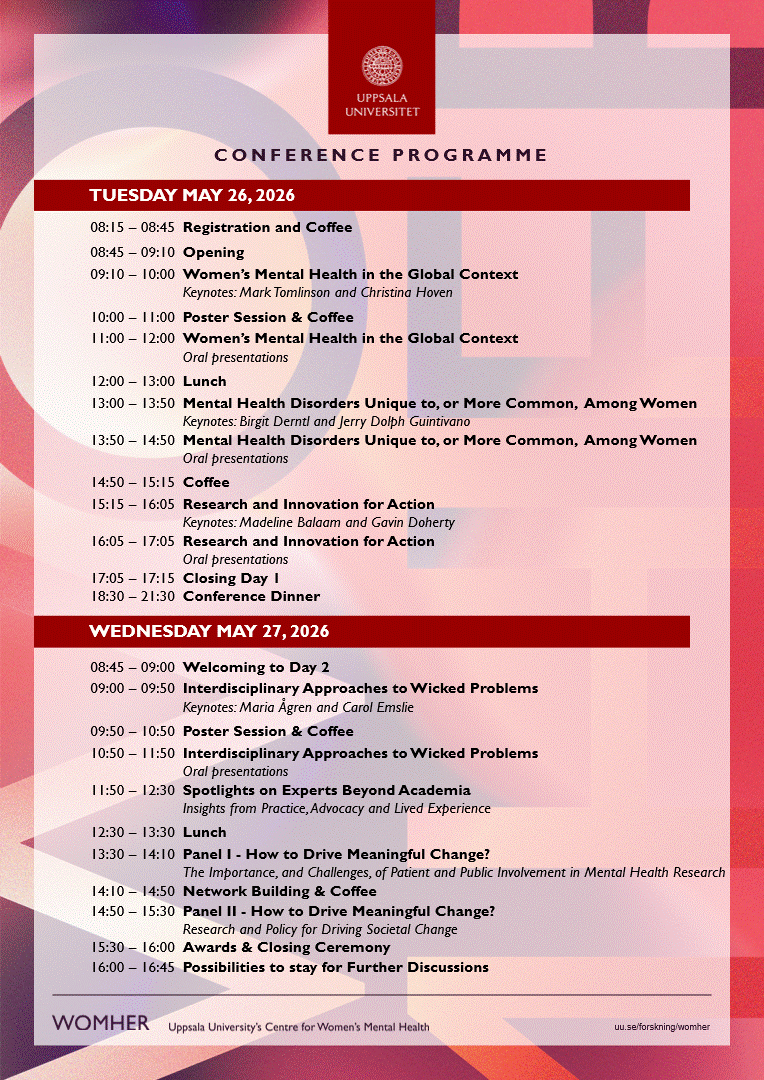
Conference program. Click the image to enlarge.
Women’s Mental Health in the Global Context
Examining women’s mental health worldwide, this theme explores how it is shaped by global trends, structural inequalities, and cultural norms. It considers how mental health is perceived and treated worldwide, as well as variations in prevalence and incidence across different health systems and societal frameworks. It addresses disparities in access to care, variations in treatment approaches, and the influence of stigma and gendered expectations. The theme provides a framework for examining these dynamics through diverse research and policy perspectives.
Research and Innovation for Action
Transforming research into real-world impact, this theme highlights innovative tools, approaches, and implementation strategies. It highlights emerging technologies – including AI-assisted diagnostics, digital therapeutics, wearable biosensors, mobile health platforms, multimodal data assessment, brain imaging, and soft robotic technologies – alongside qualitative and mixed-method approaches that inform implementation research. This theme also examines how research evidence is synthesised, evaluated, and translated into policy and practice.
Mental Health Disorders Unique to, or More Common Among, Women
This theme explores mental health conditions unique to, or more common among women, including mood- and stress-related disorders, eating disorders, postpartum depression, and premenstrual dysphoric disorder. It also examines how mental health is expressed and experienced in relation to life transitions, including menstruation, endometriosis, menopause, and reproductive health. The theme highlights the need for gender-sensitive research, diagnostics, and interventions that consider hormonal, social, and structural factors, including health inequalities linked to socioeconomic status, labour market participation, and trauma such as intimate partner violence.
Interdisciplinary Approaches to Wicked Problems
Addressing complex challenges in women’s mental health – such as stigma, underdiagnosis, and fragmented care – requires cross-disciplinary and cross-sector collaboration. This theme examines initiatives integrating psychiatry, sociology, gynaecology, public health, and technology, while acknowledging differing methodologies, terminologies and institutional structures. By showcasing obstacles and breakthroughs, it fosters dialogue on sustainable, cross-sector solutions and impactful research.