
New professors 2026 at the Faculty of Science and Technology
Eleven new professors will be inaugurated at the Faculty of Science and Technology. Here they present their research.
Peter Broqvist, computational chemistry
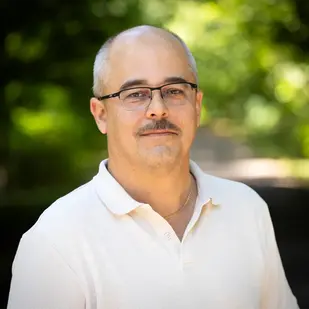
My research in computational chemistry aims to understand how materials function at the atomic level – the scale at which the interaction between atoms and electrons ultimately determines the properties of materials. Using advanced methods and computer-based simulations, I am able to study these processes in detail. This opens up new opportunities to identify and develop materials with desired properties in an efficient and systematic manner.
The research is highly interdisciplinary, combining chemistry, physics, materials science and advanced computational methods. An important perspective is the multiscale approach – linking phenomena at the atomic and electronic levels to the behaviour of materials on larger length and time scales. This makes it possible to understand how the most fundamental processes influence the properties and performance of complex, real-world systems.
A key area of research is materials for energy storage, particularly battery materials for, for example, mobile phones, computers and electric vehicles. I am investigating how small changes in the composition of materials – for example, by replacing or adding individual types of atoms – can affect their structure, stability and function. Ultimately, the research aims to generate knowledge and technical possibilities that can contribute to the development of more sustainable energy systems.
Patrik Johansson, chemistry with a focus on batteries
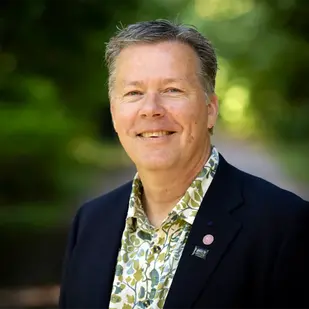
Batteries are absolutely crucial to enabling our mobile and electrified society, whilst at the same time reducing our dependence on fossil fuels and our impact on the climate. My research, which builds on a proud tradition at Uppsala University but also involves a great deal of innovative thinking, focuses on the next generation of batteries, which are set to be better in every respect. Since all technological advances are ultimately dependent on the materials available, my research brings together chemistry, physics and materials science – for understanding, design and innovation at the molecular level – with performance studies, life-cycle analysis and techno-economic realities. In my team, we want to do things differently – to think freely, correctly and on a grand scale – and, more often than not, to reduce complexity, for in simplicity lies greatness! We work with a broad range of non-critical elements, aiming for fundamentally safer and longer-lasting batteries, all by integrating experimental calculations – including AI and data-driven approaches – and adopting an application-inspired approach. By leading major Swedish and European strategic initiatives in this field, I also contribute to greater dissemination of our basic research through carefully chosen collaborations, together with stakeholders from academia, industry and the wider community.
Thomas Kalscheuer, geophysics
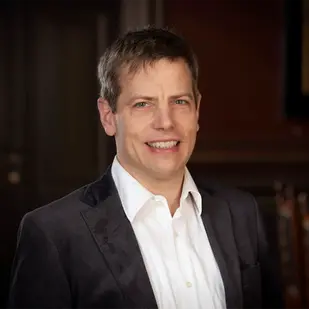
Geophysics is the science of the Earth’s physics, its physical properties and its physical evolution. It encompasses everything from satellite measurements of the Earth’s gravitational field – to understand how plate tectonics shapes the Earth’s surface with mountain ranges and volcanoes – to local seismic and electromagnetic measurements that investigate how groundwater moves through the ground.
My research focuses on electromagnetic geophysical methods, which I use to study, amongst other things, groundwater resources, tectonic processes and the stability of bedrock in preparation for infrastructure projects. It also contributes to the discovery of mineral deposits, which can promote the green transition.
Geophysical measurements aim to create a model of what the Earth’s interior looks like beneath the surface. However, the measurements give rise to several possible models. I am developing mathematical modelling methods that combine different types of geophysical and geoscientific data so that we can obtain a more unambiguous model. My research thus lies at the interface between geophysics and numerical mathematics. Geophysics enables us to measure and investigate the Earth, whilst numerical mathematics provides us with the tools to process and combine the measurements; together, they contribute to more unambiguous models.
Michael Landreh, molecular biophysics
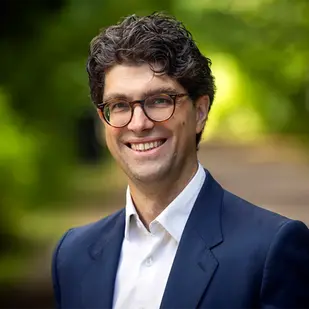
The main question in my research is how proteins work together to carry out the complex tasks that keep the cell alive. Proteins are large biomolecules that can change both their shape and position to interact with other proteins, but many are far too flexible or dynamic to be studied using existing experimental methods. As a biophysicist, I work in two main areas: 1) developing methods to capture interactions between flexible proteins and 2) using these methods to understand how such interactions can be modulated to combat diseases such as cancer and neurodegenerative conditions.
A key method in my research is mass spectrometry, which measures the mass of individual proteins and can reveal whether they bind to other molecules. In this way, I can track how spider silk proteins are assembled into silk, how a single fat molecule holds proteins together to form a functioning molecular machine, or how a molecule protects an anti-cancer protein from being broken down. I am particularly interested in machine learning, which has transformed the way we understand and study proteins. The ability to design new proteins that do not exist in nature opens up new avenues in molecular biophysics, and my research aims to develop these new tools to combat disease.
Pia Lindberg, microbial chemistry
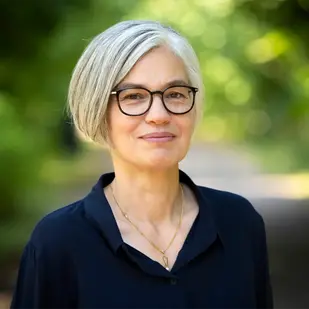
In our modern society, we are dependent on many different chemicals produced from fossil oil and gas. This includes everything from additives to materials such as plastics and textiles, medicines and substances used in all forms of industrial production. These chemicals are not renewable, and their production contributes to climate change and other environmental problems.
My research focuses on using biotechnology to produce sustainable alternatives to fossil-based chemicals. To achieve this, I use microorganisms, which are capable of producing substances on their own that are similar to the chemicals we wish to replace. I work with cyanobacteria, a type of photosynthetic microorganism, which, using energy from sunlight, can convert carbon dioxide and water into organic molecules. We are investigating the natural metabolism of cyanobacteria and the biochemical pathways within their cells that are important for the production of substances of interest. To get the bacteria to produce the desired substances, we use genetic engineering to modify their metabolism and give them new capabilities. In this way, for example, we have generated new strains of bacteria that produce molecules which serve as raw materials for plastics or aviation fuel.
Carl Nettelblad, computational science
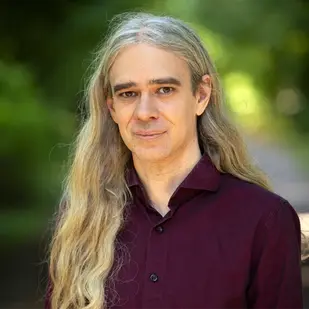
Computational science is about how we can carry out efficient and reliable calculations with applications across various scientific fields. This requires both a mathematical model of what is to be calculated and a way of translating that model into actual values. Part of the challenge lies in the fact that calculations, whether carried out by hand or on a computer, always have limited precision. If a model is handled incorrectly, the final result may be inaccurate, even if each calculation is performed to more than ten decimal places.
My research focuses on the types of calculations that can be performed efficiently on modern computer architectures, including so-called GPUs, which have been crucial to breakthroughs in artificial intelligence, amongst other things. The mathematical models I am interested in are based on probabilities. Rather than simulating a process on the computer, the computer asks itself, ‘What is the probability of a certain situation, given a certain observation?’
I have mainly focused on applications of this in genetics and protein imaging, where in both cases we have noisy and partly incomplete observations. ‘Filling in the gaps’ for such observations is crucial to achieving results that can be used in science and technology, including industrial applications in plant breeding.
Andreas Orthaber, molecular synthetic chemistry
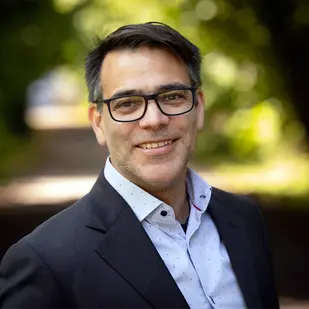
I am fascinated by a simple yet profound question: What happens when we build molecules that have never existed before?
In my research, I work in the field of synthetic molecular chemistry, where I design and create entirely new molecules in the laboratory. A central theme in my work is to move beyond the familiar field of carbon chemistry to investigate how other elements, such as phosphorus or arsenic, can be incorporated into molecular structures. By incorporating them into carefully designed molecules, I can influence how molecules absorb light, how electrons move through them and how they react chemically. These changes often lead to the emergence of unexpected properties. Molecules can become more reactive, exhibit unusual bonding patterns or acquire electronic properties that challenge our traditional understanding.
At the same time, these fundamental insights can pave the way for practical applications. By controlling the properties of molecules at such a detailed level, we can contribute to the development of functional materials, for example in organic electronics or catalysis, where molecules are used to effectively control chemical reactions. Research in these areas ultimately contributes to more sustainable chemical technologies, not least in energy-related applications.
Philipp Rümmer, computer science
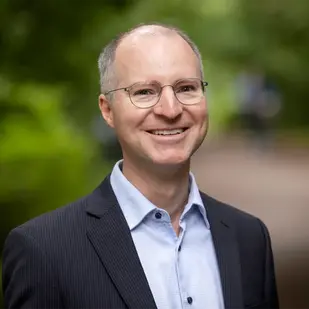
In my research, I develop methods that enable computers to answer questions such as: ‘Is this mathematical theorem correct? And what does a proof of it look like?’ or ‘Is there any input that causes this computer programme to crash? Or why is there no such input?’ Methods capable of answering such questions are known as automated reasoning and are being developed within a field of research at the intersection of computer science and artificial intelligence, which addresses the question of how computers can reason with complete precision about knowledge, mathematical statements or the properties of software and hardware. Although automated reasoning systems have existed for more than half a century, the capabilities of such systems have increased dramatically in recent years, and automated reasoning is now a very active area of research with exciting questions and a growing impact in practical applications as well. My own research contributes to automated reasoning in several different ways, including new proof systems that are better suited to computer-aided automation, improved algorithms for constructing proofs, and better ways of translating questions about software into a form that can be processed by automated reasoning.
Jan-Bernd Stukenborg, molecular cell biology
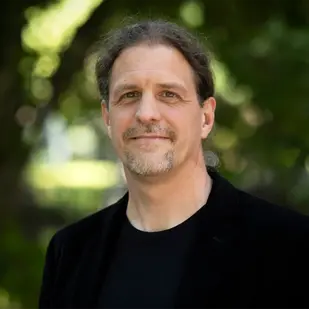
My research focuses on how male germ cells develop. They are special because they pass on genetic material from one generation to the next. That is why they are sometimes described as the body’s immortal cell line. They are not immortal in the literal sense, but they create a link between generations.
My research focuses on how germ cells survive, mature and interact with their environment in the testis. Fertility also depends on supporting cells, hormones, immune signals and tissue structure – the environment that makes this development possible.
An important part of my work concerns boys before puberty, such as paediatric cancer patients, who receive treatment that may damage their future fertility. As they do not yet produce sperm, they cannot freeze sperm samples. Instead, testicular tissue can be frozen. My research group is investigating how this can be used to restore fertility. To understand this, we are developing models of human testicular tissue in the laboratory, including organoids – small three-dimensional cell structures that mimic parts of the testis. Using these models, we are studying how the cells are affected by drugs and environmental toxins, and how immature germ cells can mature outside the body.
Ultimately, my research is about how life’s most fundamental cells, and the genetic information they carry, are protected, shaped and passed on.
Nicusor Timneanu, biophysics
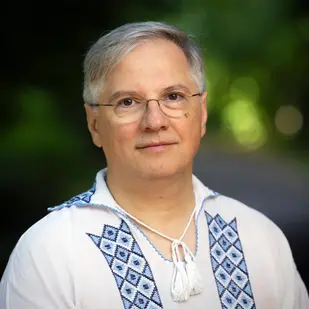
My research lies at the interface between physics and biology, with a particular focus on how extremely intense X-ray lasers interact with matter. Biophysics was born when Erwin Schrödinger asked the question: ‘What is life?’ and sought to understand life through a physical lens. In the same spirit, I use fundamental tools from physics to investigate complex biological systems at the molecular level.
The development of new methods for investigating the world around us has always led to a greater understanding. X-ray lasers are revolutionary facilities that generate super-powerful and ultra-short X-ray pulses. The lasers are so powerful that a single pulse can reveal the atomic structure of individual proteins, and so fast that they can also reveal the electron dynamics within such molecules. In these processes, large amounts of energy are transferred to the molecules, which become ionised, are converted into plasma and rapidly explode.
I want to understand the behaviour of ultra-fast processes in order to image the protein molecules before they are destroyed. Knowledge of the explosions themselves can also provide structural information by tracking the electrons and ions that are scattered. By studying plasma dynamics at high X-ray intensities, we can gain an understanding of both the molecules of life and the fundamental processes taking place within stars.
Ari Tryggvason, seismology
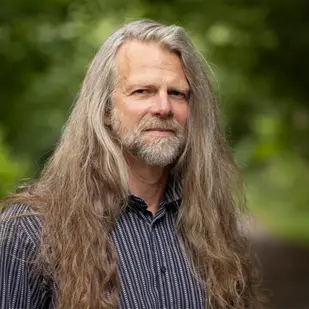
A geophysicist is either interested in how the Earth works, what the processes look like that are shaping or have shaped our planet, or in developing methods to image the Earth and/or these processes. Perhaps the vast majority of us are active in both fields, as new knowledge always leads to new questions that require new and improved methods to answer.
As a seismologist, I have always been interested in what (small) earthquakes can teach us about processes beneath the ground. At the same time, these earthquakes can be used to create three-dimensional images of the Earth’s interior – seismic tomography – or a sort of X-ray of the Earth’s layers. In my research, I have applied this to active volcanoes, for example to the volcanism on the Reykjanes Peninsula in Iceland. Over the past 4,000 years, the volcanoes there have been active in periods lasting several hundred years, followed by longer periods without volcanic activity. Until 19 March 2021, there had been no volcanic eruptions there for almost 800 years, but at the time of writing, Icelanders are awaiting the thirteenth eruption since then.
The findings from my research teach us about volcanic processes, such as where magma accumulates in the Earth’s crust and the path it takes to the surface; this information is vital for society to be able to prepare itself.