
Keynote Speakers
We are honoured to welcome distinguished keynote speakers who bring diverse perspectives and deep expertise in the field of women’s mental health and research.
Theme: Women’s Mental Health in the Global Context
Exploring how global conditions, inequalities, and cultural norms shape women’s mental health and access to care worldwide.
Mark Tomlinson, Professor of Maternal and Child Health.
Expertise in maternal, child and adolescent mental health and life-course approaches to health and wellbeing
Stellenbosch University, South Africa
Biography
Professor Mark Tomlinson is a qualified clinical psychologist and currently the Co-Director of the Institute for Life Course Health Research Stellenbosch University. He is also Professor of Maternal and Child Health in the School of Nursing and Midwifery, Queens University, Belfast, UK. His scholarly work has involved a diverse range of topics such as improving early childhood development, maternal mental health, maternal and child health, adolescent health, and on life course approaches to understanding child and adolescent development. He was elected as a member of the Academy of Science in South Africa in 2017. He has published over 400 papers in peer-reviewed journals, edited four books and written numerous chapters. He is on the Editorial Board of PLoS Medicine; and also Psychology, Health and Medicine.
Abstract
Women’s mental health in global context: A new paradigm for a world on fire
The world is increasingly fractured, many governments have seen a worrying leap to the right, while increased military spending and catastrophic cuts to international aid, have resulted in substantial increases in precarity – particularly for women – that threatens to undo much of the progress that was made in the last 50 years. In the background, we have the Epstein revelations pointing to a predatory class of men in politics, academic and business, and all the while our world is increasingly on fire because of climate breakdown. In my presentation I will argue that the crisis can be seen as an opportunity to think anew about women’s mental health and wellbeing, the interventions we design and the systems we build to offer support. Finally, I will use the lens of women’s mental health and wellbeing as a way of re-imagining global health in a world on fire.

Professor Mark Tomlinson
Christina Hoven, Professor of Epidemiology and Psychiatry.
Expertise in psychiatric epidemiology with a focus on disparities, social justice, and marginalised groups.
Columbia University, US
Biography
Dr. Christina W. Hoven is a Child Psychiatric Epidemiologist at Columbia University-New York State Psychiatric Institute, where she is a Professor of Epidemiology and Psychiatry, College of Physician and Surgeons and Mailman School of Public Health. As Director, Global Psychiatric Epidemiology Group (GPEG), her research takes a life-course perspective, focusing on risk for and persistence of psychopathology, including needs assessment and longitudinal sequelae of exposure to violence. Major foci of her research are suicide, community probability investigations, and school-based intervention assessments. She frequently engages in capacity building through training. Her research primarily involves large-scale investigations with communities of special interest, including minorities, criminal justice involved families, immigrants, and post-disaster/traumatic events, such as war and natural disaster. Professor Hoven frequently speaks to the fact that girls and women carry a disproportionate, often devastating burden of discrimination. Her research activities have been carried out throughout the world, in more than 30 countries.
Abstract
The near universal second-class status of women should not be a surprise: How did we get here and is it possible to accelerate change?
Secular and religious texts exquisitely describe discrepant expectations of females and males. The world’s literature and visual arts frequently focus on women’s efforts to accept, adjust to, or confront those differences. For most, it’s usually too late. Societal rules for women are woven into one’s “Training Program” from birth, when religious mandates set gender parameters. Expectant parents must consider gender-related decisions about their fetus, including birth rituals, education, and how milestones will be observed, if at all. If such procedures were not successfully applied, we might all be culturally, religiously, and behaviorally similar. Consider, for example, France and Taiwan. Profoundly similar, hardworking, peaceful, highly educated populations, yet profoundly different. Why? Girls are indoctrinated from birth according to cultural-religious ideologies to assume unique but subordinate roles. We will review how “Training Programs” are universally rooted in prevailing religious ideology and parents are expected, sometimes required, to perpetuate society’s values and mores.
%20hoven_Photo_st%C3%B6rre.jpg)
Professor Christina Hoven
Theme: Mental Health Disorders Unique to, or More Common Among, Women
Exploring mental health conditions that uniquely or disproportionately affect women — from mood and stress‑related disorders to experiences linked to menstruation, reproductive health, and menopause — while highlighting the need for gender‑sensitive research and care that addresses hormonal, social, and structural inequalities.
Birgit Derntl, Professor of Women's Mental Health & Brain Function.
Expertise in sex/gender influences on behavior, brain function, emotion processing and mental health, including how hormonal and biological factors shape wellbeing across the lifespan.
Biography
Birgit Derntl is full professor of Women’s Mental Health and Brain Function at the Department of Psychiatry and Psychotherapy, University of Tübingen. She is a trained clinical and health psychologist as well as a psychotherapist and a scientific member of the German Center for Mental Health. She is also the spokesperson of the DFG-funded international research training group IRTG 2804 “Women’s Mental Health across the Reproductive Years.” Her main research interests lie in social and affective neuroscience, where she examines stress, empathy, emotion regulation, and the influence of sex hormones on the brain and behavior in people of all genders in neurodiverse groups. A particular focus is on women, investigating how the menstrual cycle, hormonal contraception, pregnancy, and menopause, as well as associated stressors and disorders, affect the brain, behavior, and mental health.
Abstract
Women's mental health: a psycho-neuro-endocrinology perspective
It has become increasingly recognized that sex/gender has a central impact on health and disease. Both biological and socially determined factors play a role, which are reflected in the prevalence of mental disorders, their symptomatology, individual care needs, and the utilization of services. Women are particularly vulnerable to mental disorders during hormonal transition phases – for example during the menstrual cycle, under hormonal contraception, in pregnancy, or during menopause. These phases are accompanied by profound hormonal and neurobiological changes, which are also reflected in the structure and function of the brain.
The lecture highlights, from a psycho-neuro-endocrinological perspective, how hormonal fluctuations influence women’s mental health and uses current research findings to illustrate how hormonal variations modulate emotion, stress processing, and social behavior. In addition, it presents the DFG-funded international research training group “Women’s Mental Health across the Reproductive Years”, which, in cooperation with Uppsala University (Sweden), investigates the relationships between hormonal transition phases and women’s mental health. The aim is to gain a better understanding of the biological and psychosocial mechanisms in order to improve prevention, early detection, and treatment of mental disorders in women in a targeted manner.
A gender-sensitive approach in research and clinical care is crucial – not only to strengthen women’s mental health, but also to promote the mental health of all people in the long term.

Professor Birgit Derntl
Jerry Guintivano, Doctor of Philosophy.
Expertise in evolutionary biology approaches to mental health and gender research.
University of North Carolina, US
Biography
Dr. Jerry Guintivano is an associate research professor in the Departments of Psychiatry and Genetics at the University of North Carolina at Chapel Hill. His research investigates the genetic mechanisms linking reproductive hormones to psychiatric symptoms, with a particular focus on postpartum depression and psychosis. He also co-Chairs the Outreach Committee and leads the postpartum depression analyses within the Psychiatric Genomics Consortium. Dr. Guintivano’s work has been funded by the U.S. National Institute of Mental Health and published in Molecular Psychiatry, Archives of Women's Mental Health, and American Journal of Psychiatry. He earned his Ph.D. in Human Genetics from University of Maryland, Baltimore and Johns Hopkins University.
Abstract
Mechanisms and Collaborative Approaches to Perinatal Psychiatric Disorders
The perinatal period, traditionally viewed as a time of joy and transition, paradoxically carries a heightened risk for the emergence of severe psychiatric symptoms, including depression, anxiety, and, in rare instances, psychosis. These disorders can result in lasting adverse effects on both mother and infant, underscoring the need to understand their underlying mechanisms. Investigating perinatal psychiatric illness offers a unique window into broader psychopathology and highlights the influence of reproductive hormones on symptom onset. Given the multifactorial nature of these conditions, advancing our understanding demands interdisciplinary collaboration spanning obstetrics, psychiatry, neuroendocrinology, genetics, and psychosocial sciences. This integrated approach promises to uncover novel pathways for prevention, diagnosis, and treatment of perinatal—and potentially non‑perinatal—psychiatric disorders.

Dr Jerry Guintivano
Theme: Research and Innovation for Action
Exploring how innovative research and emerging technologies — from AI‑assisted diagnostics and digital therapeutics to wearable sensors and qualitative insights — can be translated into real‑world impact, informing better implementation, policy, and practice.
Gavin Doherty, Professor in Computer Science.
Expertise in healthcare technologies and digital health, with a focus on mental health.
Trinity College Dublin, Ireland
Biography
Gavin Doherty is a Professor and Fellow at Trinity College Dublin. He obtained his D.Phil. at the University of York, UK. He conducts research in the area of Human Computer Interaction (HCI), with a focus on digital health, and leads the Health Technology Design Group at TCD. The focus of his work has been on supporting and extending the reach of mental health professionals, and designing engaging systems in which clients have a greater degree of agency. In the area of digital mental health, he has led a team in the development of a series of innovative technology interventions which have had real impact on the delivery of digital mental health services. He led the development of the SilverCloud platform for human-supported online mental health interventions, which has been used to deliver evidence-based interventions to over 1.5 million people in hundreds of health services worldwide via a successful spinout company. Recent work has investigated human-centred approaches to the integration of machine learning in mental health service delivery and treatment. He is Chair of the ACM Distinguished Speaker committee, and was named a Distinguished Member of the ACM in 2019 for Outstanding Scientific Contributions to Computing.
Abstract
Designing digital mental health interventions - towards personalised delivery
The development of digital mental health interventions poses a range of design challenges, and using a digital mental health technology is inherently a sensitive and private experience. There has been sustained interest in the possibility of in-the-moment interventions leveraging the sensing capabilities of mobile phones and wearable devices, and increasing sophistication of conversation-based interaction, but this vision has not been realised. In this talk, I will discuss design challenges such as engagement and acceptability, and our efforts to support more personal and tailored experiences for the users of digital mental health interventions. The talk will particularly consider possibilities for integration of Machine Learning and AI capabilities within mental health interventions, and some of the difficulties surrounding these.

Professor Gavin Doherty
Madeline Balaam, Professor of Interaction Design.
Expertise in digital women’s health and intimate technologies, focusing on creating supportive tools for women’s intimate health and everyday care.
KTH Royal Institute of Technology, Sweden
Biography
Madeline Balaam is a Professor in Interaction Design at KTH Royal Institute of Technology, where she works with a team of amazing researchers on designing technologies and interactions at the intersection of intimate health, the body and touch. She takes a feminist perspective to her research which is perhaps best illustrated through the kinds of topics and issues that her design work examines and troubles. Madeline publishes her work extensively the field of Human Computer Interaction and Interaction Design. Her work is funded by Vetenskåpsrådet, Digital Futures and the European Research Council.
Abstract
How can design research create change?
In this talk I will share work from three projects that each in their own way explore the intersection between intimacy, the intimate body and technology. This includes PhotoBooth – a project inviting conversation about the role of generativeAI in the production of sexual abuse; the Pelvic Chair – a project exploring how soft robotic technologies can touch intimate parts of the body in ways which meaningfully bring new forms of knowledge about the body; and FeedFinder – a project enabling adhoc communities of practice to form around matters of concern in women’s health. Reflecting across these projects I will identify opportunities for design research to support change. In particular, I will highlight how design research can play a role in forming practices for immediate change, while also nurturing difficult conversations on how we want society to be, or shaping technical know-how for tomorrow’s world.

Professor Madeleine Balaam
Theme: Interdisciplinary Approaches to Wicked Problem
Exploring how interdisciplinary collaboration — spanning psychiatry, sociology, gynaecology, public health and technology — can address complex challenges in women’s mental health, from stigma and underdiagnosis to fragmented care, and foster sustainable cross‑sector solutions.
Carol Emslie, Professor of Health & Society.
Expertise in gender, alcohol use and public health, with a focus on the social context of drinking, alcohol-related harm reduction, and gender‑responsive alcohol policy across the life course.
Glasgow Caledonian University, UK
Biography
Professor Carol Emslie is a medical sociologist who co-leads the Substance Use Research Group at Glasgow Caledonian University and is co-Chair of the Scottish Alcohol Research Network. Her applied research aims to understand the social context of drinking and explore ways to reduce alcohol-related harm. Her research has featured on BBC Panorama and in the Guardian and the New York Times, and she has presented her research at the Scottish Parliament.
She has an international reputation for gender and alcohol research, and launched the #dontpinkmydrink social media campaign to highlight alcohol marketing to women. Recent work includes a WHO-commissioned report on gender and alcohol, and research on drinking in LGBTQ+ communities. Professor Emslie leads the Crucible programme at Glasgow Caledonian University. This creates ‘outward facing’ early career researchers who can communicate their research to media, practitioners, and policymakers and who are committed to working with partners to deliver positive social change.
Abstract
Buying in, drinking up: women, alcohol and identity
Drinking alcohol is a gendered activity. While women have traditionally consumed less alcohol than men, this gap is closing across many societies. Gender intersects with life stage, sexuality, ethnicity, social class and other social determinants of health to shape whether, what and how women drink. At the same time, drinking is a powerful way of displaying gendered identity.
Drawing on qualitative research, this keynote demonstrates how women connect their drinking choices to ‘who they are’—and how the alcohol industry capitalizes on these connections to expand their markets and increase profits. Marketing has evolved from objectifying women to sell products to men, to something more sophisticated: selling to women themselves by aligning brands with messages of empowerment, friendship and aspiration. Alcohol marketing both reflects and impacts how women are perceived and positioned within society.

Professor Carol Emslie
Maria Ågren, Professor of History.
Expertise mainly in Swedish/Scandinavian history, with an interest in European and non-European history as well.
Biography
Maria Ågren is professor of history at Uppsala University since 2002. She is the leader of the Gender and Work project (GaW) at the History Department, a project that started in 2010 and is funded until 2029. An important resource within the project is the tailor-made GaW database. See Gender and Work (GaW) – Department of History – Uppsala University
The project has produced many publications, e.g., Making a Living, Making a Difference: Gender and Work in Early Modern European Society, ed. Maria Ågren (Oxford University Press 2017) and Gender, Work, and the Transition to Modernity in Northwestern Europe, 1720-1880, ed. Maria Ågren (Oxford University Press 2025).
Abstract
Women, work, and well-being in the past
Based on new evidence, this paper discusses adult women’s work in the past from the perspective of well-being. Is it at all possible to talk about well-being in the past, or did people in general, and women in particular, live in such hardship and powerlessness that the concept of well-being does not apply? The paper focuses on three aspects of relevance to well-being: (1) what types of work did adult women typically do? (2) how could adult women combine parenthood and work in a society that lacked nurseries? (3) what did adulthood mean to women? The time-frame of the paper is c. 1600 to 1880, the geographic scope is Scandinavia.
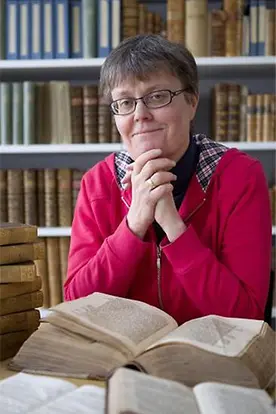
Professor Maria Ågren