
Alexandra Sandström
Alexandra Sandström began her PhD studies in 2022. Her research lies at the intersection of political economy and economic history.
What inspired you to begin doctoral studies in economics?
I found my studies in economics during both my bachelor’s and master’s programmes to be very interesting and rewarding, which motivated me to continue. In addition, I was drawn to the idea of conducting research, and the opportunities I had during my master’s studies and as a research assistant (both during and after my studies) only strengthened this interest.
Can you tell us about your current research?
My current research lies at the intersection of political economy and economic history. I am particularly interested in questions related to national identity and intergroup relations.
At present, I am mainly working on a single-authored project in which I evaluate the effects of a nation-building reform aimed at strengthening a shared national identity in a region in northern Sweden with strong cultural and linguistic ties to Finland (the Torne Valley) around the turn of the twentieth century. I study how this reform affected cultural transmission to the next generation, as well as whether it increased interaction between groups with stronger or weaker attachments to Finland and Sweden, respectively.
How do you see yourself using your economic expertise in practice and in your future career?
I hope to continue working on interesting questions that I consider important to understand, using data and quantitative methods. More specifically, I am currently in my fourth year of the PhD programme and preparing for the academic job market, which is an organised process for applying for academic positions. My goal is to remain in academia and continue working on my projects and, more generally, to pursue research. Alternatively, I would aim to find a position outside academia, for example at a government agency or an international organisation.
What advice would you give to those considering applying for the PhD programme in economics at Uppsala University?
What I particularly appreciated about the programme at Uppsala University was the opportunity to take more courses and learn more before starting my own research in earnest. I also valued the flexibility to choose which field or fields to specialise in and which questions to work on.
That said, the department is particularly strong in certain areas, so I would advise applicants to consider whether there are potential supervisors working on topics they are interested in. You can change your mind many times before settling on a topic (I am still not entirely sure that I have), but it is still valuable to think about whether there are researchers at the department whose work you find interesting and whose questions you could see yourself working on for several years.
Most researchers have personal websites where they describe their research interests and ongoing projects, which can be very helpful to consult.
What opportunities for collaboration and networking have you found within the department?
I have had many opportunities to collaborate with senior researchers at the department and to be active in one or more of the laboratories and networks affiliated with it. I have also had several opportunities to build my network through summer schools, conferences, and research visits.
More specifically, I am affiliated with the Uppsala Immigration Lab, I co-author with my supervisor, and I have participated in two summer schools (one in Paris and one in Berlin), as well as several conferences (both as a presenter and a participant). Last spring, I also conducted a research visit at Harvard University.
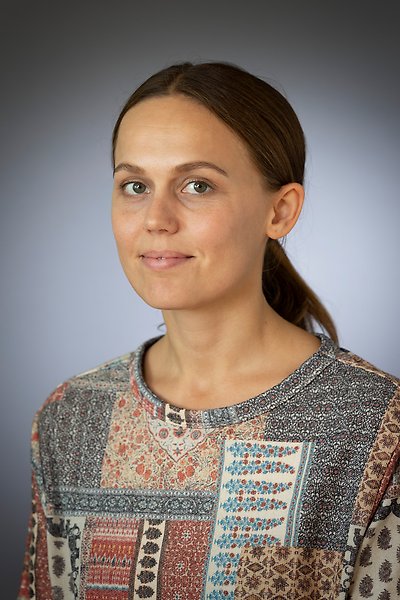
Alexandra Sandström