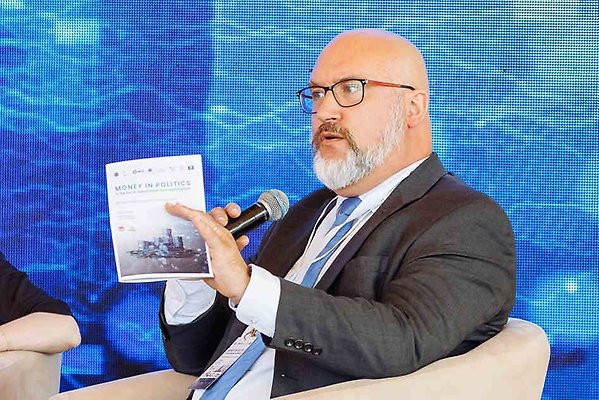
Magnus Öhman is a director and senior adviser at IFES
Interview from 2025
Why did you choose to pursue a PhD in political science?
It wasn't part of a long-term plan, but rather that I thought it would be interesting to spend more time thinking about how politics works. I am fascinated by how power works, which is why I researched the candidate nomination process within African parties.
What was the best and hardest part of being a PhD student?
The best thing about being a doctoral student was teaching, discussing issues that I thought about every day with people who didn't. Above all, I enjoyed teaching new students—it was a wonderful challenge to learn how to explain how a parliament works to someone with no prior knowledge or preconceived notions. The hardest part was finding the right focus for my thesis. It's extremely important that your thesis works, but don't forget everything else.
What do you do today? What does a typical working day look like?
For the past 20 years, I have been working on issues related to elections and party financing. This has involved working with government oversight institutions and civil society in over 50 countries around the world, as well as a great deal of research and writing. The best thing about what I do is that there is no such thing as a typical workday. Today, I wrote instructions for NGOs in various countries that will be collecting information on political financing in their countries. Next week, I will meet with politicians in Indonesia who are working on their new anti-corruption strategy, and then I will lead a discussion on how to stop illegal financing of politics in Eastern Europe. After that, I will review the procedural documents developed by the anti-corruption agency in a country in the Western Balkans.
Has the PhD programme at Uppsala University helped you in your career?
Absolutely! Even though I don't work in academia, I use what I learned during my doctoral studies every day. Much of it involves analyzing information and thinking about what is relevant and reasonable. Compared to colleagues who have not done research - also very smart people - I often notice that they fall short in that they accept information uncritically, without detailed analysis.
What advice would you give to current PhD students in political science?
Focus on connecting with people who might be fun to work with in the future, both inside and outside academia. Talk to people who are researching in the same field as you, but also to those who are researching or working on other things. You never know what might become useful later on.
What would you say to someone who is considering applying to the PhD programme?
Apply! It doesn't hurt to try, and if you get in, you won't regret it.
Education
Magnus Öhman graduated from the doctoral programme in 2004 with the dissertation The Heart and Soul of the Party, Candidate Selection in Ghana and Africa.
Today, he works as a senior adviser and director at IFES, the International Foundation for Electoral Systems..