
Magnetism and superconductivity in correlated materials

Spatial evolution of the tunneling spectra close to a strong impurity in NaCCOC
Interacting electrons display a number of emerging phenomena where the properties of the ensemble are very different from the constituents. Phases like magnetism and superconductivity can be understood from quantum mechanics, and become interesting when multiple degrees of freedom are available.
A central theme of modern condensed matter physics is the understanding of the interacting electron problem. It is generically difficult to solve theoretically, but putting together many electrons with interactions generates a plethory of new states of matter. These emergent quantum phenomena occur whenever multiple degrees of freedom such as spin, sublattice or orbital interplay. Prominent examples are superconductivity and magnetism. Primary focus of the research are the microscopic mechanisms that lead to the Cooper pairing in a superconductor or the formation of magnetic states. With a viewpoint towards understanding of real materials, we investigate materials from cuprates over iron-based superconductors to kagome metals, heavy fermion compounds as well as transition metal compounds where interacting electrons play a key role. The goal is to understand general trends and symmetry properties of the emergent phases and connect to experimentally observable quantities such that theoretical predictions can be verified or falsified.
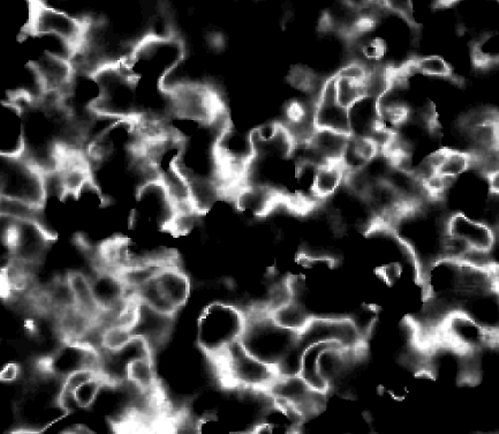
Amorphous condensate of Cooper pairs in an iron-based superconductor. Image: Andreas Kreisel