Göran Gustafsson Symposium

Each year, Uppsala University, together with the Göran Gustafsson Foundation for Research at Uppsala University and KTH, invites an internationally renowned researcher in medicine to give a lecture.
The 2026 Göran Gustafsson Symposium
Innovative cell and gene therapies – Future developments
Welcome to the 2026 Göran Gustafsson symposium and the Göran Gustafsson Lecture in Medicine. This year’s Göran Gustafsson Lecturer is Doctor Hideho Okada from University of California San Fransisco.
This year, all the lectures will be given in English.
Hideho Okada is this year’s Göran Gustafsson Lecturer

Hideho Okada. Photo: University of California San Fransisco.
Dr. Okada is a highly creative physician-scientist who has developed several therapeutic modalities in his laboratory and translated them into clinical trials. Dr Okada’s work focuses of malignant brain tumours (glioma) with the aim to find ways to potentiate the immune system to recognize and eradicate glioma cells.
Dr. Okada is a pioneer in this field, and he conducted one of the first immune gene therapy trials in patients with malignant glioma. His approaches include modifying the glioma microenvironment to increase response rates to immunotherapy as well as development of novel vaccines and chimeric antigen receptor (CAR)-T cell therapies.
Programme
13.00–13.05
Welcome
Anders Hagfeldt, Vice-Chancellor of Uppsala University
13.05–14.00
T-cell-based immunotherapy approaches for malignant gliomas
This year’s Göran Gustafsson Lecture in Medicine
Hideho Okada, University of California San Francisco
14.00–14.20
CAR-T cell therapy - The Uppsala and Swedish Experience
Gunilla Enblad, Uppsala University
14.20–14.40
Engineering CAR-T cells with improved efficacy and for reduced toxicity
Magnus Essand, Uppsala University
14.40–15.00
Coffee break
15.00–15.20
In vivo CRISPR engineering to generate TRAC-targeted CAR-T cells
William Nyberg, Karolinska Institutet
15.20–15.40
Transplantation of insulin producing cells with no immunosuppression
PO Carlsson, Uppsala University
15.40–16.00
Gene engineering of the tumor microenvironment with viruses to induce anti-tumor immune responses
Angelica Loskog, Uppsala University
16.00–16.20
Engineering non-viral nanomedicines for extrahepatic delivery of RNA therapeutics and gene editors
Samir El Andaloussi, Karolinska Institutet
16.20–16.40
A cytotoxic gene therapy targeting SOX9-positive therapy-resistant glioblastoma
Fredrik Swartling, Uppsala University
16.40–17.00
Characterization and induction of tertiary lymphoid structures in glioma
Anna Dimberg, Uppsala University
Göran Gustafsson – a true philanhropist in the world of science
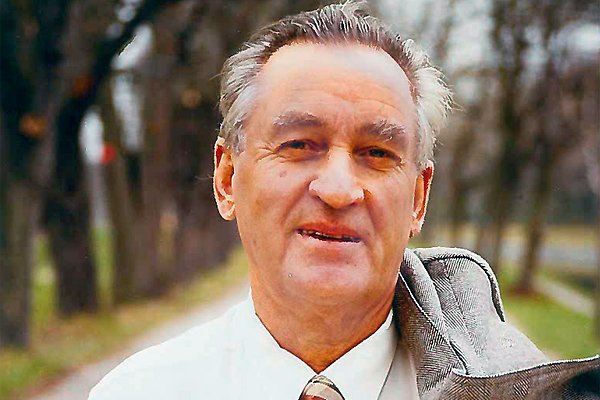
Göran Gustafsson (1919–2003). Photo: G-Förvaltning AB.
Göran Gustafsson was born in the far north of Sweden. Becoming a successful businessman, notably in real estate, Göran Gustafsson created the economic basis for his donations to two foundations that promote basic scientific research. Through these donations, Göran Gustafsson’s vision was to provide Swedish researchers with the required conditions to compete with the best researchers in the world.
In 1986, Göran Gustafsson created a foundation to support basic research in the field of medicine at Uppsala University and in the field of engineering physics at both the Royal Institute of Technology (KTH) and Uppsala University. The Göran Gustafsson Foundation for Research at Uppsala University and KTH started with a donation of 136 million Swedish SEK and currently awards 14 million SEK in grants annually.
In 1989, the Göran Gustafsson Foundation for Research in Natural Sciences and Medicine was established with a donation of 270 million SEK. Today, the Foundation makes awards of approximately 27 million SEK annually. The primary objective of this foundation is to promote basic science in molecular biology, physics, chemistry, mathematics and medicine.
In an interview in 1993, Göran Gustafsson explained why he sold his property portfolio and donated more than SEK 400 million to foundations, where the return goes to rewarding outstanding researchers:
“The money has been my tool. When the craftsman retires, he leaves the tools for those who can best take over. I want to create conditions for researchers to develop methods that improve nature and our environment. I feel bad when I think about the environmental damage that we have contributed to. This is a thank you to the society that gave me the chance!”
Göran Gustafsson’s efforts have not remained unpaid. Already in 1987, he received the Uppsala University Gustaf Adolf medal. The same year, he was made Technology Honorary Doctor at KTH. When King Carl XVI Gustaf and three other friends of Uppsala University were awarded the title of honorary member of Uppsala University in 1990, Göran Gustafsson was one of the three.