Olof Rudbeck Day

The Olof Rudbeck Day is an annual event to promote and spread awareness of current medical research. It is organised by Upsala Läkareförening, Uppsala University Hospital and the Disciplinary Domain of Medicine and Pharmacy at Uppsala University.
Gaming, TikTok and white snus – how are young people today?
Olof Rudbeck Day 2026 will take place on 17 October and this year’s theme is Gaming, TikTok and white snus – how are young people today? The day features lectures by leading researchers in the field, Q&A sessions and discussions.
Registration is not binding, and only used for an indication regarding the number of potential visitors.
Programme
Moderator: Pernilla Åsenlöf, Dean of the Faculty of Medicine
9:00
Opening remarks
Vice-Rector Peter Stålberg och the Chair of Upsala Läkareförening Stellan Sandler
9:15
Vad är ett beroende och kan man bli beroende av allt?
Mathias Hallberg, Professor, Uppsala University
9:35
Maskrosbarn och orkidébarn – hur genetisk känslighet kan påverka ungdomar
Cecilia Åslund, Head of Operations, Centre for Clinical Research Västmanland
10:00
COFFEE BREAK
10:30
Skärmberoende och skärmhälsa – Hur ser det ut och vad är riskerna? Anna Söderpalm Gordh, adjungerad professor, Göteborgs universitet
11:00
Vitt snus – en snabbt växande trend
Erik Nylander, Researcher, Uppsala University
11:20
Koffein – vårt vanligaste beroende
Andreas Frick, Lecturer, Uppsala University
11:40
Gambling i tidig ålder, risker och konsekvenser
Anders Håkansson, Professor/Senior Consultant, Lund University
12:10
Panel discussion with speakers and societal stakeholders
12:30
LUNCH
13:30
Vad får ungdomar att må bra? Ett samskapat projekt med ungdomar.
Veronica Hermann, Nurse/Midwife, Med dr (with the youths Carla, Frida, Cazper, Elimar, Kerstin and Sigfrid)
14:10
Brun, stark och smal – peptiderna som lovar allt
Mathias Hallberg, Professor, Uppsala University
14:40
Aktuella trender och beroendevård idag
Tobias Eriksson, Senior Consultant at the Addiction Medicine Clinic, Uppsala University Hospital
15:10
Summering
Pernilla Åsenlöf, Professor, Uppsala University
15:15
COFFEE BREAK
15:45
Awarding of the Upsala Läkareförening Olof Rudbeck Prize 2026
Stellan Sandler, Chair
Heteroresistens i bakterier: Mekanismer, detektionsutmaningar och klinisk betydelse
Dan I. Andersson, Uppsala universitet
16:30
Concluding remarks
Dean Pernilla Åsenlöf sums up the day
The Upsala Läkareförening Olof Rudbeck Prize
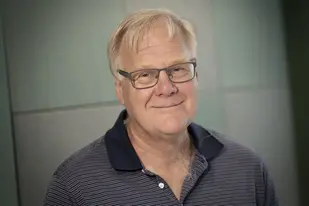
Every year, on Olof Rudbeck Day, the Upsala Läkareförening Olof Rudbeck Prize is awarded for outstanding achievements in basic research that have been of significant clinical significance.
The 2026 laureate is:
Dan I. Andersson, Professor at the Department of Medical Biochemistry and Microbiology, Uppsala University.
Previous laureates
- 2025 Lars Rönnblom
- 2024 Ulf Gyllensten
- 2023 Ann-Christine Syvänen
- 2022 Ulf Landegren
- 2021 Lars Lannfelt
- 2020 Christer Betsholtz
- 2019 Kerstin Lindblad-Toh
- 2018 Ulf Pettersson
- 2017 Lisa Ekselius
- 2016 Bengt Glimelius
- 2015 Otto Cars
- 2014 Lena Claeson-Welsh
- 2013 Leif Andersson
- 2012 Bengt Westermark
- 2011 Lars Wallentin
- 2010 Per Westermark
- 2009 David Bergqvist
- 2008 Bo Hellman
- 2007 Lars Grimelius
- 2006 Torvard Laurent
- 2005 Hans G Boman
- 2004 Leif Wide
- 2003 Carl Henrik Heldin
- 2002 Ulf Lindahl
- 2001 Karl Erik Hagbarth
- 2000 Svante Pääbo
- 1999 Lars Terenius
- 1998 Per A Peterson
Olof Rudbeck the Elder
Olof Rudbeck the Elder (1630-1702) was a prominent scientist who was active at Uppsala University in the 17th century. He was a polymath and made significant contributions across multiple fields.
Even as a young anatomy student, he discovered the lymphatic vessels and their importance. At that time, Uppsala University did not yet teach medicine, but Olof Rudbeck was enterprising and contributed to the development of medical education at the University.
As a professor of medicine, with responsibility for teaching anatomy and other subjects, he had the Anatomical Theatre built on the top of Gustavianum, the university building at the time. There, he could instruct students and demonstrate human anatomy to the public. He also established the Botanical Garden, now the Linnaeus Garden, where medical students could learn botany and study medicinal plants.