
Hunting for new species where no human has been before
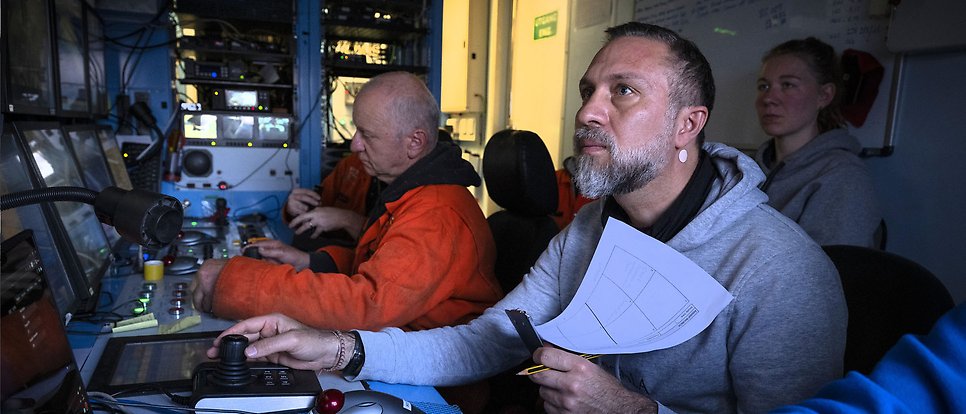
Paco Cardenas in the room on the ship where they can monitor what the seafloor looks like. Photo: Christian Åslund / Greenpeace
What kinds of organisms exist on the seabed between Norway and Greenland? An expedition is currently underway in which researchers, in collaboration with Greenpeace, are attempting to identify unknown life forms thousands of metres below the surface. Paco Cardenas is one of the researchers who, after just a few days of diving, have already discovered species that are probably entirely new.
Why are you undertaking this expedition?
“For two reasons. One reason is scientific: we want to collect organisms, particularly from the seabed, as we know very little about the biodiversity of these habitats. The other is that Greenpeace has organised the expedition, and their aim is to protect these habitats from threats such as seabed mining,” says Cardenas, curator at the Museum of Evolution.
How is the work organised?
“The ship has a very large, high-tech robot capable of diving to a depth of 3,000 metres. The robot is equipped with cameras and two arms that can be used to pick up organisms from the seabed. We researchers work in two shifts around the clock. Using the cameras, we observe what’s on the seabed, then we take care of the organisms we find. You can follow our dives via live streams, where we also comment on what we see.”
What have you found so far?
“We have collected various types of sponges, corals, crustaceans and starfish. Among the sponges we’ve collected, we already have a potential new species – found on just our second dive!”
Why is the Arctic deep sea so interesting to study in more detail?
“We will be crossing the Arctic Mid-Atlantic Ridge, which is a place where two oceanic plates meet. There is ongoing volcanic activity here, which creates a truly unique ecosystem where life can exist totally without sunlight. Instead, it is powered by these ‘chimneys’ on the seabed. Our aim is to document all the animals we find here, so that in future we can monitor how they are affected by factors such as climate change.”
What’s it like working on a ship so far out at sea?
“The first few days we had extremely strong winds, so some of us were seasick. But things have calmed down now. Another special aspect is that it is light around the clock, as we are north of the Arctic Circle. But above all, it’s really exciting. We’re seeing places no one has ever visited before. What many people don’t realise is that 90 per cent of the deep sea remains completely unexplored. It’s quite a mind-boggling thought, especially when you consider that we’ve essentially mapped the Moon and large parts of the surface of Mars.”
Sandra Gunnarsson
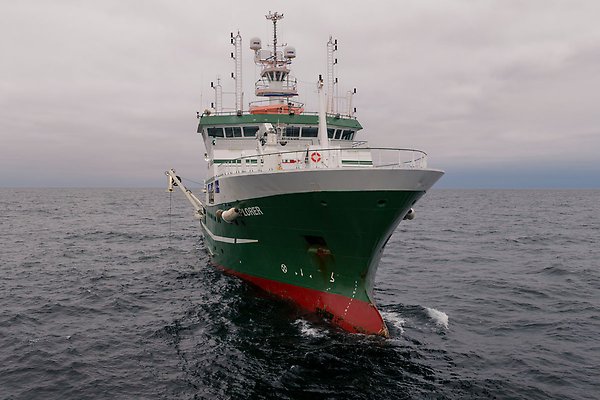
From the ship, the robot is lowered into the water using the crane visible on the left side. Photo: Christian Åslund / Greenpeace
Sponges at a depth of 2,500 meters. Photo: Solvin Zankl / Greenpeace
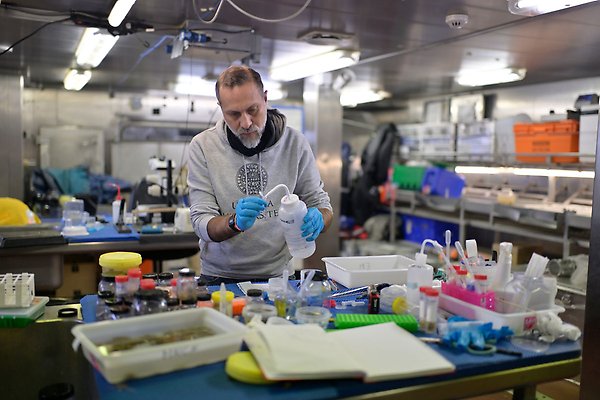
Paco Cárdenas places collected sponges in ethanol. These will be taken to Uppsala after the expedition. Photo: Solvin Zankl / Greenpeace