
Ellen Fries – historian and first woman to obtain a doctorate in Scandinavia
 Zoom image
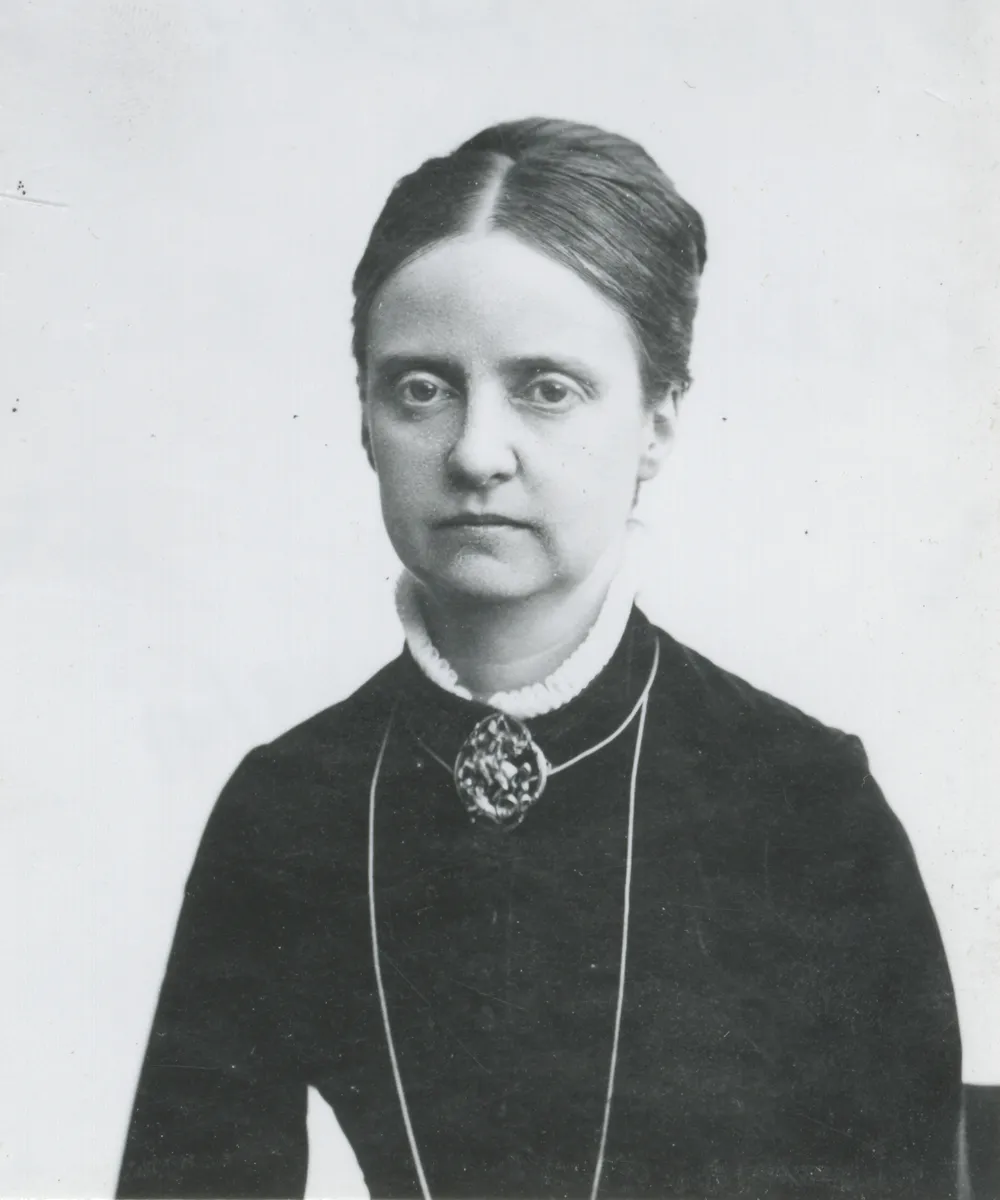
Ellen Fries, 1883.
- Ellen Fries (1855–1900) was a historian, teacher and writer – and the first woman to be awarded a doctorate at a Nordic university.
- With her book Märkvärdiga qvinnor (Remarkable Women), Ellen Fries became a pioneer in the field of Swedish women’s history.
- After her time in Uppsala, Ellen Fries went on to be a teacher and director of studies in Stockholm. Her work helped enhance the role of education in women’s lives.
- Ellen Fries played an active role in the women’s movement, co-founding both the Fredrika Bremer Association and the Nya Idun society, and taking the initiative for the National Council of Swedish Women.
Life as a female student in 19th-century Uppsala
Fries found her time as a student in Uppsala both intellectually stimulating and socially isolating. In letters home, Fries describes the two-edged experience of being a pioneer:
“If I am stupid, many professors – who have never had anything to do with a girl – believe all girls are stupider than I am, or just as stupid.”
She also describes the way in which female students were excluded from informal arenas where knowledge and networks often originated:
“People tend to chat about trivial matters with us women, if they even deign to speak to us at all.”
At Uppsala University, she engaged in research on 17th-century political history. She also found an academic home at the Historical Society of Uppsala, where she was treated with respect and became the first woman to give a lecture in 1881. The female students created their own forums as well. They spent time in one another’s company and attended seminars and lectures together.
Her PhD in history from Uppsala University in 1883 marked a breakthrough at a time when higher education was practically inaccessible to women.
Despite her academic achievements, she was barred from pursuing a career in academia. Instead, her activities ranged from research and teaching to social activism – a life’s work that made her a key figure in the history of Swedish women.
Research on 17th-century Swedish history
In Fries’s time, historical research was dominated by political and national perspectives. Her own thesis, in keeping with contemporary research, dealt with diplomatic relations during the reign of Karl X Gustav. However, in her later works she developed new perspectives. In the biography Erik Oxenstierna (1889), apart from the principal person himself she also included the women around him, an approach that attracted attention at the time. The biography was described as “one of the first truly modern works in Swedish biographical literature”.
 Zoom image
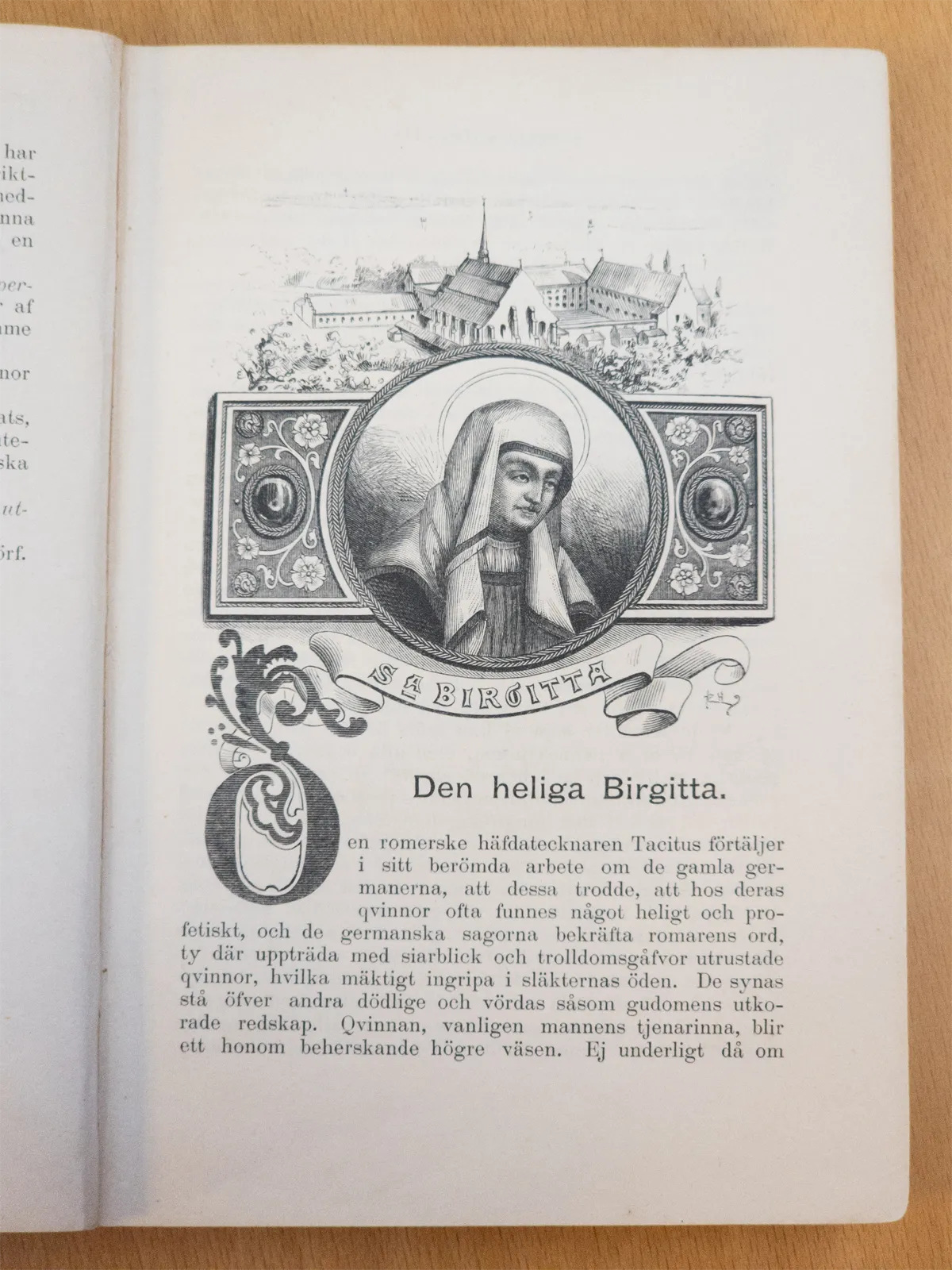
Saint Birgitta was one of the Swedish women Fries wrote about in Märkvärdiga qvinnor (Remarkable Women).
At the forefront of research on Swedish women’s history
Published in 1890–91, Fries’s book Märkvärdiga qvinnor (Remarkable Women) was a landmark in the field of Swedish women’s history. The work is in two volumes, the first of which deals with foreign women and the second with Swedish women. Here, Fries compiled and analysed women’s lives and achievements, often based on her own archival research.
In the foreword to the second volume, she writes:
“The history of Swedish women remains largely unwritten. The cultural work that has traditionally been the domain of women in Sweden, the influence they have exerted on the development of society, and the influence that society has had on them, have so far received only limited attention from our researchers.”
She highlighted both well-known figures such as Saint Birgitta and less prominent women, placing them in their historical context. The work was based on extensive research into primary sources in archives and libraries, as well as the author’s own research trips.
Worked as a teacher and director of studies
After her time in Uppsala, Fries went on to work as a teacher and director of studies in Stockholm. In 1890, she became director of studies at Åhlinska School for girls, where she established an upper-secondary programme. Teaching was central to her work, and she sought actively to bring history to life and make it accessible. She gave lectures and wrote for a broad public, for example in works such as Svenska kulturbilder (Images of Swedish culture).
Her commitment to teaching and learning also extended to issues of educational policy. On the subject of co-educational schools, she wrote that they were only worthwhile if the teachers were “imbued with the conviction that upbringing and education are just as important for girls as for boys”.
Through her work, she helped enhance the role of education in women’s lives.
Involvement in the women’s movement
With academic career paths closed to her, Fries chose to become involved in the women’s movement. She was a co-founder of both the Fredrika Bremer Association and the Nya Idun society, and took the initiative to establish the National Council of Swedish Women.
Even in her youth, she expressed her views on the role of women:
“If I could only understand whether a woman’s purpose in life consists of anything other than bearing children […] My plan, however, is to become a teacher.”
Her commitment was both ideological and practical. Through organisations, magazines and public speaking, she campaigned for the right of women to education and participation in society. She took action wherever she could and helped to change the conditions that limited her own opportunities.
Text by Fatemeh Khudadadi.