
New professors 2026 at the Faculty of Arts
Seven new professors will be inaugurated at the Faculty of Arts. Here they present their research.
Sigrid Schottenius Cullhed, literary studies
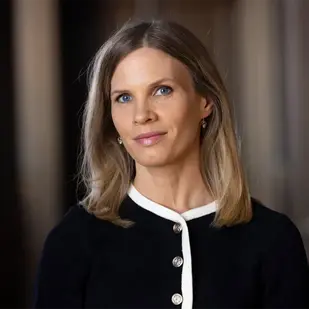
Stories can change the way individuals and societies understand and deal with experiences that are difficult to talk about openly. With this as my starting point, I have studied texts and their reading history, from ancient sources to contemporary French literature.
My doctoral thesis focused on the Roman poet Proba’s biblical collages of Virgil from the 4th century. This sparked my interest in the overlooked legacy of late antiquity and in how classical mythology’s depictions of sexual violence and silence have been read and reinterpreted.
Most influential of all is the myth of Philomela, to which I have devoted a monograph: deprived of her tongue, she reveals through her weaving the violence she cannot speak of. From Sophocles and Ovid, this motif extends into our own time and has contributed to the notion that the most difficult experiences can only be expressed through silence and omissions.
The connection between narrative and impact is difficult to capture both theoretically and empirically. My work has therefore moved towards narrative medicine and digital reception studies, most recently in a study of Vanessa Springora’s memoir Consent, whose reception laid bare a generational divide in France; what was once read as seduction is now read as abuse. The book sparked a debate that lasted several years and contributed to a change in the law, bringing the question of the impact of narratives on society into sharp focus.
Hanna Hodacs, history of ideas
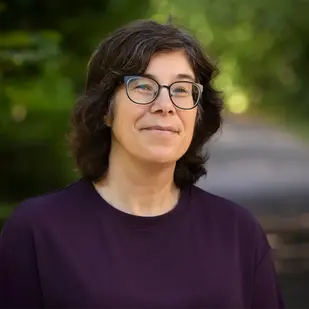
In my research, I have traced connections in history that span borders and continents and coalesce into global processes during the 18th and 19th centuries. One theme is natural history – the study of plants, animals and minerals – as defined in Sweden by Carl Linnaeus. Natural history was developed and disseminated at universities, on field trips and on domestic journeys in a country with comparatively low academic barriers, where the exploration of nature was linked to practical utility. Education created the conditions for individuals to travel further; it opened doors to various colonial projects.
Another theme I have explored concerns the trade in exotic goods, but also how these gave rise to the creation of substitutes, such as Swedish coffee substitutes; thus, it concerns both the history of dissemination and the history of imitation. This is particularly interesting to investigate in societies such as the Nordic ones, which had a high degree of self-sufficiency. The focus is on the household and women’s ability to imitate exotic goods using local raw materials. The latter help us to understand perceptions of goods from faraway places in the past. By extension, it can be said that these substitutes paved the way for imported coffee; when prices fell and global production increased during the 19th century, Swedish coffee consumption rose sharply.
Karin Hassan Jansson, history
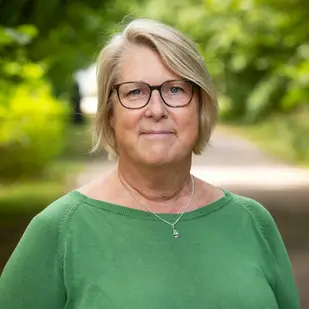
My research focuses on people’s everyday lives from the late Middle Ages to the 19th century. Above all, by studying the arguments and actions of both women and men, I have sought to understand the norms, rationalities and worldviews of that era. To gain insight into the actions and behaviour of ordinary people, I have often turned to court records. Among other things, I have written about rape, brawls, masculinity and violence, and about how the norms of the Lutheran household rules were used by both the high and the low as they argued for their rights in various contexts. For just over ten years now, as part of a major project focusing on digital history, I have been studying how ordinary people earned their living from the 17th century until the end of the 19th century. In this context, I have written, amongst other things, about how women and men managed other people’s labour and about the significance of marriage for the organisation of work. I am currently writing a book on domestic servants, the most common occupational group in early modern society. My aim here, as so often in my research, is to combine microhistorical studies of individual lives with questions concerning broader social change.
Jenny Gunnarsson Payne, ethnology
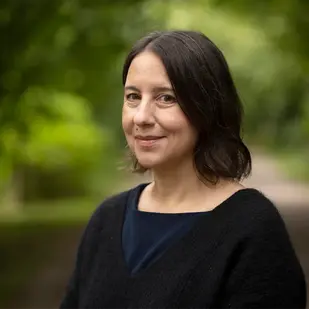
In my research, I have examined a range of different phenomena, including feminist grassroots media, assisted reproduction and reproductive rights, opposition to gender and LGBTQ rights, populism, LGBTQ migration and genealogy. What they all have in common is that they bring together my interest in issues of gender, reproduction, sexuality, kinship and politics, and that they move between everyday experiences and broader societal changes. My research has also addressed questions of how sex/gender, sexuality and family have become areas of conflict at both national and transnational levels, and the consequences this has had for individuals’ lives.
Empirically, my research is primarily based on ethnographic methods such as interviews, observations and questionnaires, which I combine with analyses of, for example, media material, legal texts and policy documents. Based on these analyses, I have developed theoretical concepts to understand how different notions of kinship interact, and how political identities and conflicts are shaped through discourses on family, reproduction, gender and sexuality. I examine how everyday and intimate life is influenced by broader societal developments and political decisions, and thereby how we understand ourselves in relation to both the past and the future.
Mattias Pirholt, literary studies
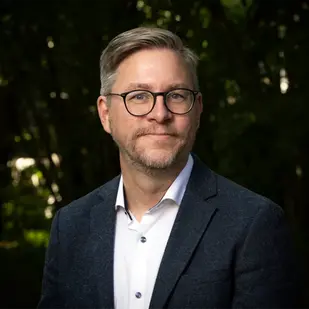
In my research, I focus on both Swedish and foreign literature – primarily German and American – from the 18th century to the present day. I study a range of fundamental aesthetic issues, such as imitation and autonomy, as well as literature’s relationship to other art forms.
By highlighting continuity, my research challenges established notions of epochal boundaries. Similarly, my studies shed light on the relationship between literature and the visual arts, as well as productive cross-border interactions between the arts.
In my most recent research, I am interested in ethical issues in the literature of the American South – particularly within the genre known as Southern Gothic. This is a dark literary tradition that challenges our ethical concepts by depicting violence, racism, poverty and degeneration.
Ylva Söderfeldt, history of ideas
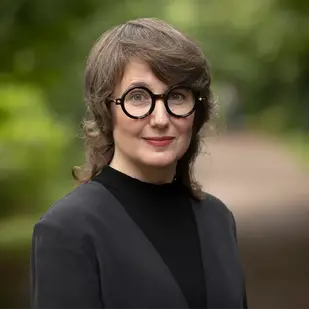
In my research, I study the history of medicine in the broadest sense. This means that my focus is not solely, or primarily, on academic researchers or medical practitioners, but rather on people living with illness or on ordinary people’s relationship with medical knowledge. During the period I am interested in – the 19th and 20th centuries – our society has become increasingly shaped by medical ways of thinking, and I am researching the dynamics, driving forces and conflicts behind this development.
In particular, I am interested in the interaction between people belonging to a specific category – for example, a particular type of patient – and the experts who generate knowledge about this category of people. In recent years, I have studied this by exploring the history of patient organisations. My interest here lies in how patients, through their organisations, have played a part in shaping medical concepts of disease and in shaping ideas about and practices surrounding the illnesses they themselves suffer from.
I am also extensively involved in interdisciplinary research within the field of medical humanities, as well as the development of theoretical perspectives and methods within the digital humanities.
Jon Viklund, rhetoric
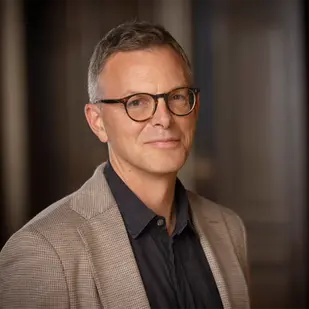
My research focuses on political debate and how politicians use words, narratives, rituals and symbolic acts to create meaning and frame social issues. I study how concepts and language use have changed over time and how this has influenced our understanding of social issues. By combining rhetorical analysis with digital methods, I study both individual speeches and long-term changes in public communication.
As a humanities researcher, I regard it as an important mission to rediscover, preserve and make speeches accessible as part of our cultural heritage. I lead the work on the ‘Svenska tal’ database, which collects and makes historical and contemporary speeches freely available to researchers and the general public. The database is being developed into a national research infrastructure for the study of Swedish speech culture and its significance for democracy.
Another important part of my work is collaboration. Together with Nordic colleagues, I develop teaching materials, provide professional development for teachers and organise public speaking competitions, where upper secondary school pupils develop their rhetorical skills and come together across national borders. My ambition is to combine research, the digital humanities and collaboration to make Swedish and Nordic speech culture visible, accessible and vibrant – both for research and for society at large.