
New professors 2026 at the Faculty of Medicine
Nine new professors will be inaugurated at the Faculty of Medicine. Here they present their research.
Joachim Burman, neurology
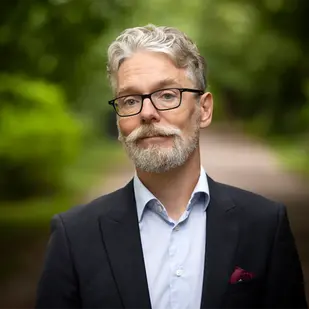
Can a chronic autoimmune disease be cured? Twenty years ago, the idea was considered unrealistic. However, I chose to make this idea the focus of my research, and it has been the central theme of my work ever since.
I chose a different approach to the established one. Instead of curbing the ravages of the disease with strong medicines, I wanted to restore the immune system through autologous haematopoietic stem cell transplantation – a sort of ‘restart’ in which the software bug driving the disease would hopefully be deleted. Our studies showed that many patients remained free of disease activity for more than ten years after a single treatment. Perhaps they were cured?
Since then, I have investigated why the treatment works, how a lasting response to treatment can be measured, and why some patients continue to deteriorate even though the inflammation has been halted. Taken together, the results suggest that autologous haematopoietic stem cell transplantation can cure multiple sclerosis in a significant proportion of patients.
I am now leading the HiHat study, in which we are investigating whether the same ‘reset’ of the immune system can be achieved in a simpler and safer way using a time-limited combination of two already approved medicines. The challenge is no longer to demonstrate that multiple sclerosis can be cured, but to develop simpler and safer treatments that achieve the same effect.
Agnieszka Butwicka, child and adolescent psychiatry
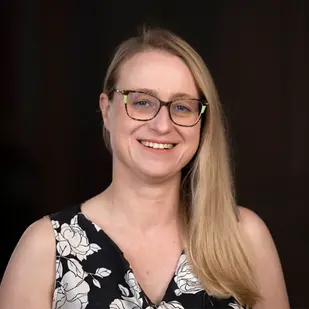
My research investigates the links between mental health problems, neuropsychiatric disorders and somatic conditions in young people. Taking a life-course perspective, I seek to understand the causes and consequences of these co-occurring conditions – from early risk factors, through childhood, to adulthood. By investigating the interplay between different factors, I hope to identify strategies that can improve young people’s health and well-being.
Erika Comasco, molecular psychiatry
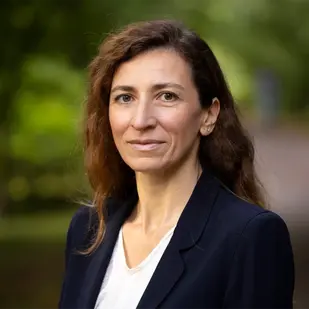
Some people are more vulnerable to mental ill health than others. My research focuses on understanding how biological and psychosocial factors influence mental health.
A particular focus of my research is women’s mental health at different stages of life, especially during the fertile period, and my aim is to better understand the significance of hormonal changes for mental health. I also study adolescence, a period when the brain is developing and many mental health problems first emerge. Another important aspect of my research is understanding why mental health issues manifest differently in women and men, and the role hormonal changes may play in shaping treatment approaches. This knowledge can contribute to more personalised care that takes gender differences into account.
By combining knowledge from several fields – such as genetics, brain research, pharmacology, endocrinology and psychiatry – in experimental studies and large-scale research collaborations, I aim to deepen our understanding of what influences our mental health. The goal is to contribute to the earlier detection of mental health conditions, more personalised prevention and more effective treatment.
Meena Daivadanam, global health
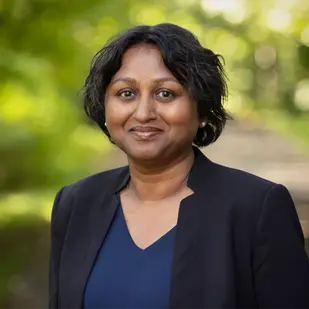
Global health is about reducing health inequalities, both between and within countries. My research focuses on preventing chronic diseases such as type 2 diabetes and cardiovascular disease. Good health should not be determined by where you live or what resources and opportunities you have. Our choices are shaped by the environments in which we grow up and live, particularly the food environment. That is why I want to contribute to societies where healthy choices are not difficult, but simple and obvious for everyone.
For me, prevention is about meeting people where they are. Effective solutions must be rooted in people’s everyday lives, living conditions and needs. That is why I strive to develop well-grounded and sustainable strategies that make a real difference through co-creation with target groups and local organisations.
Reaching those most in need is not just a matter of research; it is a matter of fairness, ensuring that no one is left behind.
Mårten Fryknäs, experimental clinical pharmacology
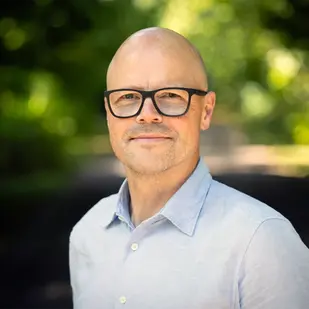
My research focuses on understanding how drugs affect cancer cells and how that knowledge can contribute to new treatment strategies. Cancer cells and their surrounding environment differ from healthy tissue in several ways. I want to understand how these differences can be exploited to target cancer more precisely and develop more effective and gentler treatments.
In our research, we combine experimental cancer pharmacology with large-scale molecular analyses. We are developing models to better mimic the properties of tumours and the environment in which they grow. Using these models, we systematically investigate new compounds and existing drugs.
A key objective is for our laboratory results to form the basis for further research and, in the long term, to benefit patients. This requires close collaboration between researchers with different areas of expertise, from the laboratory to clinical research.
New discoveries often begin with an unexpected observation. Sometimes an experiment leads to an entirely new research question; sometimes it turns out that a known drug has completely new applications. Curiosity and the opportunity to contribute to better treatments are key driving forces in my research.
Lars Hagander, paediatric surgery
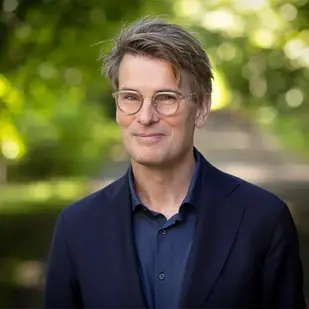
Successful surgery requires skill, precision and compassion, particularly when children are involved. As a professor, I aim to bring these perspectives together within clinical practice and academia – for the sake of the craft and precision of paediatric surgery, for those who will carry this practical wisdom forward, and for the environment in which students, researchers and teachers find the motivation to reach their full potential.
Paediatric surgery is a reconstructive surgical speciality in the broad anatomical sense and for people who are still growing. Our procedures and research focus on congenital malformations, paediatric tumours and acquired surgical conditions, from the foetal stage through to adolescence. My research encompasses pathogenesis, refined diagnostics and innovative treatment, as well as the art of medicine. Through our studies, we contribute knowledge that can be directly applied to the care of individual children and their families.
A global perspective has long been an important part of my clinical practice, research and teaching. My work in academic-surgical diplomacy has aimed to strengthen countries’ domestic surgical preparedness. This international work has broadened my view of the medical profession and medical social responsibility, as well as how an education at a comprehensive university, through grace and nature, can prepare us for both – intellect and action.
Kim Kultima, experimental clinical chemistry
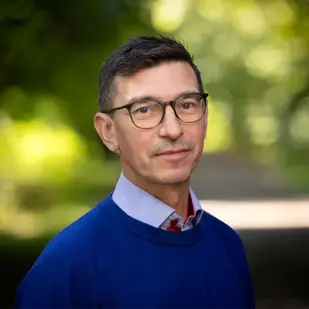
My research combines analytical chemistry, clinical medicine and AI to increase our understanding of the underlying mechanisms of diseases and improve diagnostics. Using high-resolution mass spectrometry, we analyse metabolites, lipids, proteins, drugs and environmental pollutants in biological samples from patients and healthy control subjects. Molecular patterns are linked to clinical data to identify disease mechanisms and biomarkers.
Multiple sclerosis (MS) is my main area of research. Our studies have shown that both substances produced or modified by the gut microbiota and environmental pollutants are linked to the risk of MS and impaired functional ability. We are also developing AI models to detect the transition to progressive MS at an earlier stage, whilst simultaneously indicating the certainty of the prognosis.
A central part of my research is to develop the clinical chemistry analyses of the future, ensure their quality and introduce them into healthcare. The aim is to establish robust methods that enable earlier detection of disease, better treatment choices and more precise monitoring of treatment efficacy. In the long term, I hope this will lead to more reliable diagnostics, more personalised care and better health.
Eva Larsson, ophthalmology
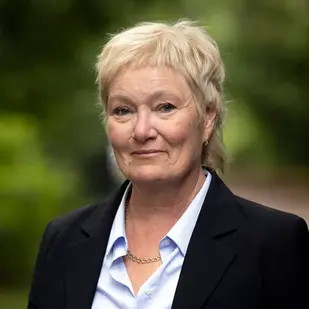
Children born prematurely or with abnormal skull shape are at increased risk of permanent visual impairment. In my research, I study how the structure and function of the eyes develop in these children from the neonatal period through to adulthood, using clinical examinations, optical coherence tomography (OCT) and electrophysiology (ERG). A large part of my work concerns retinopathy of prematurity (ROP). We have shown that even children without severe ROP are more likely to have vision problems, which persist into adulthood, and we have also demonstrated both abnormal retinal structure and impaired retinal function. Another important part of my research concerns children with craniosynostosis. Premature fusion of the skull sutures can affect the brain, the shape of the orbit and visual function in these children. Through systematic eye examinations before and after surgery, as well as detailed measurements of the volume and shape of the orbit, we are mapping how different types of craniosynostosis affect visual acuity, strabismus and refractive errors, with the aim of tailoring follow-up care and surgery to protect vision.
Fredrik Swartling, paediatric brain tumour biology
Aggressive brain tumours such as medulloblastoma, pineoblastoma and glioma can currently be treated with surgery, radiotherapy and chemotherapy. For many children, the treatment is successful, but for some the tumour returns. When this happens, the chances of a cure are often significantly lower. At the same time, the treatments that save lives can also cause severe side effects for the developing brain.
My research aims to understand what enables certain tumour cells to survive treatment. By studying individual cells in tumours using detailed sequencing, we can track how they change over time and identify the cells that hide, become resistant and may later lead to a relapse.
To do this, we use patient samples alongside advanced models such as organoids, which mimic the development of tumours in the brain. Using new technology, we can map the tumours’ biological ‘fingerprints’ and understand the mechanisms driving the disease. A particular focus is on developing new, more precise treatments. Among other things, we are investigating whether virus-based gene therapies can be used to deliver targeted treatment directly to the most hard-to-reach tumour cells – those that current treatments often miss. In the long term, I want to contribute to more effective treatments tailored to each individual child. These would increase the chances of survival and give the child the opportunity for a better life after recovery.