
Energy Sharing in Morgongåva
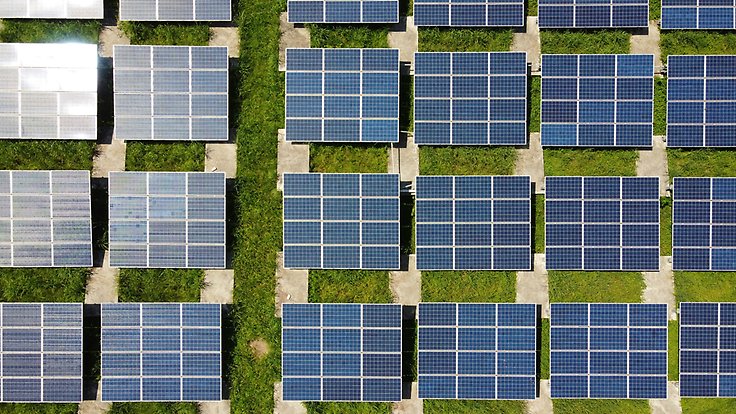
In this project, we develop and test a scalable local energy sharing system that enables businesses and the surrounding community in Morgongåva to share electricity and heat efficiently, reducing grid pressure and fossil fuel dependence.
About
Local energy systems are under increasing pressure due to growing electricity demand, limited grid capacity, and the need to reduce fossil fuel use. At the same time, many areas have untapped potential for local energy synergies between businesses, energy companies, and surrounding communities. In Morgongåva, a small town in Heby municipality with a large logistics-oriented business park, companies want to expand solar power production, but grid constraints limit further development. Meanwhile, the local energy utility operates an ageing pellet boiler and faces rising costs and sustainability challenges. There is therefore a clear need to explore how surplus energy and waste heat from the business park can be shared locally in a way that is technically feasible, economically viable, legally compliant, and organisationally robust.
The Energy Sharing in Morgongåva project addresses this need by further developing an energy sharing system between the Morgongåva Business Park, the local energy company Sala-Heby Energi (SHE), the property owner Catena, and the surrounding community.
Objectives
The overall aim is to design a flexible, robust, and economically sustainable system that maximises the use of locally produced energy, reduces pressure on the electricity grid, and lowers the community’s reliance on biomass combustion. The project builds on a previous feasibility study that analysed technical and economic aspects of energy sharing between the business park and the local district heating system.
The main objectives are to:
- Expand the energy sharing system to include additional properties in the business park, especially Catena’s facilities.
- Compare physical and virtual energy sharing, particularly where direct cable connections are missing.
- Develop clear organisational structures, including roles, responsibilities, and decision-making processes among the partners.
- Design viable business models that ensure long-term economic sustainability.
- Assess legal and regulatory conditions that may enable or hinder implementation.
- Produce investment-ready documentation to support future construction and operation.
- Generate transferable knowledge for other Swedish energy sharing initiatives.
Methodology
The project uses an interdisciplinary, iterative, and action-research-based approach with a strong emphasis on stakeholder engagement.
Two main working groups operate in parallel:
- Technical group: Led by researchers from Uppsala University and supported by the energy consultancy FVB, simulates different system configurations for electricity and heat sharing. These simulations assess self-consumption, energy efficiency, use of waste heat, reduced pellet use, and economic performance. Components such as solar PV, batteries, heat pumps, electric boilers, and thermal storage are tested in different combinations.
- Organisational–legal–economic group: Led by Uppsala University and the University of Gothenburg, develops governance structures, contractual frameworks, and business models using methods from systemic design and design thinking. This includes defining priorities for energy flows, pricing mechanisms, maintenance responsibilities, and legal compliance. The project continuously aligns technical solutions with organisational and economic feasibility through close coordination between the two groups.
Morgongåva Business Park, Sala-Heby Energi, and Catena form a steering and reference group to ensure that the system reflects real operational needs and long-term ownership capacity. The project also works closely with Heby municipality, regional authorities, and energy networks to support future scaling.
Results will be shared through workshops, national knowledge-sharing platforms coordinated by the Swedish Energy Agency, academic publications, and industry networks. Catena’s large property portfolio creates strong potential for replication in other logistics hubs.
Project Partners
- STUNS (coordination and stakeholder collaboration)
- Morgongåva Business Park (MGFP)
- Sala-Heby Energi (SHE)
- Catena AB
- Uppsala University (UU) – energy systems, organisational development
- University of Gothenburg (GU) – business law
- FVB Sverige AB – technical and economic consultancy