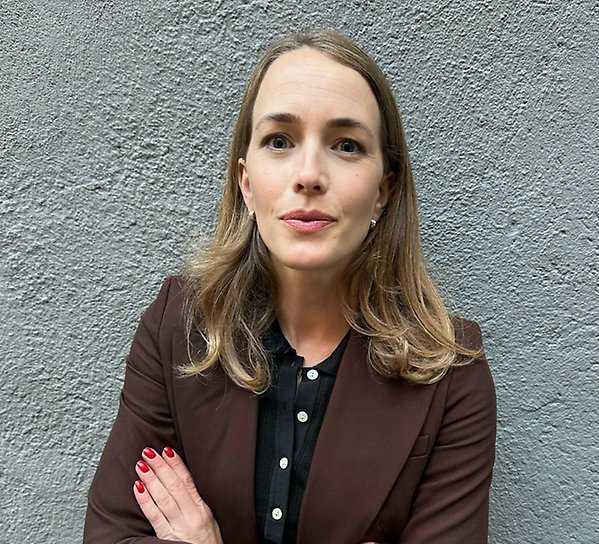
Anna Ida Rock leads the Africa Research at the Swedish Defence Research Agency (FOI)
Interview from 2025
Why did you choose to pursue a PhD in political science?
When I wrote my bachelor's and master's theses, I realised how much I enjoyed delving deeply into a subject. After completing my master's degree in development studies, I worked part-time as a research assistant at the Department of Peace and Conflict Research in Uppsala. This gave me an insight into everyday research life in practice, which made me even more eager to continue on my own. I also had a strong interest in state-building processes in post-conflict states, so when a doctoral position with that specific focus was advertised, it felt natural to apply.
What was the best and most difficult part of being a PhD student?
It's difficult to choose, because I really enjoyed my time as a doctoral student. I had wise and fun doctoral colleagues to share my everyday life with. At the same time, the environment at the department was stimulating and generous; there was always someone who took the time to help when I got stuck or suddenly decided to try a new method. The best thing, and sometimes also the most difficult, was the freedom to immerse myself in a subject for several years and to have the opportunity to contribute something new. It is a luxury to be able to devote yourself to something you are passionate about for so long, but it also requires discipline and perseverance when you repeatedly turn your own ideas over and over in your mind. So as the defence of my thesis approached, I felt quite fed up with my own texts.
Where do you work today? What does a normal workday look like?
I am the head of the Swedish Defence Research Agency's (FOI) Africa research team. Our main client is the Ministry of Defence, and in my role I am responsible for both the budget and ensuring that studies are delivered on time and to the right standard. At the same time, I work as a researcher myself, focusing on Africa-related security policy issues. My days can look very different. Sometimes I sit and read or write almost all day, almost like during my doctoral studies. Other days are filled with meetings, seminars or presentations. Since the work is policy-related, we have regular contact with and present our research to, among others, the Ministry of Defence and the Ministry of Foreign Affairs.
Has your PhD experience at Uppsala University helped you in your career?
Since I work in research, my doctoral education forms the basis for much of what I do in my current position. Even though my research today is more policy-oriented, I still grapple with questions such as how to formulate a good research question, design the best possible research plan and choose the right method. Important lessons from my doctoral studies include training in working disciplinedly with a text over a long period of time, being able to give constructive feedback that actually helps the recipient, and, not least, accepting (reasonable) criticism without becoming discouraged, but instead seeing it as an opportunity to improve my text. It is not always easy! My field studies in Somaliland and Liberia during my thesis work also gave me experiences that I still find very useful in the research trips I make today.
What is your best memory from your time in Uppsala?
There are many wonderful memories to choose from. But when I moved to Uppsala, I hardly knew anyone and felt quite lonely in the days leading up to the start of my first course. During my first weeks as an undergraduate, I got to know three of my very best friends today, which beats most things!
What advice would you give to current PhD students in political science?
Make sure you have a good plan and stick to it, but try not to stress too much about the future and trust the process. It can feel overwhelming to think about completing an entire thesis manuscript, but if you do what you need to do week by week, it will come together. Along the way, you may have to discard parts of what you have written, and it may sometimes feel difficult, but suddenly it will click and the writing will flow again. If you get completely stuck, ask for help! For me, it often helped to bounce ideas with others. Also, try to find others who share your research interests as early as possible, whether they are in Uppsala or elsewhere in the world. It makes a big difference not to feel alone in your field of research. And perhaps most importantly: work hard, but also make sure to enjoy your time as a doctoral student. Attend seminars that you find interesting, even if they are outside your subject area, and take the opportunity to do things together with the other doctoral students!
What would you say to someone who is considering applying to the PhD programme?
Apply, of course! If you are even remotely interested in research, this is a unique opportunity to really immerse yourself in something you find exciting.
Education
Anna Ida Rock defended her doctoral thesis in 2021
Today, she heads the Swedish Defence Research Agency's (FOI) Africa research programme.