
“Studying without strategies is like searching for treasure without a map” • Martin Fernström leads the way at Kunskap För Livet
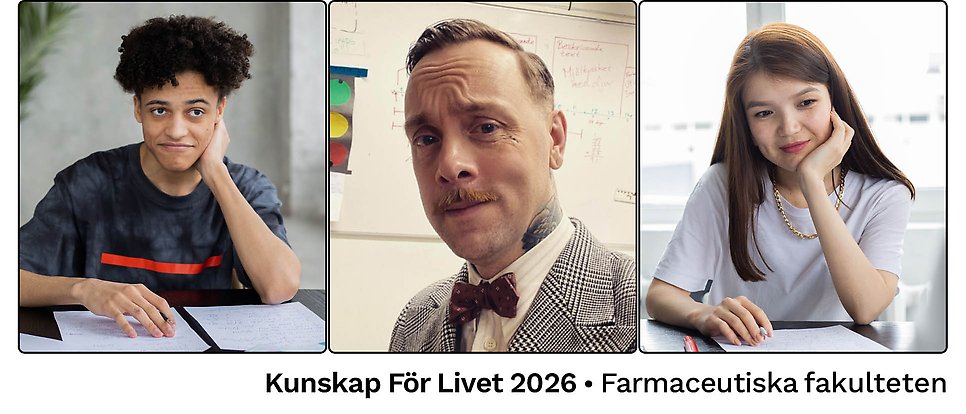
“We don’t learn what we need to learn by studying harder, but by studying smarter. If you plan your studies well and stay fully focused, it can even be fun,” says Martin Fernström, the teacher who, in UR's Pluggkoden, helps students achieve significantly better results with simple strategies.
Achieving the grade you really want requires hard work – and it should. Unfortunately, several studies show that school-related stress has become a part of everyday life for many adolescents – and this is not acceptable. In the report Det enda jag tänker på är stress och skola (All I Think About Is Stress and School), more than half of Swedish high school students say that disruptive classrooms, the amount of homework and performance pressure negatively affect their mental health. This pressure is particularly evident among girls, six in ten of whom worry that their final grades will not be sufficient. But there are strategies that can make studying both easier and more effective.

School stress • An unwanted part of everyday life for many students
“When you study, it is incredibly important how you use your time, what attitude you have and how you develop smart strategies. Some effective techniques are to create focus, review what you have learned and approach your goal in manageable steps. A good analogy is that studying without strategies is like searching for treasure without a map. But if you do it right, studying becomes more enjoyable and leads to better results with less effort,” explains Martin Fernström, educational presenter on UR's Pluggkoden.
For many young people, the challenge begins in the classroom. One study shows that almost half of the students find it difficult to concentrate during lessons. Four in ten teachers experience that a large proportion of lesson time is spent maintaining order. Repeated reports identify the increasing use of digital technology in the classroom as a contributing factor, and one in three students say they are distracted by other students' screens. In 2026, a national mobile phone ban has been introduced in primary and lower secondary schools to strengthen concentration and create a calmer learning environment, and further measures are under way.

“A serious matter” • Lotta Edholm, Minister for Upper Secondary School, Higher Education and Research
“It is a serious matter that so many students are unable to concentrate at school. There must be no doubt that the teacher is in charge of teaching and that the school’s rules must be followed by everyone. Some important measures that the Government is currently working on are to give teachers and headteachers significantly better conditions to act as they see fit. They will also have more qualified colleagues,” says Lotta Edholm, Minister for Upper Secondary School, Higher Education and Research.
A calm study environment takes us a long way, but we have to take the final step ourselves. Today, studies show that our ability to acquire knowledge in a structured way is declining. We therefore need to update our study techniques, and the toolbox is full of useful strategies. On Gymnasium.se, for example, you will find a wide range of practical tips. Retrieving information from memory from time to time trains the brain. Repeating information at increasing intervals (spaced repetition) strengthens memory. Adding your own mind maps, colours and images can help you see the bigger picture. And then there is perhaps the most important detail of all…
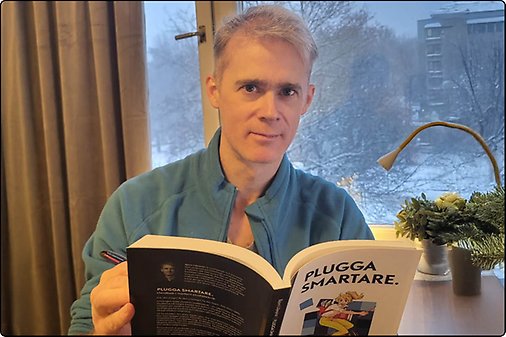
“Create routines that work” • Björn Liljeqvist, study techniques expert
“Create routines that make it easier to actually open the book. Have designated places where you know: “This is where I study.” Preferably somewhere where other people can see you, which is an effective way to bring out the best in ourselves. Make a plan for what you want to accomplish the following day: these are the pages I will read, these are the exercises I will complete. That way, you are not starting from scratch. You have manageable goals and can also cross off everything you accomplish from your list. These are simple strategies that help us get things done,” says Björn Liljeqvist, study techniques expert and former President of Mensa International.
In other words: Break the task down into small, achievable goals. Make sure to reward yourself with something enjoyable when you are finished – but not before. And as you prepare to do your homework, switch off and remove anything that distracts you. Today, a majority of high school students say they multitask when doing their homework – which can reduce learning efficiency by up to 40 per cent. Create a study environment you enjoy. And remember to take a break when you need one. Everything does not have to be completed at once, but a good foundation makes it easier to pick up where you left off.
“You get the grade you want by studying smarter, not harder. It is like climbing a staircase. If you try to jump straight to the top, you will probably fail. If you take one step at a time, you can reach your goal with relatively little effort. And if you plan your studies and stay fully focused, it can actually be fun. That is part of what we will learn at Kunskap För Livet 2026,” says Martin Fernström ahead of his meeting with 2,000 high school students in the Uppsala University Grand Auditorium.
Meet Martin in Pluggkoden: Strategier för minnet
3 quick tips for studying smarter
- Plan smart: Divide your studying into time blocks and schedule regular breaks to maintain your focus throughout the entire study session.
- Focus completely: Put your mobile phone away and close all browser tabs on your computer that are not related to your schoolwork.
- Learn actively: Summarise each text in your own words or explain the subject to a friend instead of simply reading the text from beginning to end.
Facts Kunskap För Livet 2026
- On 23 November, Martin Fernström will join Kunskap För Livet, where 2,000 high school students, teachers and experts will gather to explore ideas for a more sustainable future.
- Registration is now open for students and school classes. Participation is free of charge, and the event will take place in the Uppsala University Grand Auditorium.
- Meet our speakers
Diamant Salihu – Journalist and author
Jale Poljarevius – Police and Regional Intelligence Director
Mårten Nylén – Health expert
Elaine Eksvärd – Rhetoric expert and communication coach
Beata Kull – Social entrepreneur
Christian Benedict – Professor and author
Mathias Hallberg – Professor and Distinguished Teacher
More speakers will be announced soon
Links
Kunskap För Livet • En dag med Dig i fokus
Register for Kunskap För Livet 2026
More in focus at Kunskap För Livet 2026:
"Some sleep is always better than none" • Christian Benedict inspires young people to sleep tight
“You must test your idea to see if it takes off” • Three entrepreneurs on taking the first step
Watch the film Kunskap För Livet 2025
Contact Kunskap För Livet
Anja Sandström
Dean, Faculty of Pharmacy
018-471 5026, Anja.Sandstrom@ilk.uu.se
Mathias Hallberg
Deputy Vice-Rector, Uppsala University
018-471 4141, Mathias.Hallberg@farmbio.uu.se
Magnus Alsne
Communications Officer, Faculty of Pharmacy
0704-25 09 45, Magnus.alsne@ilk.uu.se
text: Magnus Alsne, photo: Martin Fernström a o