“A smiley doesn’t always get the job done” • Elaine Eksvärd ready to help Uppsala’s young people communicate with confidence
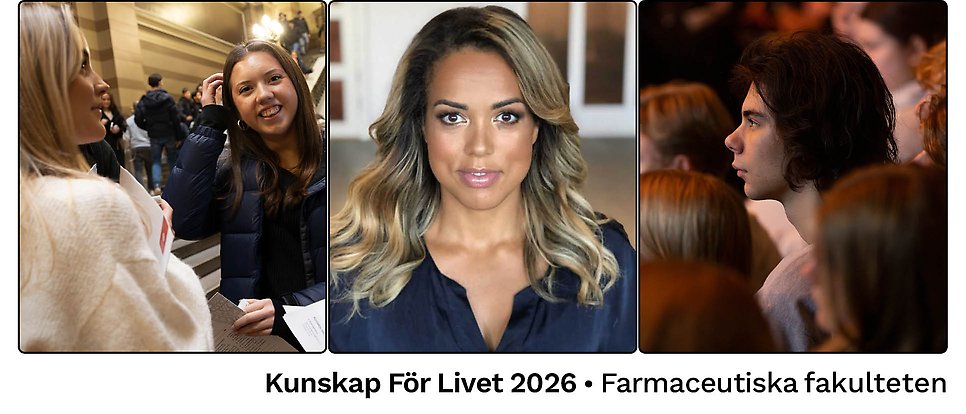
What happens to a society when people find it increasingly difficult to express themselves in ways that others can understand? Raise your gaze from TikTok and you’ll find the answer. Since the turn of the millennium, Swedish students’ reading comprehension has dropped from among the best in the world to a historic low. “Communication is a muscle, and now we need to work on strengthening it,” says rhetoric expert Elaine Eksvärd, who will meet Uppsala’s high school students in November at Kunskap För Livet 2026.
“But you’re not listening to what I’m saying” – or is it actually the case that, amid all the snaps and selfies, we are losing our ability to express ourselves in ways that others understand? There is no simple answer at a time when some warn of a language crisis, while others argue that a well-chosen smiley can say more than a thousand words. What is certain is that digital platforms are fundamentally changing the way we communicate.
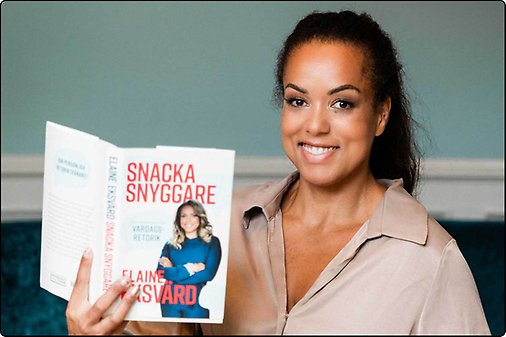
Elaine Eksvärd • Helping Sweden communicate more effectively
“Rhetoric is less about the art of speaking and more about getting people to want to listen. You can be highly competent and have fantastic ideas, but still fail if you cannot communicate what you have to say. This means we need to adapt our language to the times we live in. But we also need to remember who we are talking to. If you want to convince a teacher or a future employer of your qualities, a smiley probably won’t get the job done,” says rhetoric expert Elaine Eksvärd.
The fact that books now compete with endless streams of short video clips is likely contributing to this development. A number of studies give cause for concern. Statistics from the Swedish National Agency for Education show a decline in the number of Year 6 students achieving a passing grade in Swedish. In the international PISA assessments, Swedish ninth-graders’ reading comprehension has dropped from among the best in the world in 2000 to a historic low. A survey of Swedish teachers confirms this picture: students’ writing skills in the classroom have definitely seen better days.
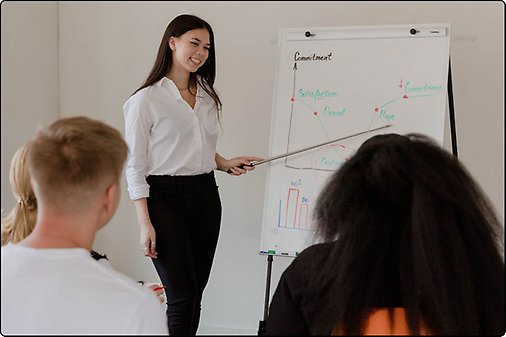
Lesson learned • Practise speaking in front of a group
“If students do not learn to write properly, we clip their wings when it comes to taking in knowledge and solving problems. In that situation, allowing them to photograph the board, write with spell-checking software and replace reading with listening is, in my view, directly counterproductive. This is particularly true for children from disadvantaged backgrounds. Instead, schools must give every child and young person the time and support they need to master their language,” says Agneta Gulz, Professor of Cognitive Science at Lund University.
Of course, there are also some bright spots in the language landscape. One major advantage is that young people’s integration of English into their spoken language gives them a valuable platform in our globalised world. At the national level, studies show that Swedish students can produce texts quickly. They also show that our teenagers are confident and capable when it comes to expressing opinions orally. At the same time, there is a clear need for more practice in rhetorical structures and maintaining a clear line of argument.
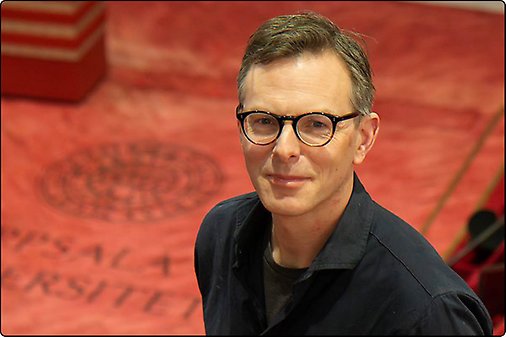
Jon Viklund • Professor of Rhetoric at Uppsala University
“In our research programme Norden og Verden, high school students practise writing and delivering argumentative speeches to an audience. The participants show both potential and engagement, but also that they can improve further with the right support. Practical, repeated training at school is essential. Listen to good examples, develop different styles, discuss AI and, most importantly, speak in front of a group. The value of early practice is clear. Just look at the United States, England and many other countries where rhetoric has a natural place on the curriculum,” says Jon Viklund, Professor of Rhetoric at Uppsala University.
The benefits of mastering your language are obvious. Our ability to communicate is our link to other people. The better we become at formulating messages that get through, the better positioned we are to influence others. This makes language skills a matter of democracy, leading many to warn of a future in which society is divided into an A team and a B team. But why not view the ability to communicate effectively as a skill we can improve here and now?
“Communication is without a doubt a muscle. No one is born fit, and now we need to work on strengthening it. Some effective exercises are to shift your focus from yourself to your audience. Maintain eye contact and show interest in how what you are saying is being received. If you need to give constructive criticism, keep it factual. If you are met with silence, calmly acknowledge the situation. In short, there are so many tools for making your voice heard, and I am really looking forward to meeting Uppsala’s high school students at Kunskap För Livet 2026,” says Elaine Eksvärd.
3 quick tips to improve your language skills
- Read a little every day: Just 15 minutes a day can give you a broader vocabulary and make it easier to both write and express yourself.
- Write in your own words: Summarise what you have read or experienced. The more you write, the easier it becomes to express yourself clearly.
- Practise speaking: The more often you tell stories, explain things or discuss ideas with others, the more confident you will become at expressing your thoughts.
Facts Kunskap För Livet 2026
- On 23 November, Elaine Eksvärd will join Kunskap För Livet, where 2,000 high school students, teachers and experts will gather to explore ideas for a more sustainable future.
- Registration is now open for students and school classes. Participation is free of charge, and the event will take place in the Uppsala University Grand Auditorium.
- Meet our speakers
Diamant Salihu – Journalist and author
Jale Poljarevius – Police and Regional Intelligence Director
Mårten Nylén – Health expert
Elaine Eksvärd – Rhetoric expert and communication coach
Martin Fernström – Educational programme host & teacher
Beata Kull – Social entrepreneur
Christian Benedict – Professor and author
Mathias Hallberg – Professor and Distinguished Teacher
More speakers will be announced soon
Links
Kunskap För Livet • En dag med Dig i fokus
Register for Kunskap För Livet 2026
More in focus at Kunskap För Livet 2026:
"Some sleep is always better than none" • Christian Benedict inspires young people to sleep tight
“You must test your idea to see if it takes off” • Three entrepreneurs on taking the first step
Watch the film Kunskap För Livet 2025
Contact Kunskap För Livet
Anja Sandström
Dean, Faculty of Pharmacy
018-471 5026, Anja.Sandstrom@ilk.uu.se
Mathias Hallberg
Deputy Vice-Rector, Uppsala University
018-471 4141, Mathias.Hallberg@farmbio.uu.se
Magnus Alsne
Communications Officer, Faculty of Pharmacy
0704-25 09 45, Magnus.alsne@ilk.uu.se
text: Magnus Alsne, photo: Mikael Wallerstedt, Daniel Olsson a o