
"Some sleep is always better than none" • Christian Benedict inspires young people to sleep tight
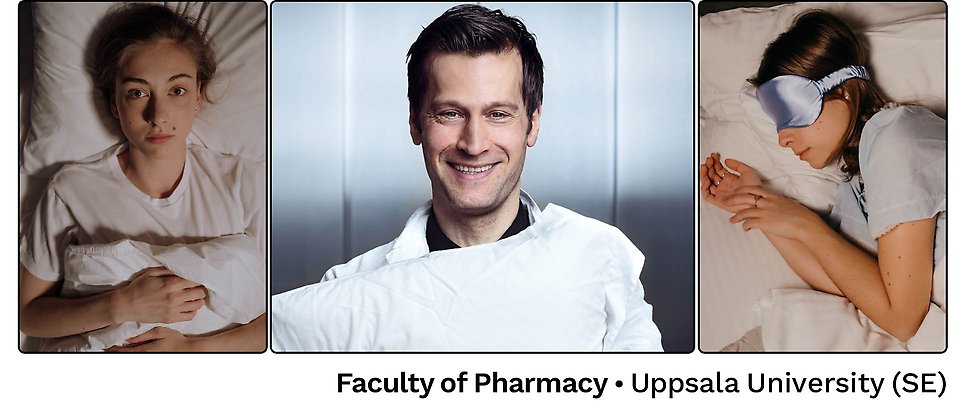
To help reverse the ongoing sleep crisis among adolescents, the Public Health Agency of Sweden recently introduced recommendations for healthier sleep habits. "Helping teens take the first step towards a good night's sleep requires practical advice. We now have a solid foundation to build on," says sleep researcher Christian Benedict, who will meet 2,000 high school students in November to help them win the battle for the bedroom.
Do you struggle to get to bed on time and wake up feeling more tired than you should? If so, you're not alone. Recent studies show that poor sleep habits have become a growing public health concern. Particularly alarming is the fact that more than half of Sweden's young people do not get enough sleep. Among students in the final year of upper secondary school, almost four in ten girls sleep so little that they meet the clinical threshold for sleep deprivation.

Christian Benedict lecturing in the University Grand Auditorium
"These figures confirm a long-term trend. As early as the 2010s, one in three teenagers surveyed in Uppsala County reported that their sleep habits had a negative impact on their school performance. That this trend continues in the wrong direction shows that we must help young people understand how important sleep really is. Here, inspiration is a far better tool than simply telling young people what to do," says Christian Benedict, Professor and sleep researcher at Uppsala University.
The situation has become so serious that the sleep hormone melatonin is now among the most commonly prescribed drugs for children and adolescents in Sweden. In the summer of 2025, Minister for Social Affairs Jakob Forssmed warned about the long-term health consequences of insufficient sleep. On 9 April this year, the Public Health Agency of Sweden presented new recommendations on routines, environments and daily activities designed to help children and young people establish healthier sleep habits.
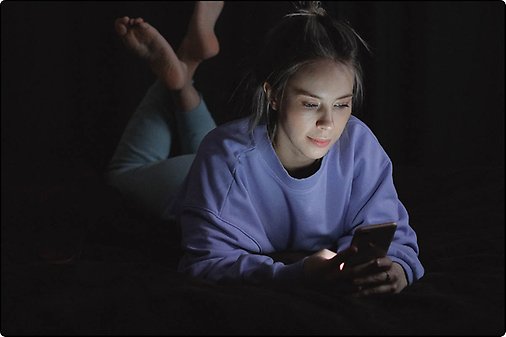
One simple rule: Leave your phone outside the bedroom
"We are facing a silent epidemic. It is extremely important that both the Government and the Public Health Agency raise awareness of this issue while also providing practical advice. Many teenagers need simple, concrete tips to take that first important step, and we now have a solid foundation to build on," says Christian Benedict.
Young adults are recommended to sleep seven to nine hours per night. Many teenagers naturally have a delayed body clock, meaning they often feel alert when bedtime approaches. At the same time, school starts early the next morning. The new recommendations therefore emphasise maintaining a regular sleep schedule, being physically active outdoors during the day and – perhaps most importantly – leaving your mobile phone outside the bedroom at night.

Is a sleeping mask your thing? Great, go ahead with it
"These are sensible recommendations that can benefit everyone, but don't forget to add your own routines as well. In our family, we established clear bedtime routines when our children were young, and now that they are teenagers, they have chosen to stick with those habits. Remember, there is no universal formula for what puts you into sleep mode. If reading five pages of a book or doing ten push-ups helps you wind down, just keep doing it."
At Uppsala University's sleep laboratory, Benedict's research team has contributed to several groundbreaking studies demonstrating the importance of sleep. Their internationally recognised findings include evidence that even a single night without sleep can negatively affect the brain and increase food intake. However, Benedict is equally keen to highlight the many positive effects of getting enough sleep.
"One fact that usually captures young people's attention is that we are perceived as more attractive after a good night's sleep. Boys are often curious about how sleep can support muscle growth after exercise. It cannot be repeated often enough that the teenage brain needs plenty of sleep to mature. Perhaps most importantly, we need to stop turning sleep into a performance of skill. Do the best you can, and never forget that some sleep is always better than none.
3 quick tips for a good night
- If you use your phone before bedtime, it can make it harder for you to fall asleep and also worsen your sleep quality.
- If you sleep with your phone outside the bedroom, you will sleep better and longer.
- If you go to bed and get up at about the same time every day, it will be easier to fall asleep and you will wake up more often refreshed.
Facts Kunskap För Livet 2026
- On 23 November, Christian Benedict will join Kunskap För Livet, where 2,000 high school students, teachers and experts will gather to explore ideas for a more sustainable future.
- Registration is now open for students and school classes. Participation is free of charge, and the event will take place in the Uppsala University Grand Auditorium.
- Meet our speakers
Diamant Salihu – Journalist and author
Jale Poljarevius – Police and Regional Intelligence Director
Mårten Nylén – Health expert
Elaine Eksvärd – Rhetoric expert and communication coach
Martin Fernström – Educational programme host & teacher
Beata Kull – Social entrepreneur
Christian Benedict – Professor and author
Mathias Hallberg – Professor and Distinguished Teacher
More speakers will be announced soon
Links
Watch the film Kunskap För Livet
Contact
Christian Benedict, Professor
Department of Pharmaceutical Biosciences
Christian.Benedict@farmbio.uu.se
Text: Magnus Alsne, photo: Stefan Tell, Mikael Wallerstedt a o