
“Logging out of TikTok doesn't give us withdrawal symptoms” • Mathias Hallberg wants to break unhealthy digital habits
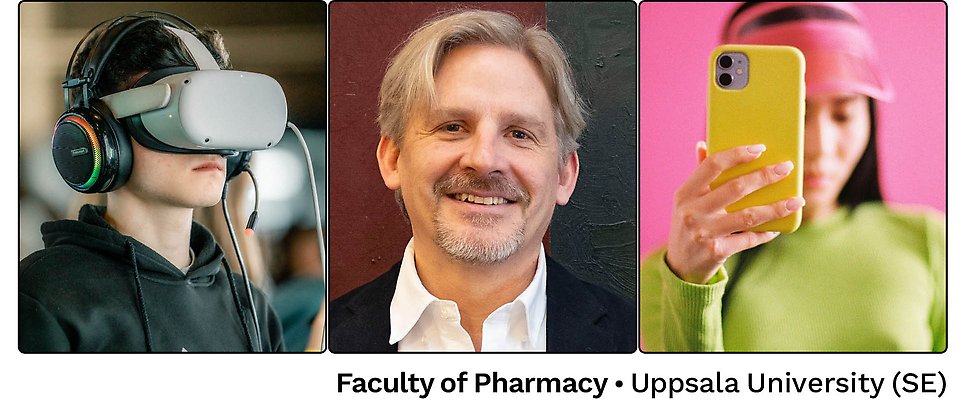
Spending more than seven hours a day in front of screens, an increasing number of teenagers want to replace endless scrolling with more creative activities. “Digital platforms have become such an integral part of our lives that we need to find a healthier balance, and young people's attitude is genuinely inspiring,” says Mathias Hallberg, Professor of Addiction Research.
Every day we pick up our smartphones approximately 350 times and spend more than seven hours in front of screens. This is hardly surprising when global tech giants invest enormous resources in encouraging us to try – and ideally become hooked on – the next app. Algorithms are still one step ahead of our analogue brains. In response to this trend, Sweden is introducing mobile phone-free school days while the Public Health Agency of Sweden is developing new recommendations on healthy screen habits. But will these measures be enough to help us break our digital habits before it is too late?
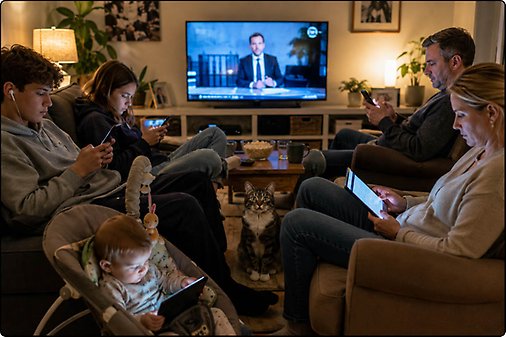
Family fun? Screens have become a natural part of everyday life.
“Social media, streaming services and online gaming are here to stay, but they now occupy such a prominent place in our lives that we need to reflect on what is actually reasonable. The fact that logging out of TikTok does not trigger physical withdrawal symptoms makes digital habits easier to break than substance addiction. At the same time, screens are so deeply integrated into everyday life that young people, parents and teachers all need to be part of the conversation if we are to change course,” says Mathias Hallberg, Professor of Addiction Research.
Digitalisation is reflected throughout the education system, but classrooms are not immune to digital distractions. Recent OECD data show that Sweden has the weakest classroom discipline in Europe, with one in three pupils disturbed by other students' use of digital devices. Studies also demonstrate that when one student switches from schoolwork to activities such as YouTube, nearby students lose concentration as well. Yet the distractions of smartphones extend far beyond the classroom.
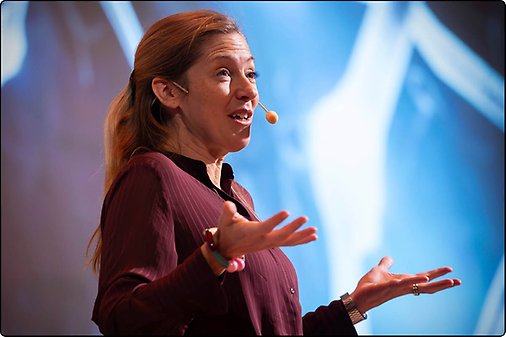
Sissela Nutley lectures at Kunskap För Livet 2025
“To thrive, we need opportunities to focus. Many people think that switching off push notifications is enough, but research shows that students learn less effectively even when their phone is simply in their pocket, compared with when it is in another room. In other words, the mere presence of a smartphone competes for our attention. We also see that students at schools that collect mobile phones become more physically active, which supports learning and bodes well for the nationwide introduction of mobile phone-free school days,” says Sissela Nutley, researcher with a focus on young people's mental health and digital media.
Home life is no less connected, and the effects are equally evident. Today, 73 per cent of young people feel they spend too much time online, preventing them from engaging in other important activities. Studies also indicate that almost one in two Swedish boys is at risk of developing problematic gaming behaviour. Meanwhile, increasing numbers of teenage girls struggle with anxiety and body image concerns, with comparisons driven by social media believed to be a contributing factor.

Discuss how you actually want to spend your screen time
“If you want to talk to your teenager about smartphone use, begin by discussing what you would like to have time for during a typical day. From there, you can consider together how much time is reasonable to spend on screens and how that time is best used. Then create a family media plan with agreed rules for screen use at home. And to all adults: don't forget to review your own screen habits as well. Young people are influenced both by what we say and by what we do,” says Helena Frielingsdorf, psychiatrist and investigator at the Public Health Agency of Sweden.
Teenagers are far from the only ones who struggle to put their phones away. In June 2026, the Public Health Agency of Sweden presented new recommendations on parents' screen habits. The recommendations were prompted by findings showing that children whose parents spend more time on screens also tend to use screens more themselves. The same research found that many young people express frustration about their parents' mobile phone use. And honestly – don't many of us sometimes feel that it is time to spend less time looking at screens and more time with the people around us?
“According to the Youth Barometer, Swedish teenagers increasingly want to replace endless scrolling with a slower pace and more creative activities. Many have already taken the first step, and even more believe that 2026 will be the year they put their phones aside and spend more time in the real world. I find that tremendously encouraging. With the support of the Public Health Agency's practical toolkits, I believe both young people and adults are ready to develop healthier, less screen-centred ways of reaching our full potential,” says Mathias Hallberg.
See video: Gaming addiction – why does it develop?
Three quick tips for smarter screen use
- Avoid multitasking: You can complete your homework up to four times faster if you keep your phone in another room.
- Turn off notifications: After an interruption from a notification or message, it can take more than 20 minutes to regain your previous level of concentration.
- Start your day without your phone: Wait at least 30 minutes after waking up before checking your phone to help you get your day started without immediately slipping into endless scrolling.
Facts Kunskap För Livet 2026
- On 23 November, Mathias Hallberg will join Kunskap För Livet, where 2,000 high school students, teachers and experts will gather to explore ideas for a more sustainable future.
- Registration is now open for students and school classes. Participation is free of charge, and the event will take place in the Uppsala University Grand Auditorium.More speakers will be announced soon
- Meet our speakers
Diamant Salihu – Journalist and author
Jale Poljarevius – Police and Regional Intelligence Director
Mårten Nylén – Health expert
Elaine Eksvärd – Rhetoric expert and communication coach
Martin Fernström – Educational programme host & teacher
Beata Kull – Social entrepreneur
Christian Benedict – Professor and author
Mathias Hallberg – Professor and Distinguished Teacher
More speakers will be announced soon
Links
Kunskap För Livet • En dag med Dig i fokus
Register for Kunskap För Livet 2026
Skärmanvändning och hälsa (FHM)
Föräldrars egen användning av skärmar (FHM)
More in focus at Kunskap För Livet 2026:
"Some sleep is always better than none" • Christian Benedict inspires young people to sleep tight
“You must test your idea to see if it takes off” • Three entrepreneurs on taking the first step
See video: Kunskap For Livet 2025
Contact Kunskap För Livet
Anja Sandström
Dean, Faculty of Pharmacy
018-471 5026, Anja.Sandstrom@ilk.uu.se
Mathias Hallberg
Deputy Vice-Rector, Uppsala University
018-471 4141, Mathias.Hallberg@farmbio.uu.se
Magnus Alsne
Communications Officer, Faculty of Pharmacy
0704-25 09 45, Magnus.alsne@ilk.uu.se
Text: Magnus Alsne, photo: Mikael Wallerstedt a o