
Major research grant awarded to Uppsala University for study of prehistoric food culture
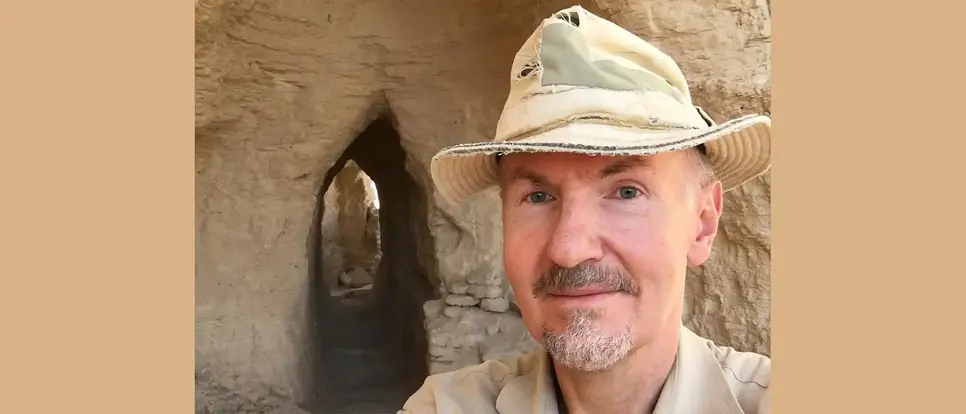
Anders Kaliff, professor of archaeology at Uppsala University, has been granted funding from Riksbankens Jubileumsfond (RJ) for his research programme Från mjölk till mjöd – indoeuropeisk matkultur i förhistorien (“From milk to mead – Indo-European food culture in prehistory”). The photograph shows Anders Kaliff carrying out fieldwork in Jordan. Photo: Private.
Anders Kaliff, professor of archaeology at Uppsala University, has been granted funding from Riksbankens Jubileumsfond (RJ) for his research programme Från mjölk till mjöd – indoeuropeisk matkultur i förhistorien (“From milk to mead – Indo-European food culture in prehistory”). The project is one of only three RJ programmes to have been awarded funding in this year’s round of grants.
In total, RJ allocates nearly 380 million kronor to research in the humanities and social sciences in Sweden. Uppsala University has had the most research projects approved in this year’s RJ funding round, with 17 funded research projects out of a total of 80.
The research programme Från mjölk till mjöd – indoeuropeisk matkultur i förhistorien has been granted funding as an RJ Programme. This is a form of funding aimed at larger research environments and long-term initiatives lasting six to eight years.
From milk to mead
Anders Kaliff, professor of archaeology at Uppsala University, is leading the research project, which involves researchers from six universities in five different countries.
“The programme investigates early Indo-European dietary habits by combining linguistic research, archaeology and modern biomolecular methods,” explains Anders Kaliff. “Food is a particularly rewarding gateway to the past: it concerns everyone, is shaped by traditions, and leaves traces in words, objects and biological material alike. These sources often tell different stories. Rather than viewing this as a problem, the project uses these differences as a key to understanding. By comparing what lingustics, archaeology and molecules tell us – and what they do not tell us – we can ask new questions about everyday life, migration, contact and social relations in prehistory.
“We’re going to examine how food was produced, prepared and shared, how eating habits changed over time, and the social significance of food, for example in celebrations, hospitality and rituals. This will lead to a new way of understanding prehistoric societies, in which food is not just about survival but about culture, identity and social order,” concludes Kaliff.
The research programme Från mjölk till mjöd – indoeuropeisk matkultur i förhistorien has been granted just over SEK 40 million and will run for seven years.
Anders Berndt
About RJ
RJ (Riksbankens Jubileumsfond) is an independent research funding body that supports research in the humanities and social sciences. Each year, the foundation allocates roughly half a billion Swedish kronor to research and collaboration. Since its inception, the fund has contributed over 20 billion kronor to Swedish research.