
“The greatest benefit of VASCERN was the combination of knowledge, people and perspectives”
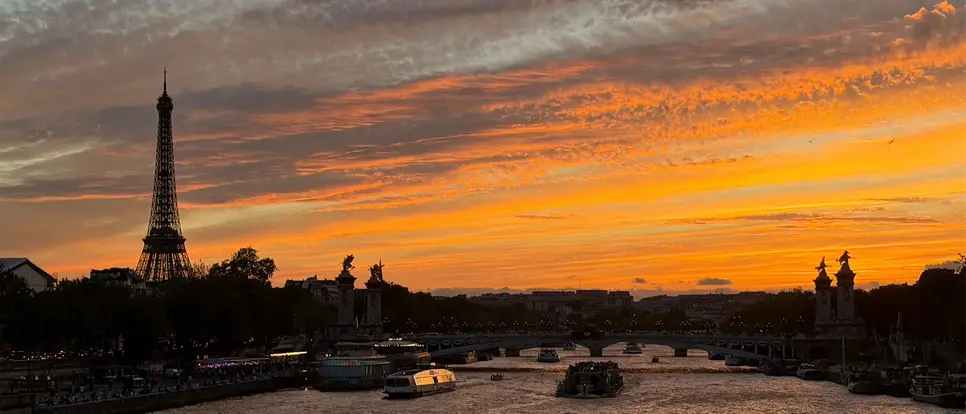
Renting an apartment together with five other participants was a fun part of the experience for Maria, who got even more out of the international exchange outside of the scheduled programme. Photo: Maria Dzialanska.
When medical student Maria encountered children with rare vascular diseases during an exchange programme in Tanzania, it sparked an interest in the field and in international knowledge exchange. Through the VASCERN Summer School, she deepened her knowledge and gained a new understanding of the importance of international collaboration for people living with rare diseases.
Hello Maria! Could you tell us a little about yourself and your background.
My name is Maria Dzialanska, and I'm studying on the Medicine Programme. I have always enjoyed meeting people from different backgrounds, and creating and developing ideas together. I find international collaborations incredibly rewarding, both personally and professionally, and they are experiences that I always carry with me.
What made you apply to the VASCERN summer school?
During the autumn semester of 2025, I participated in an exchange programme in Tanzania. It was a very educational experience, where I spent a lot of time at the children's hospital in Dar es-Salaam.
There, I met several children with rare vascular diseases, conditions that we as medical students do not encounter very often in Sweden. It sparked an interest in these diseases, but also made me aware of how important international collaborations are when it comes to rare diagnoses. Expertise can be highly concentrated, which makes the exchange of knowledge between different countries and specialist centres incredibly important.
When I came home from Tanzania, I felt strongly that it was an area I wanted to continue exploring. When I found VASCERN, it felt like a very natural next step.
What did the online activities during the spring involve, and what was the interaction with the other students like?
During the spring, we attended online seminars with experts in various fields about once a week. It was a good mix of theoretical knowledge and clinical discussions.
Although it can sometimes be difficult to create engaging discussions online, I think it worked very well. A significant advantage was that we had time to get to know each other a little before the week in Paris.
How did you manage to combine VASCERN with your other studies?
It worked very well. During the spring semester of 2026, I was writing my individual degree project, which meant that I had a relatively flexible schedule. For me, the combination worked very well, and I rather felt that VASCERN complemented my studies by giving me perspective and knowledge that I otherwise would not have gotten as much of during the Medicine Programme.
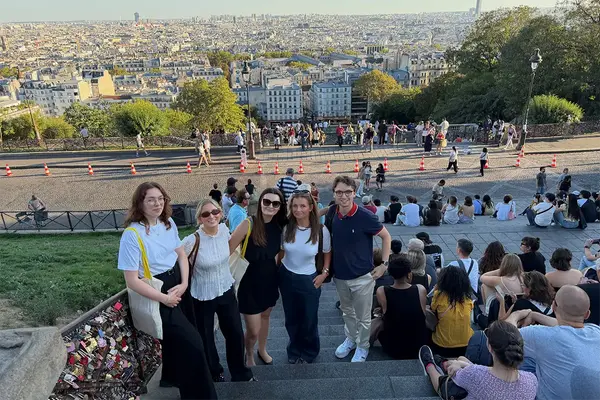
Spending time together outside of the scheduled programme became a big part of the experience for Maria (second from the right), here with students and junior physicians from Ireland, Lithuania and Germany.
Tell us about the week in Paris – what did it involve and what did you do?
It was an intense and educational week. We attended lectures with specialists from different parts of Europe, interspersed with patient cases and discussions. It was an opportunity to explore disease mechanisms, diagnostics and treatment.
A particularly important part was the participation of representatives from the patient organisations. Hearing their own stories and experiences gave a completely different understanding of what it actually means to live with a rare disease.
Their stories made the diseases feel very real. It gave a lot of perspective and really reinforced my desire to contribute and make a difference for this group of patients.
You were the only student from Uppsala this year. How did the social aspect of the week work?
It worked very well. Since we had already met online during the spring, it didn't feel like I came to Paris all alone, even though I was the only student from Uppsala. Since many of us were in the same situation and did not know many participants beforehand, it was also very easy to start talking to each other.
We also spent a lot of time together outside of the scheduled programme, so the social aspect became a big part of the experience. I almost think it was an advantage to go by myself, because it really allowed me to get to know students from other countries.
How did all the practicalities work out, with scholarship and accommodation?
Since Uppsala University is a partner in VASCERN, I was able to apply for an Erasmus grant. The application process went smoothly, and I received excellent support from the Unit for International Mobility.
Before the programme started, VASCERN also created a group for participants, where several people started discussing the possibility of arranging accommodation together. I ended up renting an apartment together with five other participants from different countries. It was actually a very fun part of the experience, as we got to know each other much better and got even more out of the international exchange outside of the scheduled programme.
What was the biggest benefit of VASCERN?
The greatest benefit was probably the combination of knowledge, people and perspectives.
From a purely medical point of view, I learned a lot about diseases that you otherwise only encounter very briefly during medical school. At the same time, I got to meet experts, patients and other students from all over Europe. It also gave me a much greater understanding of the importance of international collaboration in rare diseases. No single physician or clinic can have experience of everything, and that is precisely why networks such as VASCERN are so important.
Why should one apply to VASCERN?
I think you should apply if you are curious and want to explore ares of medicine that you may not encounter during your studies. You don't have to already be an expert in vascular or rare diseases. Rather, I think the most important thing is to be interested and willing to learn.
It is also a unique opportunity to meet leading experts, patients and physicians from different countries and to gain insight into how European collaborations in healthcare and research actually work.
For me, it became much more than just a course. It was both an academic and a personal experience that has sparked new ideas about what I would like to do in the future.
Do you have any advice for students who want to apply?
My biggest piece of advice is to dare to apply, even if you don't feel that you have a perfect background in the field. Explain why you are interested in the area and what you hope to gain from the experience. You don’t need a long list of achievements to demonstrate your interest. A genuine commitment and a willingness to learn will go a long way.
About Maria
Age: 24 years old
Grew up in: Örebro
Studying: the tenth semester of the Medical Programme
Additional activities: Co-founder of the AIDS-loppet i Uppsala through IFMSA. Active in both the medical students’ theatre group and Medicinarna.
About VASCERN Summer School
VASCERN Summer School is a summer school on rare cardiovascular diseases. It is primarily aimed at medical students, master’s students and doctoral students, and the purpose is to increase knowledge and build a European network of future experts in the field.