
Drivers and Consequences of Political Violence in Democracies (PV-DEM)
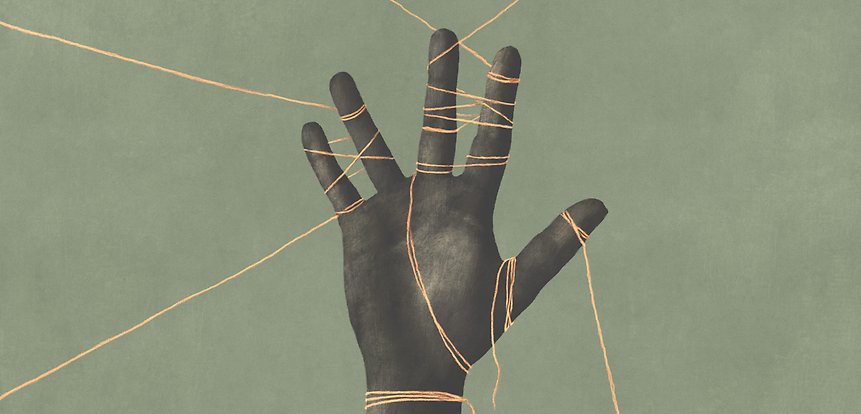
Francescoch, iStock Photos
Over the past decade, violence has been used for political purposes in established democracies across the world, and the consequences for marginalized groups such as women and ethnic minorities are particularly severe. The research project PV-DEM investigates how the use of violence in politics comes to be accepted in democratic societies, and how political violence affects inequality in political participation.
Details
- Period: 2026-07-01 – 2031-06-30
- Funder: Riksbankens jubileumsfond
Description
Political violence has often been studied in autocracies or post-conflict, young democracies. But the last decade has seen several attacks, including assassinations, against political leaders in, for example, the UK, the US, Japan, and Denmark.
This makes it important to understand how the use of violence in politics comes to be accepted in democratic contexts, says project leader Sandra Håkansson. Previous research also shows that political violence is particularly harmful for the political participation of already marginalized groups such as women and ethnic minorities. We need to understand why this is the case.
PV-DEM has two parts. First, the project studies how violence comes to be normalized in democratic political contexts: who accepts the use of violence in politics, and when and for what purposes? Secondly, the project investigates how violence harms political equality: why does political violence make women and ethnic minorities more likely than their counterparts to decrease their political participation?
The project encompasses several democracies with different histories of political violence, such as Colombia, The United States, and Sweden. Survey experiments and interviews with both political elites and citizens will be used to understand what tips the balance towards tolerating or rejecting the use of violence as a tool in politics. Interviews, surveys, and registry data will be used to analyze how violence affects the political participation of different social groups, and the mechanisms that shield some groups from the harms of violence.
Ultimately, the goal of the project is to better understand how political violence comes to set the boundaries of political action, and how we can safeguard democracy and democratic equality from the influence of violence.