
What makes democracies grow, keep on going, or weaken?
Free and fair elections are a cornerstone of democracy – but what is required for democracy to function and endure over time? At Uppsala University, researchers study everything from voter behaviour, voter participation and political representation to democratisation, human rights and political violence.
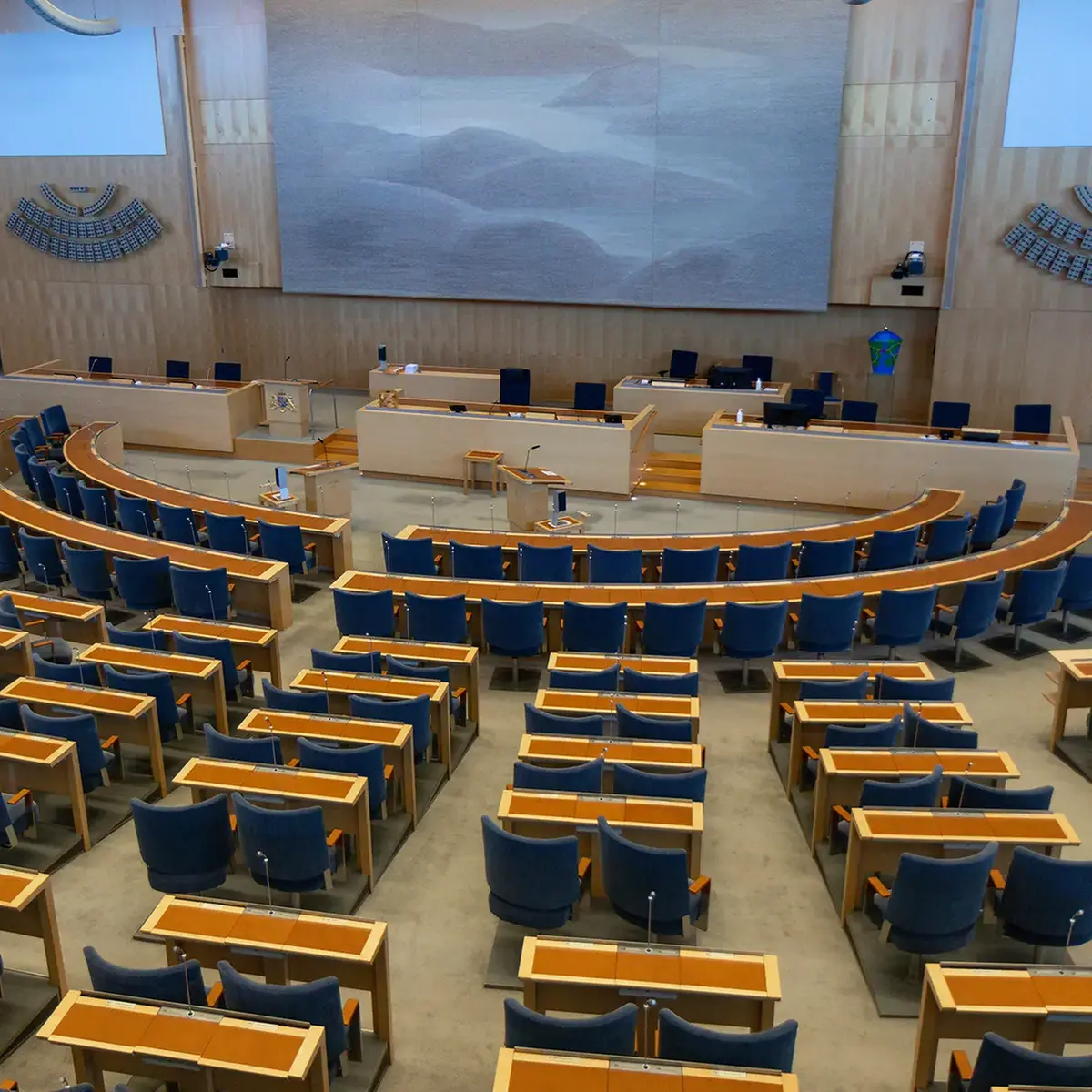
The research contributes historical and global perspectives
Comparing countries and looking back in time enables us to understand why democracy develops differently, how it can be weakened and what role knowledge, and independent universities play in an open society. The research covers multiple subject areas and contributes perspectives on the emergence of democracy, today’s challenges and future…
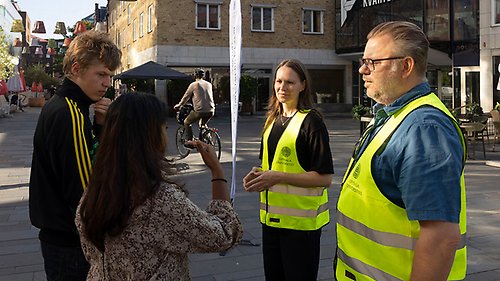
The research challenge of democracyLeading up to the elections: Political scientists out and about
The event takes place from 7 September to 11 SeptemberAsk us about power, politics and democracy! Between 7 and 11 September, political scientists from Uppsala University will be out and about in a city square, available to answer questions and discuss the elections, what actually happens in the Riksdag and the government, and how Swedish democracy works.
Departments that conduct research in politics and democracy
Research environments, projects and programmes that conduct research about elections
Should I stay or should I go? Polling station lines, voter turnout, and democratic equality
That all voters have fair and equal opportunities to cast their votes is a cornerstone of democracy. This project aims to investigate how polling station lines and other factors related to election administration impact voter turnout. Of particular importance is examining whether these factors disproportionately affect the participation of certain groups of voters, which potentially could jeopardise democratic equality.

Inequality of political opportunity: Measures and Explanations
The idea that all citizens should have the same opportunities to influence political decisions forms a cornerstone of liberal democratic thinking. The purpose of the present project is therefore to study the distribution of political participation in advanced democracies in general – and in Sweden in particular – from the standpoint of equality of opportunity.

Democratic Resilience in an Age of Information Warfare
Democracy not only requires political rights and institutions such as free, general, and regular elections. It also requires a public conversation that enables citizens to form their own opinions. Building societal resilience against manipulation is therefore an urgent task for protecting democracy in an age of information warfare. This project critically examines prevalent assumptions about the meaning of democratic resilience and develops a new interpretation of the concept.

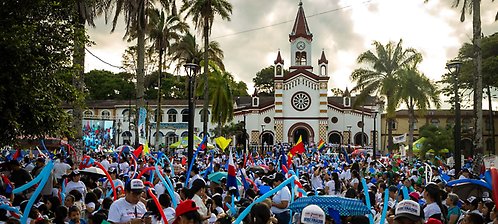
How Violent Actors Distort the Path to Political Power: Evidence from Colombia
In many countries, violent groups interfere in politics and deform democratic decision-making. This jeopardizes democratic ideals about equality in political participation and democratic representation. At the same time, many politicians with known ties to violent groups are successful in democratic elections. This project seeks to shed light on this paradox.
Democracy and Higher Education
Research programme that will help create the conditions for a democratic and robust society and strengthen academic freedom.

Gender and Politics - UPPGAP
Research group exploring how gender influences political representation, the functioning of political parties, discourses of colonialism, parliamentary dynamics, and issues like violence and corruption in political contexts.
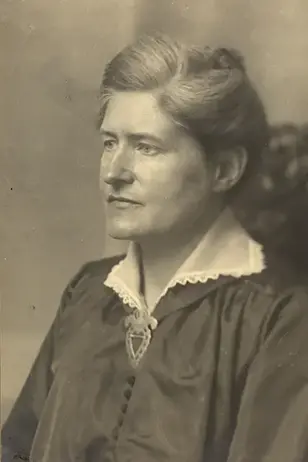
Lydia Wahlström – historian, Swedish suffragette and gender equality advocate
Lydia Wahlström (1869–1954) was a historian, writer and a pioneer in the Swedish women’s movement. As a student in Uppsala, she founded Upsala Kvinliga Studäntförening (an association for women students) in 1892. Its members challenged the norms of the time by being the first female students to wear a student cap in public. In 1898, Wahlström defended her doctoral thesis in history, as only the second Swedish woman to do so.
Lydia Wahlström was a leading force in the suffrage movement in Sweden and chair of the National Association for Women's Suffrage (Sweden). She also campaigned for equal pay, women’s rights to central government services and for women to become priests. She later became very involved with the fight against Nazism.
News and video about elections, voter participation and disinformation
Fear silences women politicians in public debate
Women politicians are significantly more likely than their male colleagues to refrain from speaking out in public for fear of threats or har...

Roleplaying games can resolve conflicts and strengthen democracy
VIDEO. At a first glance, roleplaying might look like fantasy and fiction, but new research suggests it can be a powerful tool for handling ...
Generative AI in the fight against disinformation
Generative AI can be used to combat misinformation. However, it can also exacerbate the problem by producing convincing manipulations that a...

Age at immigration affects future voter turnout
Is one's future voter turnout affected by the age at which one immigrated to Sweden? The question is examined in a study by Henrik Andersson, a UIL researcher. By comparing siblings in the same family who were of different ages when arriving in Sweden it was observed that there is a 5 to 10 percentage point greater probability of participating in national elections if one arrives at the age of 0-5 compared to 12-17.

The Swedish flag – a force for unity
Seeing a Swedish flag, even if it is only shown subtly, can cause people to feel less dislike for their political adversaries. This is shown...

Objects from Uppsala University’s collections
Rösträttsspelet – the voting rights game
The voting rights game was printed on a postcard depicting a board game. In its packaging there were additional postcards promoting women’s suffrage. The postcards had different motifs, and included places where the issue of women’s right to vote was being hotly debated. The postcards were published in the 1910s by the National Association for Women’s Suffrage (Sweden).
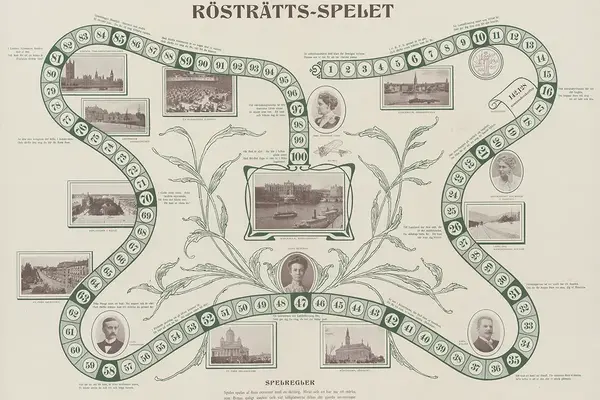
The voting rights game which is held in the collections of the university library.
1622
The Johan Skytte Professorship of Eloquence and Government is established.
1759
Peter Forsskål attempts to present his political pamphlet on civil liberty, but it is suppressed.
2007
Li Bennich-Björkman becomes the first woman to hold the Johan Skytte professorship in political science.
The Johan Skytte Prize
The Johan Skytte Prize was established by the Skytte Foundation in 1994 to be awarded annually to a scholar who, in the view of the Foundation, had made the most valuable contribution to the discipline of political science. After international nominations each year the candidates are evaluated by a Prize Committee, presided over by the holder of the Skytte Chair.
The Prize is awarded at a solemn ceremony in Uppsala on the Saturday closest to October 1 (the day of the donation), often in the presence of the Minister of Education, the Governor, the Archbishop, Rector Magnificus and most of the professors of political science in the country. The Prize Committee has the ambition of considering all areas of the discipline. A look at the work of the awarded laureates indicates, however, that democracy – in theory as well as in practice – is a dominant theme in modern political science.

Courses and programmes for those who want to learn more about democracy and politics
Political Science
In political science every aspect of political life is studied – from the ideas of ancient thinkers to the decision-making of today. The problems of democracy are dealt with from the point of view of classical theory and contemporary debate.

Master’s Programme in Political Science
The Master’s programme in Politics prepares you for a career as a researcher and analyst in both the private and public sectors, at national and international levels. The aim is to provide you with a systematic understanding of the fundamental issues in political science, enabling you to critically examine, assess and analyse politics and international relations on an academic basis.
