
Young people’s health in focus at well-attended Olof Rudbeck Day

The Olof Rudbeck Day 2026 was well-attended and focused on young people's health and the challenges they face today. Photo: Robin Widing
From gaming and screen addiction to nicotine pouches and mental health. This year’s Olof Rudbeck Day highlighted some of the issues affecting young people today. A well-attended programme featuring researchers from several universities offered fresh perspectives and lively discussions.

Professor Dan Andersson was awarded the Olof Rudbeck Prize by Upsala Läkareförening's Eva Johansson. Photo: Robin Widing
On the Olof Rudbeck Day, researchers, healthcare professionals and other interested participants gathered in the Grönwall Hall at Uppsala University Hospital. The theme was Gaming, TikTok and white snus – how are young people today? with a particular focus on addiction, risk-taking behaviour and young people’s health.
Mathias Hallberg, Professor at Uppsala University and Deputy Vice-Rector of the Disciplinary Domain of Medicine and Pharmacy, was one of the day’s speakers. He was also one of the programme organisers and was very pleased with both the programme and the turnout.
“The theme this year is highly interesting and current, appealing to both younger and older audiences, which was also reflected in the people attending,” he says.

Mathias Hallberg was one of the lecturers at the Olof Rudbeck Day, as well as programme director. Photo: Robin Widing
From screen use to gambling addiction
The day featured a series of lectures covering a wide range of topics. Anna Söderpalm Gordh from the University of Gothenburg explored screen addiction and healthy screen use, while Anders Håkansson from Lund University discussed the risks associated with gambling at an early age.
Age of first exposure was a recurring theme in relation to almost all forms of risk-taking behaviour and addiction. The longer young people can delay their first experiences of gambling, nicotine, alcohol and other potentially addictive substances or activities, the lower their risk of developing an addiction later in life.

Pernilla Åsenlöf, Dean at the Faculty of Medicine, was the moderator. Photo: Robin Widing
The programme also included lectures on white snus, caffeine and how genetic sensitivity can affect young people. Lotta Borg Skoglund, Senior Consultant and docent at Uppsala university, highlighted the link between neurodevelopmental conditions and an increased risk of addiction.
“I thought there was an excellent mix of speakers from within and outside the University. Our own expertise here at Uppsala University was complemented by world-class research from, for example, the universities of Gothenburg and Lund.”
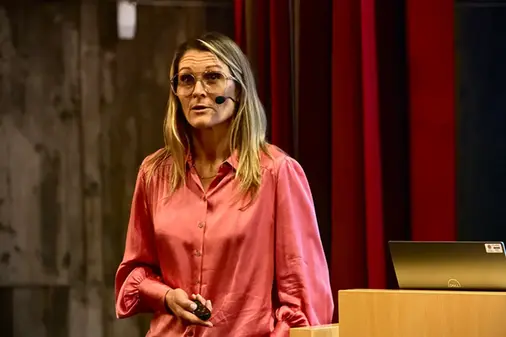
Lotta Borg Skoglund held a lecture on neurodevelopmental conditions and an increased risk of addiction. Photo: Robin Widing
Young people shared their own perspectives
However, the day was not solely about risks, ill health and addiction. During the afternoon, Veronica Hermann, a researcher at the Department of Public Health and Caring Sciences and the CHAP research group, joined six young people to present a project exploring what affects young people’s health. This provided an opportunity to contribute their perspectives on issues that directly affect them.

Six young people gave their perspective on what actions and interventions benefit young people's health. Photo: Robin Widing
“The quality of the speakers really stood out, and overall, there was an excellent balance between academic research and accessible science communication. It was also enjoyable and interesting to hear the young people’s perspectives and learn what their own research within the project had revealed,” says Mathias Hallberg.
The day also concluded with the traditional presentation of the Upsala Läkareförening Olof Rudbeck Prize, which this year was awarded to Dan I. Andersson, Professor of Medical Bacteriology at Uppsala University.
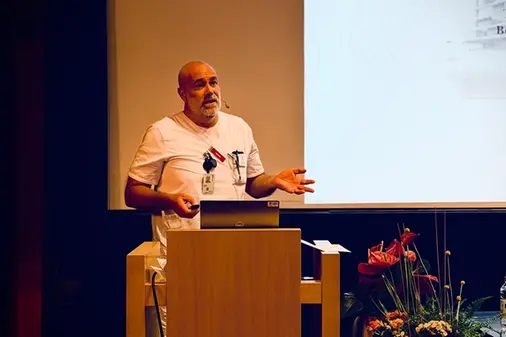
Tobias Eriksson, Chief Medical Officer at the The Outpatient Clinic for Addiction Medicine, Uppsala University Hospital, gave a brief glimpse into the trends in addiction care. Photo: Robin Widing
Conversations continued beyond the lecture hall
In addition to the lectures, Mathias Hallberg highlights the opportunities for participants to meet and exchange ideas as one of the day’s greatest strengths.
“The interactions and discussions did not stop in the lecture hall but continued during the breaks and after the programme had ended. It was wonderful to see, and I think it is a good indication of how successful the day was,” concludes Mathias Hallberg.
Robin Widing