
Prof. Heiner Linke
A microfluidically controlled, artificial protein motor
The molecular motors and machines found in biology are the big inspiration for the field of artificial molecular motors. However, while Nature primarily uses proteins for such tasks, building artificial motor proteins remains a major challenge. To tackle this, we used a modular design strategy, assembling components from natural non-motor proteins to create Tumbleweed (TW)—an artificial protein-based walker that moves directionally along a DNA track in response to chemical stimuli delivered via microfluidics.
TW comprises three coiled-coil legs joined by a central SpyTag/SpyCatcher hub, each ending in a ligand-gated DNA-binding “foot.” These feet bind specific sites on a DNA track, and their activity is regulated by changing ligand concentrations using a custom microfluidic device. TW operates through a Brownian ratchet mechanism, rectifying diffusion-driven movement via sequential ligand delivery. Single-molecule fluorescence experiments confirm that TW steps 17 nm every 7 seconds and can take up to 11 steps before detaching or photobleaching. Ongoing work focuses on improving speed and run length, which alos requires us to push boundaries in microfluidic control.
Preprint here
Prof. Heiner Linke
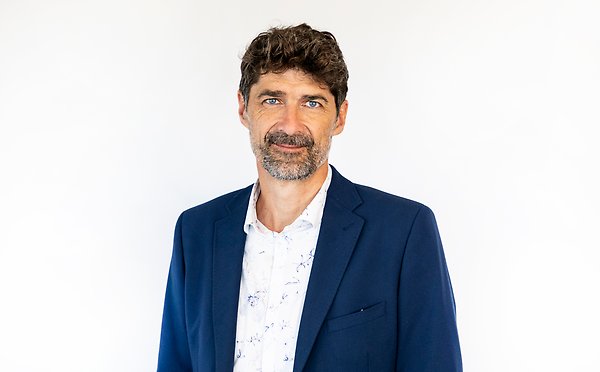
Heiner Linke is a Professor of Nanophysics at Lund University in Sweden. Prior to this, he was a research fellow in Sydney/Australia (1998 – 2001) and a faculty member of the physics department at the University of Oregon (2001 – 2009). He has served as the Director of the Center for Nanoscience at Lund University (NanoLund, 2013-2020) and as the Deputy Dean (Research) at the Faculty of Engineering LTH. He currently coordinates an ERC Synergy project on artificial molecular motors.
Prof. Heiner Linke
Contact
- The Local Organizing Committee
- Contact the Local Organizing Committee
- Iro Beligianni
- Neeraj Katiyar
- Karin Magnusson
- Dimitra Valadorou
- Samuel Wulfert
- Xinyang Dai
- Sara Ferreira Cardoso
- Florence Maryanna Olan Agcaoili
- Tatiana Turcitu