
Biomedical Engineering

The Division of Biomedical Engineering is part of the Department of Materials Science and Engineering with research focused on understanding interactions between materials and biological systems.
Welcome to the Division of Biomedical Engineering
The Division of Biomedical Engineering is part of the Department of Materials Science and Technology at the Ångström Laboratory. Our ambition is to foster a dynamic teaching and research environment that is internationally recognized for its excellence in connecting basic research with clinical applications. We conduct research in the development and evaluation of new materials in interaction with biological systems to understand the underlying principles. For us, it is equally important to study the impact of materials on biological processes as well as the impact of biological processes on materials.
Don't hesitate to get in touch!
You are welcome to visit us at the Ångström Laboratory Regementsvägen 10, Uppsala.
Head of Division: Professor Maria Tenje
Professor responsible for the research programme: Professor Cecilia Persson
Professor responsible for doctoral studies: Professor Maria Tenje; Assistant professor responsible for doctoral studies: Professor Cecilia Persson
Contact information to our division members
Information about MSc projects offered at our division

Research Themes
Precision Health
We realize patient-specific implants through additive manufacturing and research organ-on-chip devices for personalized medicine.

Antimicrobial resistance
We develop methods for rapid diagnostics of antibiotic sensitivity, biomaterials with antibacterial properties and tools to decipher the underlying biological processes for the development of antimicrobial resistance.

Sustainability
We develop resource-efficient manufacturing methods and new advanced analysis tools with a reduced environmental footprint.

AI for life science
We are developing high-throughput microfluidic systems capable of generating large data sets from single-cell assays and using other large data sets obtained from multimodal monitoring of the parameter space to optimize material fabrication processes and component design.

Research Groups


Seminar and conferences
MTSI Seminar Series
This seminar series aim to bring together people at UU and beyond with an interest in biomedical engineering.

Additive Manufacturing @ Uppsala University
The series of open seminars aim to broaden knowledge of Additive Manufacturing (AM).

ESB 2027
We hereby invite you to join the 36th Annual Conference of the European Society for Biomaterials 2027, taking place in Uppsala, Sweden!

Research Projects

CNSx3
SSF financed Center for Person-Centered Brain Models and Therapies

Wallenberg Foundation "FATE"
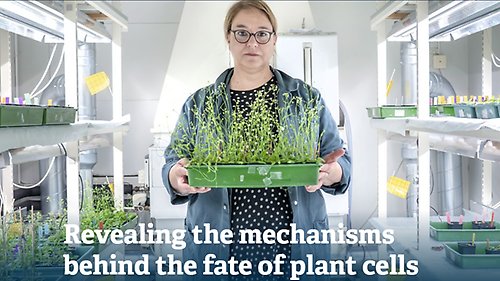
Revealing the mechanisms behind the fate of plant cells
FORMAS
On-site diagnostic tools to determine antibiotic susceptibility


Nordic Research Network on Vascularized 3D Organ-on-Chip Systems (NORDVASC3D)
Network to advance functional vascularized 3D organ-on-chip systems.

ERC Consolidator Grant PHOENIX
Novel microfluidic tools for high-throughput and fully controlled organoid generation

Print4Life
Advanced Research Training for Additive Manufacturing of the Biomaterials and Tissues of the Future

Vinnova - Emerging technology solutions in synthetic biology
Droplet microfluidics toolbox for resistance development in bacteria

Wallenberg Academy Fellowship
Building a platform to grow “minibrains” in the lab
Wallenberg Initiative Materials Science for Sustainability (WISE)
WISE is aimed at enabling sustainable development through cutting-edge basic and demand-driven materials science on an international level.

Research Infrastructure

Completed major research collaborations


ERC Starting Grant SONGBIRD
SOphisticated 3D cell culture scaffolds for Next Generation Barrier-on-chip In vitro moDels

Education in Biomedical Engineering
Biomedical Engineering is a rapidly evolving, interdisciplinary field of research. At the Division, we offer a comprehensive scientific education, with courses at the bachelor’s, master’s and doctoral level.
Information about courses in the department can be found in the student entrance
Programs
Undergraduate Courses
Kurskod | Benämning | Hp |
|---|---|---|
1TE758 | 5 | |
1TM009/ 1TM120 | Additive manufacturing | 5 |
1TM011 | Specialised Course on Topics in Additive Manufacturing | 5 |
1TM034 | 5 | |
1TM102 | Introduction to Additive Manufacturing | 5 |
1TM104 | Manufacturing of Metal Powders | 5 |
1TM105 | Additive Manufacturing in Polymeric Materials | 5 |
1TM107 | Process Simulation and Quality Control | 5 |
1TM124 | Additive Manufacturing in Industry - Project Course | 5 |
1TM128 | 5 |
PhD Courses
Course code | Course name | Credits |
|---|---|---|
FTN0027 | Introduction to BioMEMS | 5 |
FTN0189 | Acoustofluidics | 3.5 |
FTN0622 | Seminar series on academic, industrial and social perspectives in additive manufacturing | |
FTN0190 | Writing and Reviewing in Biomedical Engineering | 1.5 |
Master's Projects
Master’s Thesis Opportunities – Explore current projects and register your interest. See Available Projects
Publications
-
3D-printed microneedle acoustofluidic mixer for rapid on-chip biochemical assays
Part of Ultrasonics, 2026
- DOI for 3D-printed microneedle acoustofluidic mixer for rapid on-chip biochemical assays
- Download full text (pdf) of 3D-printed microneedle acoustofluidic mixer for rapid on-chip biochemical assays

-
Part of Applied Materials Today, 2026
- DOI for A Topology Optimized Spinal Fusion Cage for the Use of Weak but Osteoinductive Bioceramics as Synthetic Bone Grafts
- Download full text (pdf) of A Topology Optimized Spinal Fusion Cage for the Use of Weak but Osteoinductive Bioceramics as Synthetic Bone Grafts
-
Acoustic streaming and shape evolution of viscous droplets in ultrasonic fields
Part of Journal of Fluid Mechanics, 2026
- DOI for Acoustic streaming and shape evolution of viscous droplets in ultrasonic fields
- Download full text (pdf) of Acoustic streaming and shape evolution of viscous droplets in ultrasonic fields
-
Part of Applied Surface Science Advances, 2026
- DOI for Calcium phosphate-phosphoserine composite coatings enhance corrosion resistance and cytocompatibility of 3D-printed WE43 magnesium alloy for orthopaedic applications
- Download full text (pdf) of Calcium phosphate-phosphoserine composite coatings enhance corrosion resistance and cytocompatibility of 3D-printed WE43 magnesium alloy for orthopaedic applications
-
Part of npj Digital Medicine, 2026
- DOI for Droplet microfluidics with image texture quantification for detection of rare antibiotic-resistant subpopulations from bloodstream infections
- Download full text (pdf) of Droplet microfluidics with image texture quantification for detection of rare antibiotic-resistant subpopulations from bloodstream infections
-
Glial cell responses to particles derived from spinal implant materials
Part of Materials Today Advances, 2026
- DOI for Glial cell responses to particles derived from spinal implant materials
- Download full text (pdf) of Glial cell responses to particles derived from spinal implant materials
-
Part of ACS Applied Bio Materials, p. 4410-4421, 2026
- DOI for Laser Hatch Distance Can Tune Corrosion Behavior and Mechanical Properties While Maintaining the In Vitro Biocompatibility of Additively Manufactured Mg Alloy WE43
- Download full text (pdf) of Laser Hatch Distance Can Tune Corrosion Behavior and Mechanical Properties While Maintaining the In Vitro Biocompatibility of Additively Manufactured Mg Alloy WE43
-
Part of JCI Insight, 2026
- DOI for NIA cell cytotoxicity is transiently enhanced during acute malaria and modulated by the host microenvironment
- Download full text (pdf) of NIA cell cytotoxicity is transiently enhanced during acute malaria and modulated by the host microenvironment
-
Part of Materials & design, 2026
- DOI for Poly(L-lactic acid) and calcium phosphate composite structures: Towards fully resorbable, patient-specific cranial implants
- Download full text (pdf) of Poly(L-lactic acid) and calcium phosphate composite structures: Towards fully resorbable, patient-specific cranial implants
-
Quantitative Assessment of Chemical Modifications of Macromolecules through Counterion Measurement
Part of Chemistry of Materials, p. 442-453, 2026
- DOI for Quantitative Assessment of Chemical Modifications of Macromolecules through Counterion Measurement
- Download full text (pdf) of Quantitative Assessment of Chemical Modifications of Macromolecules through Counterion Measurement
Theses
- Gabriel Werr, PhD thesis 2024 "On-chip sensing"
- Estefanía Echeverri Correa, PhD thesis 2024 "Biological response to spinal implant degradation products"
- Salim Ghandour, PhD thesis 2023 "Novel materials and implant designs for the treatment of degenerative disc disease"
- Yijun Zhou, PhD thesis 2023 "Mechanical optimisation of orthopaedic bone screw constructs"
- Ioanni Katsaros, PhD thesis 2023 "Silicon nitride-based materials for spinal and antipathogenic applications"
- Hanna Nilsson Åhman, PhD thesis 2023 "Powder Bed Fusion – Laser Beam of Mg alloy WE43: Establishing the process - structure - properties relationship"
- Federico Cantoni, PhD, 2023, "Fabrication advances of microvasculature models on-chip"
- Lulu Wu, PhD, 2023, "Development of Nanocellulose Materials for Nano-filtration and Microfluidic Cell Culture"
- Abdul Raouf Atif, PhD, 2023, "Evaluation of Biological Biomaterial Properties using Microfluidic Systems"
- Sarah-Sophia Carter, PhD, 2022 "Exploring microfluidics as a tool to study cell-biomaterial interactions"
- Ana María Porras Hernández, PhD, 2022 "Micropatterning of hyaluronic acid hydrogels for in vitro models"
- Zhenhua Liu, PhD, 2022, "Droplet acoustofluidics for biochemical applications"
- Charlotte Skjöldebrand, PhD, 2022 "Silicon nitride based coatings for biomedical implants"
- Ana María Porras Hernández, Licentiate, 2022 "Chemical micropatterning of hyaluronic acid hydrogels for brain endothelial in vitro cell studies"