
Why is it dark at night? Which were the first instruments used to study the stars, and what do we use today? Why did universities find it so hard to accept that the Earth revolves around the Sun? In what way was Anders Celsius’s father a forerunner of empiricism, and why was his thesis banned?

Vice-Chancellor Anders Hagfeldt and presenter Johannes Borgegård sit down with astronomer Eric Stempels for a discussion on the history of astronomy and future research.
A summary of the Vice-Chancellor's podcast
Astronomy and space physics
Astronomers and space physicists at Uppsala University are exploring the Universe at all scales – from the Earth’s atmosphere and our own solar system to comets, asteroids, exoplanets and the large-scale structure of galaxies.
The research ranges from the properties of planets and the evolution of stars to how plasma and magnetic fields in space shape both the solar system and interstellar space. The researchers combine observations from telescopes and spacecraft with advanced computer models, and develop instruments and technology to measure and analyse space environments.
The findings provide new insights into both the cosmos and Earth – into climate processes, natural resources, space weather and technological solutions – and help address key societal challenges while advancing research into the origin and evolution of the Universe.
Department of Physics and Astronomy
The research and education in physics and astronomy at Uppsala University extends from the innermost building blocks of matter through consideration of molecules and materials to the structure and development of stars and the universe.
Jobs and vacancies
PhD student in stellar/galactic astrophysics? Observe stars with the James Webb Telescope? See all vacancies at the Department of Physics and Astronomy.
Research environments and research infrastructures
Ångström Space Technology Center (ÅSTC)
Strange as it may seem, microtechnology plays a role of increasing importance in the exploration and exploitation of the largest we know: our planet, including its deep seas and what’s far beneath its crust, but also space. The reasons differ widely. Very often instruments of outstanding precision are needed, sometimes it is a matter of probing environments accessible only through very narrow bore holes, and occasionally it is a cost issue, especially when hardware shall be put in orbit or travel farther.

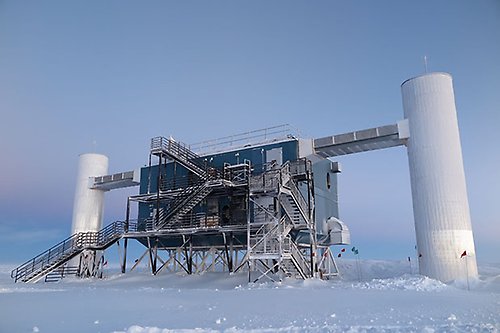
IceCube Neutrino Observatory
The IceCube Neutrino Observatory is the world’s leading neutrino telescope and consists of light-sensitive detectors located inside an area a cubic kilometre in size deep beneath the South Pole ice cap.
The Swedish Institute of Space Physics
Basic research and och PhD studies in space physics, space technology and atmospheric physics. (Page in Swedish)

Centre for Chemical Mechanisms of Life
Multi-disciplinary centre of excellence with the goal of fostering collaboration, facilitating interdisciplinary research and introducing interdisciplinary chemistry education on all levels.

Direct imaging of extrasolar planets
Projects in which researchers are attempting to find planets in other solar systems through direct detection

String Theory and The Dark Sector
The event takes place on 20 MayOne of the world’s leading researchers in string theory, Cumrun Vafa, visits Uppsala for a popular science lecture on the universe’s dark sector. With his engaging and accessible style, he makes advanced physics understandable to anyone interested in science—no prior knowledge required. Welcome to join us for a lecture to be remembered!


The Anders Celsius Observatory as it looked when it was completed in 1741.
Observatories
Anders Celsius argued that an observatory should be built in Uppsala. In 1741, it was completed on the roof of the building now known as Celsiushuset (the Celsius House). The observatory itself no longer exists.
In 1853, the Celsius Observatory was replaced by what is now known as the Old Observatory in Observatory Park. It is still used by amateur astronomers and is open to the public.
In 2003, a new telescope was taken into use at the Ångström Laboratory.

Nils Dunér corrects the hour angle in the 1890s.
Determining Uppsala time
One of the uses of the observatory was to conduct meridian observations to determine local time, a practice that was essential before radio signals took over the task of time synchronisation in the 20th century. During the 19th century, the observatory was responsible for the city’s official time. Incorrect observations meant that the time sometimes had to be corrected, affecting railway services and other activities.
The last professional stellar observation for time measurement before radio signals took over was carried out in the 1920s.
News and podcasts on astronomy and space physics
Asteroid named after Uppsala physicist
Ulf Danielsson, Professor of Theoretical Physics, has recently had an asteroid named after him. The celestial body has been designated 15308...

IceCube upgraded with Swedish technology
Deep in the glacier ice at the South Pole lies IceCube, one of the world's most advanced observatories for studying neutrinos that reach...

Instrument will survey 20 million stars and galaxies
The instrument 4MOST on ESO's VISTA telescope has received first light. Over the next five years, researchers from Uppsala University, t...

Objects from Uppsala University’s collections
Celsius temperature scale and thermometer
In 1722, Anders Celsius began taking daily temperature readings. He compared various thermometers and temperature scales but found none of them sufficiently reliable. Consequently, in 1742, he devised his own temperature scale, which he had arrived at through numerous experiments. The scale was defined by the freezing and boiling points of water. Celsius divided the difference between them into 100 degrees.
Celsius used the temperature scale in the weather journal he began keeping and which is still kept today. The series is now one of the longest in the world.

Anders Celsius’ thermometer at the Gustavianum,

The telescope in the exhibition hall at the Gustavianum.
The Klingenstierna achromatic refractor
One of the many fascinating items in the University’s collections is Samuel Klingenstierna’s refracting telescope with an achromatic lens. The telescope was made by Peter Dollond in London in the 1770s.
Klingenstierna worked out how the telescope’s double lenses should be ground so that the light would be refracted and converge at a single point, producing a sharp image. It was a feat that Isaac Newton himself had attempted but failed to achieve.
Klingenstierna was among the first to secure funding to purchase instruments for the University. Previously, they were paid for and owned by the respective professors.
Samuel Klingenstierna was originally a mathematician and, in 1728, became Sweden’s first professor of physics – or, as it was known at the time, experimental physics. Klingenstierna was also a tutor to Crown Prince Gustav (later Gustav III).
1593
Laurentius Paulinus Gothus appointed Professor of Astronomy
1741
The observatory at the Celsius House is completed
1997
Ångström Laboratory opens

Olaus Johannis Gutho, Sweden’s first known student, studied astronomy
The first Swedish student whose name we know was called Olaus Johannis Gutho. He was from Gotland and studied at Uppsala University. He enrolled at the University in 1477 and studied subjects including theology, general philosophy and astronomy. His notes are preserved in the University Library and show that the teaching of astronomy was based on the book Libellus de sphaera (Treatise on the Sphere) by Johannes de Sacrobosco.
Read more about Olaus Johannis Gutho
The first known professor of astronomy at Uppsala University was Laurentius Paulinus Gothus, who was appointed in 1593.
Courses and programmes for those who want to learn more about space
Physics
Physics is about questions such as the future supply of energy, the earth's climate, new materials and the origin of the universe. Studies in physics provide fundamental tools to understand the universe, from the incredibly large to the unimaginably small – from solar systems and galaxies via the earth and its climate to atoms and elementary particles. Physics is also needed to understand phenomena in for example chemistry, biology and geoscience.

Master's Programme in Physics – Astronomy and Space Physics
How does the Earth's magnetic field work? What do we know about other planets and exoplanets? How do stars evolve, how do their lives end? How was the Milky Way formed? What controls the evolution of the universe? The specialisation in Astronomy and Space Physics in the Master’s programme in Physics addresses these questions. You will gain a deep understanding of various physical phenomena ranging from space beyond the Earth's atmosphere to the limits of the observable universe.

Master's Programme in Physics – Theoretical Physics: Quantum Fields and Strings
Study the fundamental laws of the Universe with our Master's specialisation in Theoretical Physics: Quantum Fields and Strings. You will receive the comprehensive training expected of a theoretical physicist. You will acquire the necessary mathematical skills, and explore breakthroughs in gauge and conformal theory, string theory, holography, and more. Guided by eminent scientists, embark on a journey of discovery at the forefront of understanding Nature.
