
New research school in regulatory science aims to strengthen Swedish life science
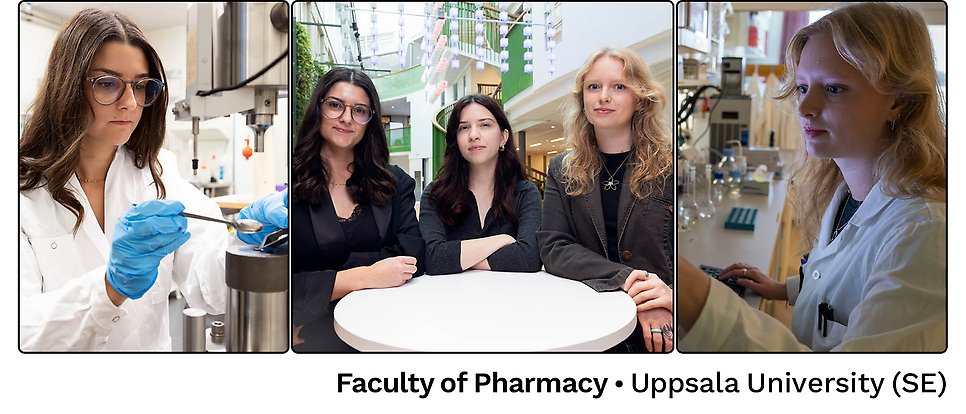
Through an interdisciplinary research school, Uppsala University and the Swedish Medical Products Agency aim to advance Sweden's expertise in regulatory science. “We hope our approach will also foster closer collaboration between academia, industry and regulatory authorities in this field,” says Julia Regnell, newly recruited PhD student at the Faculty of Pharmacy.
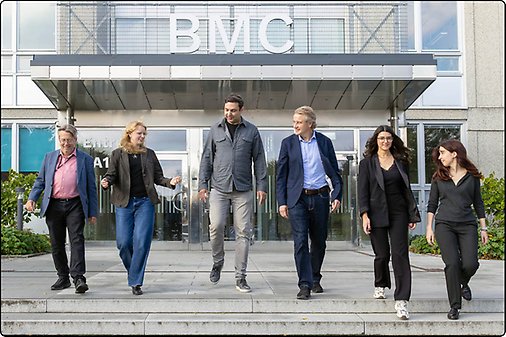
Uppsala University's initiative in regulatory science is on a roll. Through a new research school, the Faculty of Pharmacy aims to meet the life science sector's growing demand for regulatory expertise. The first PhD students joined the programme at the Biomedical Centre in September.
“Welcomed with great enthusiasm across the sector” • The work begins
“Through dialogue with regulatory authorities and industry, our faculty has identified knowledge and skills needs relating to the regulations governing drugs. Now, we are – in cooperation with several key partners – moving into research. It is inspiring that our group is involved from the outset, and we know the initiative is met with great enthusiasm across the pharmaceutical sector,” says Mikael Hedeland, Professor of Analytical Pharmaceutical Chemistry.
The PhD positions are distributed across the Faculty's three departments. Each project involves external co-supervisors with practical experience in regulatory work. One of the projects now underway is based in the Analytical Pharmaceutical Chemistry research environment, with a focus on new methods for the quality control of therapeutic oligonucleotides.
Aiming to contribute to more robust analytical strategies • Julia Regnell
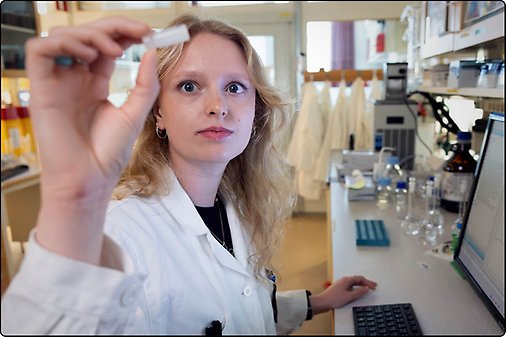
“When studying chemical engineering with a specialisation in pharmaceuticals, I did my degree project in the team where I am now a PhD student. This gave me insight into the importance of analytical methods for the development and quality assurance of drugs, as well as how many stakeholders face these challenges. I hope our interdisciplinary approach will contribute to more robust analytical strategies as well as closer collaboration between academia, industry and regulatory authorities in this field,” says Julia Regnell at the Department of Medicinal Chemistry.
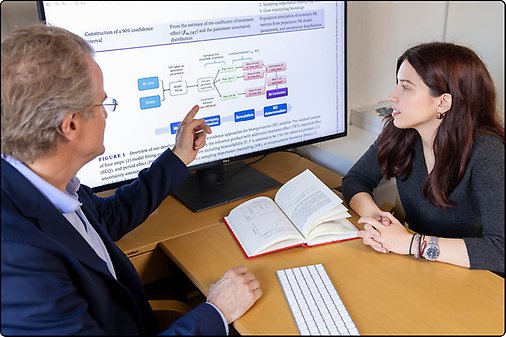
In the Pharmacometrics research group, PhD student Marina Dimitriou is investigating how statistical methods and pharmacometric tools can provide a stronger basis for regulatory decision-making. Her work relates to the International Council for Harmonisation's new guideline M15, which supports broader use of mathematical and computer-based models in regulatory decision-making.
“Our work directly addresses current needs” • Marina Dimitriou
“I applied for the position because it matches the challenges facing modern drug development, while also offering the opportunity to work in one of academia's leading pharmacometrics research environments. The involvement of the Swedish Medical Products Agency means that our work directly addresses current needs and will hopefully help make future clinical studies more efficient,” says Marina Dimitriou at the Department of Pharmacy.
The relevance of the project was recently underscored as Andrew Hooker, Professor of Pharmacometrics, received a grant worth approximately SEK 5 million from the U.S. Food and Drug Administration (FDA). The funding will support the development of pharmacometric modelling methods to accelerate assessments of whether generic medicines are as safe and effective as already approved products.
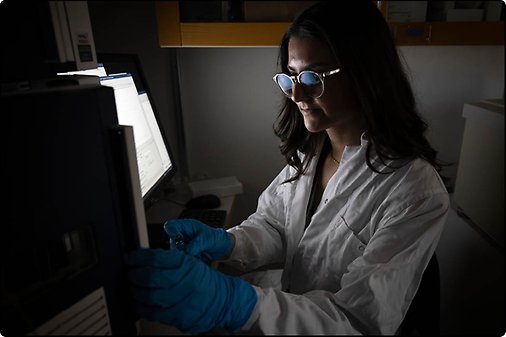
Aiming to contribute to effective and safe treatments • Sofia Hedberg
“Enormous resources are spent on drugs and treatments today. The sooner we can produce equivalent alternatives at lower prices, the less they will cost society and individuals. With the initiative we are now launching in Uppsala and the FDA funding, we have the opportunity to achieve results that can make a difference worldwide,” says Andrew Hooker.
In the research environment in Pharmaceutical Technology, Sofia Hedberg is studying the safety and risks associated with splitting tablets. Small changes in dosage can have significant effects, particularly when treating children and older patients. By analysing tablet design and how easily they can be split, the team aims to support safer dose adjustment for vulnerable patient groups.
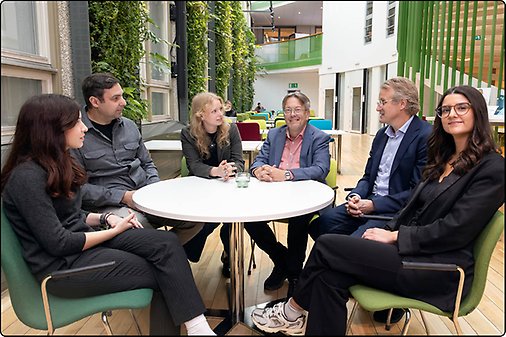
Welcome to the intersection of research and practical application
“During my studies, I immediately became interested in the requirements and regulations that drug developers must navigate. Along the way, I have gained professional experience at the Swedish Medical Products Agency and in industry. I now hope that my project – combining regulatory science, formulation and PBPK modelling — will contribute to safer and more effective drug treatments,” says Sofia Hedberg at the Department of Pharmaceutical Biosciences.
Bringing together the University's research environments and the Swedish Medical Products Agency's experience in regulatory work improves the opportunities for new knowledge to reach practice. The collaboration also strengthens the relevance of research and the quality of future regulatory decisions. As part of this initiative, Jessica Mwinyi, an investigator at the Swedish Medical Products Agency, was recently appointed Adjunct Professor of Clinical Pharmacology at Uppsala University.

Consolidating Sweden's position in life science • Albert Mihranyan
“The adjunct professorship gives me the opportunity to contribute the perspective of a regulatory authority to research, while also bringing new knowledge back to the Swedish Medical Products Agency. It is at this intersection of research and practical application that we can develop methods and decision-making tools that deliver real benefits. By focusing on person-centred drugs and pharmacogenomics, we can develop the regulatory frameworks needed to implement precision medicine in clinical practice,” says Jessica Mwinyi.
The initiative in regulatory science also matches Sweden's national life science strategy, which highlights regulatory research as vital for the development and introduction of new treatments and medical technologies.
“We have established a network that brings together leading expertise in healthcare, research and regulatory affairs. For me, this joint effort is central to our work to consolidate Sweden's position as a leading life science nation over the long term. All the partners are enthusiastic that we are now moving ahead,” says Albert Mihranyan, Professor of Pharmaceutical Technology.
Facts
- Regulatory science is defined here as the science of developing and applying new tools, standards and methods to assess the safety, efficacy, quality and performance of products that are regulated by national or international authorities.
- The field ranges from basic method development to application in regulatory decision-making processes and policy formulation.
- The research school is founded with financial support from the Pharmaceutical Committee and involves all three departments of the Faculty of Pharmacy.
Contact
Mikael Hedeland, Professor
Department of Medicinal Chemistry
Mikael.Hedeland@ilk.uu.se
Andrew Hooker, Professor
Department of Pharmacy
Andrew.Hooker@uu.se
Albert Mihranyan, Professor
Department of Pharmaceutical Biosciences
Albert.Mihranyan@uu.se
text: Magnus Alsne, photo: Mikael Wallerstedt