
Master's Programme in Biomedicine
120 credits
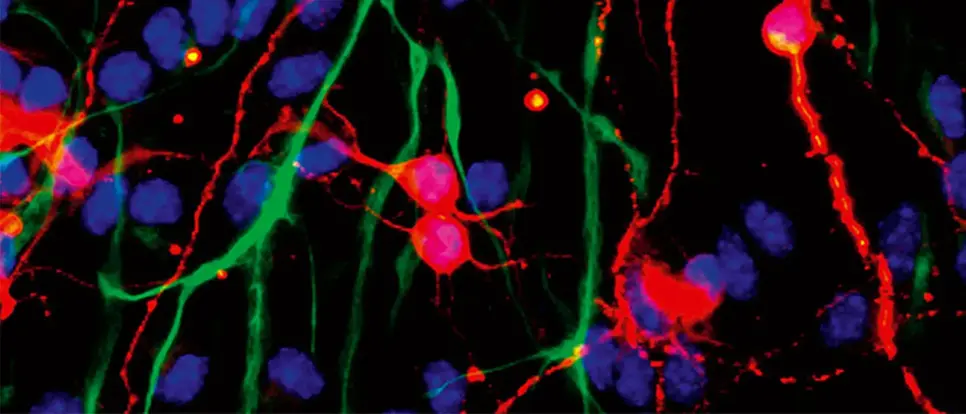
Are you interested in biomedical research? Do you want to use your knowledge in biomedicine to develop new medicines? As a student in the Master's Programme in Biomedicine, you will obtain in-depth knowledge about some of our major diseases and the brain, both healthy and diseased. You will follow the process of developing new drugs, from finding new targets to the final product. This will prepare you for a career in research, clinical trials and drug development, amongst other things.
Application and entry requirements
Expand the information below to show details on entry requirements, programme-specific documents, selection criteria and tuition fees.
Autumn 2026 Autumn 2026, Uppsala, 100%, On-campus, English
- Location
- Uppsala
- Pace of study
- 100%
- Teaching form
- On-campus
- Instructional time
- Daytime
- Study period
- 31 August 2026–4 June 2028
- Language of instruction
- English
- Entry requirements
-
Academic requirements
A Bachelor's degree, equivalent to a Swedish Kandidatexamen, from an internationally recognised university. The main field of study must be in biomedicine, medicine, pharmacy, biology, or a similar field of study that gives relevant knowledge in cell and molecular biology, chemistry and biochemistry, pharmacology, physiology and neurobiology.
Also required is knowledge and practical experience of laboratory experiments in life sciences.
Language requirements
Proficiency in English equivalent to the Swedish upper secondary course English 6. This requirement can be met either by achieving the required score on an internationally recognised test, or by previous upper secondary or university studies in some countries.
- Selection
-
Students with a Bachelor's degree or one-year Master's degree from a biomedicine programme have priority. Selection among other applicants is based on an overall appraisal of previous university studies and previous professional experiences.
Tuition fee-paying students and non-paying students are admitted on the same grounds but in different selection groups.
- Fees
- If you are not a citizen of a European Union (EU) or European Economic Area (EEA) country, or Switzerland, you are required to pay application and tuition fees.
- First tuition fee instalment: SEK 82,500
- Total tuition fee: SEK 330,000
- Application deadline
- 15 January 2026
- Application code
- UU-M3650
- Additional information
-
There are two admissions rounds for this Master's programme. We strongly encourage all international students to apply in the first admissions round. The second admissions round is primarily for Swedish students and citizens of an EU/EEA country or Switzerland. Key dates for application to the autumn semester.
- Supporting documents
-
In addition to the general supporting documents, you also need to submit the following programme-specific documents:
- an application summary sheet
- document(s) and/or letter(s) of recommendation certifying your previous experience (if applicable).
Check the application guide for information on how to apply and what other supporting documents you need to submit.
Autumn 2026 Autumn 2026, Uppsala, 100%, On-campus, English
- Location
- Uppsala
- Pace of study
- 100%
- Teaching form
- On-campus
- Instructional time
- Daytime
- Study period
- 31 August 2026–4 June 2028
- Language of instruction
- English
- Entry requirements
-
Academic requirements
A Bachelor's degree, equivalent to a Swedish Kandidatexamen, from an internationally recognised university. The main field of study must be in biomedicine, medicine, pharmacy, biology, or a similar field of study that gives relevant knowledge in cell and molecular biology, chemistry and biochemistry, pharmacology, physiology and neurobiology.
Also required is knowledge and practical experience of laboratory experiments in life sciences.
Language requirements
Proficiency in English equivalent to the Swedish upper secondary course English 6. This requirement can be met either by achieving the required score on an internationally recognised test, or by previous upper secondary or university studies in some countries.
- Selection
-
Students with a Bachelor's degree or one-year Master's degree from a biomedicine programme have priority. Selection among other applicants is based on an overall appraisal of previous university studies and previous professional experiences.
- Fees
- If you are not a citizen of a European Union (EU) or European Economic Area (EEA) country, or Switzerland, you are required to pay application and tuition fees.
- First tuition fee instalment: SEK 82,500
- Total tuition fee: SEK 330,000
- Application deadline
- 15 April 2026
- Application code
- UU-P3650
- Additional information
-
There are two admissions rounds for this Master's programme. We strongly encourage all international students to apply in the first admissions round. The second admissions round is primarily for Swedish students and citizens of an EU/EEA country or Switzerland. Key dates for application to the autumn semester.
- Supporting documents
-
In addition to the general supporting documents, you also need to submit the following programme-specific documents:
- an application summary sheet
- document(s) and/or letter(s) of recommendation certifying your previous experience (if applicable).
Check the application guide for information on how to apply and what other supporting documents you need to submit.
Expand the information below to show details on entry requirements, programme-specific documents, selection criteria and tuition fees.
Autumn 2027 Autumn 2027, Uppsala, 100%, On-campus, English
- Location
- Uppsala
- Pace of study
- 100%
- Teaching form
- On-campus
- Instructional time
- Daytime
- Study period
- 30 August 2027–3 June 2029
- Language of instruction
- English
- Entry requirements
-
Academic requirements
A Bachelor's degree, equivalent to a Swedish Kandidatexamen, from an internationally recognised university. The main field of study must be in biomedicine, medicine, pharmacy, biology, or a similar field of study that gives relevant knowledge in cell and molecular biology, chemistry and biochemistry, pharmacology, physiology and neurobiology.
Also required is knowledge and practical experience of laboratory experiments in life sciences.
Language requirements
Proficiency in English equivalent to the Swedish upper secondary course English 6. This requirement can be met either by achieving the required score on an internationally recognised test, or by previous upper secondary or university studies in some countries.
- Selection
-
Students with a Bachelor's degree or one-year Master's degree from a biomedicine programme have priority. Selection among other applicants is based on an overall appraisal of previous university studies and previous professional experiences.
Tuition fee-paying students and non-paying students are admitted on the same grounds but in different selection groups.
- Fees
- If you are not a citizen of a European Union (EU) or European Economic Area (EEA) country, or Switzerland, you are required to pay application and tuition fees.
- First tuition fee instalment: SEK 82,500
- Total tuition fee: SEK 330,000
- Application deadline
- 15 January 2027
- Application code
- UU-M3650
- Additional information
-
There are two admissions rounds for this Master's programme. We strongly encourage all international students to apply in the first admissions round. The second admissions round is primarily for Swedish students and citizens of an EU/EEA country or Switzerland. Key dates for application to the autumn semester.
- Supporting documents
-
In addition to the general supporting documents, you also need to submit the following programme-specific documents:
- an application summary sheet
- document(s) and/or letter(s) of recommendation certifying your previous experience (if applicable).
Check the application guide for information on how to apply and what other supporting documents you need to submit.
About the programme
The theme of the programme is: "From the ailing body and the ailing brain to the discovery and development of new drugs". The focus is on research-oriented questions for application in academic research and the pharmaceutical or life science industry.
With a focus on the link between pathophysiology and drug development, and by offering flexible opportunities for specialisation and advancement in your field of interest, the programme provides an excellent base for future work in science, both academically and within the life science industry. Practical experience of experimental strategies and scientific thinking is an integral part of this Master's programme and you will get in close contact with exciting research projects.
As a student in the Master's Programme in Biomedicine, you will develop your creativity and problem-solving ability through seminars, journal clubs and experimental projects. During the later part of the programme, you will be able to create your own career path. Our students have reserved places with the well-reputed Clinical Drug Development course, which provides an excellent basis for future work in the life science industry.
If you have an interest in research and want continue towards a PhD, you can instead do an experimental project in a research group. This will increase your theoretical and laboratory knowledge within a biomedical subject. It is also possible to broaden your education by applying to other courses, for example within innovation or entrepreneurship, at Uppsala university or another university in Sweden or abroad. If you choose to go on an exchange during the third semester, you can do your thesis in the same country, thus spending the whole second year abroad.
Career
The Master's Programme in Biomedicine prepares you for professional work within various sectors of society, for example in:
- research
- drug development
- production
- evaluation
- business development
- leadership
- information/journalism.
Our graduates work at, for example, Quintiles, Scandinavian CRO and Thermo Fisher Scientific. Job titles include Clinical Trial Coordinator, Product Development Specialist and Marketing Manager. The labour market is promising and there is a large demand for professionals with biomedical education in the pharmaceutical industry.
The strong focus on research also prepares you for further academic research through PhD studies. Many of our previous students have pursued PhD studies either in Sweden or abroad and they have been attractive candidates because of the excellent scientific competencies gained during their Master's studies.
Content
The first semester in the Master's Programme in Biomedicine starts with gaining in-depth knowledge about the pathophysiology and molecular mechanisms of some of our most prevalent diseases, with a focus on endocrine disorders. Following this, you will study advanced neurobiology, which describes the biology and functions of the brain and covers areas such as cognition, behaviour, pain, and neurodegeneration.
During the second semester, the first half consists of elective courses. One option is to study two shorter courses of 7.5 credits each. The first shorter course provides a comprehensive view of the process of drug development. For the second short course, you have two options. You can either study the early phases of drug design with a focus on structure-effect relationships and interactions between drugs and targets, or take a course in molecular neurodegeneration, which gives you a chance to learn more about the molecular mechanisms and treatment options relevant to neurodegenerative diseases.
Instead of two shorter courses, you can choose to study a 15-credit course in immunology. This will give you a profound knowledge of the structure and function of the immune system.
If you wish to finish your studies with a one-year Master's degree, you will do a 15-credit Master's thesis instead of the elective courses.
During the second half of the semester, you will study how new targets for drugs are identified and evaluated. You will be guided through the exciting steps of unravelling the function of new genes, from bioinformatics to expression and functional studies.
The third semester offers an opportunity to specialise within the programme, with 30 credits of elective courses. One common choice is a course in clinical drug development, which focuses on how clinical trials are planned and performed.
You may also choose other courses offered by Uppsala University or other universities in or outside Sweden, for example within innovation and entrepreneurship or another subject of your interest. Many students choose to do an experimental project, which allows them to gain practical laboratory experience and learn how to plan and execute a scientific project. This semester is also very well suited for exchange studies.
During the fourth semester, you will do a Master's project of 30 credits in the specialisation of your choice. You can also choose to conduct a 45-credit thesis starting in the middle of the third semester.
Courses within the programme
Courses listed below follow an outline for studying 120 credits in the programme.
Semester 1
- Homeostasis and Endocrine Disorders with a focus on Major Diseases, 15 credits
- Advanced Neurobiology, 15 credits
Semester 2
- Drug Discovery and Development, 7.5 credits followed by either Computational Medicinal Chemistry, 7.5 credits or Molecular Neurodegeneration, 7,5 credits or
- Immunology, 15 credits
- Preparation for Research with Focus on New Drug Targets, 15 credits
Semester 3
- Elective courses, 30 credits, for example research projects or Clinical Drug Development.
Semester 4
- Master Project of 30 credits or Master Project of 45 credits (the 45 credit Master Project starts during the third semester).
Learning experience
The Master's Programme in Biomedicine includes scheduled lectures, laboratory practicals, seminars, problem-oriented group assignments and demonstrations. The curriculum requires full-time studies.
The first year consists mainly of theoretical courses. A seminar series with lectures about for example presentation techniques, research ethics and bioethics is given during the first semester. You will have more opportunities for practical laboratory work during the second year, primarily through the Master's project, but also by choosing to do experimental projects during the elective third semester.
The programme takes place in Uppsala and is taught in English.
Degree
The programme leads to the degree of Master of Medical Science (120 credits) with Biomedicine as the main field of study. After one year of study, it is possible to obtain a degree of Master of Medical Science (60 credits).
Outline
The programme outline is no longer being updated. Please refer to the programme syllabus for a list of the courses included. More detailed information is available under "Content" in the programme information.
Is this programme right for you?
Read an interview with one of our students.

Studies in medicine and pharmacy
Watch our video about the Disciplinary Domain of Medicine and Pharmacy.

Register your interest
Let us guide you through the application process with helpful updates and reminders.

Contact
- For programme-specific information, please contact programme director Lina Thorvaldson:
- biomedmaster@uu.se
- +46 18 471 42 16
- For general information or questions about the Master´s Programmes at the Faculty of Medicine, please contact:
- medmaster@uu.se
- or
- Book an appointment with a study counsellor at the Faculty.
- For admissions-related or general information, please contact our applicant support team:
- study@uu.se
Student at Uppsala University
As a student, you will find information about your studies in the Student Gateway.