
Hydrogenases and Hydrogen Metabolism
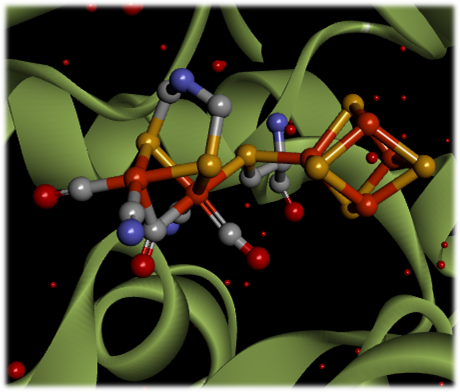
We study nature's own hydrogen gas processing enzymes to understand biological energy metabolism and inspire the sustainable catalysts of the future.
Description of the project
Hydrogen plays an important role in the energy metabolism of many microorganisms. A major focus of our research is the study of hydrogenases, enzymes used by microorganisms to produce and consume molecular hydrogen. These metalloenzymes catalyse hydrogen conversion using abundant metals such as iron and nickel, offering a biological model for efficient hydrogen chemistry.
Our research investigates how hydrogenases assemble their complex metal cofactors, how catalytic intermediates form during turnover, and how the surrounding protein environment influences reactivity and stability. In particular, the group has worked extensively with [FeFe]-hydrogenases, combining biochemical, spectroscopic, and synthetic approaches to understand how these enzymes function at the molecular level.
By identifying, characterising, and engineering hydrogenases from diverse organisms, we investigate how these enzymes adapt to different environmental conditions. This work connects molecular-level studies of enzyme function with broader questions in microbiology, biotechnology, and environmental chemistry.
Through these studies, we strive to contribute to a broader understanding of hydrogen metabolism in living systems. From a molecular design perspective, it provides us with a rich repertoire of model system for elucidating how Nature can manipulate the reactivity of metals and templates for biomimetic catalyst design.