
Oestrogen treatment should be recommended more after endometrial cancer in younger women

Oestrogen treatment in young women after endometrial cancer should become more common, a new study from, among others, Karin Stålberg concludes. Photo: Adobe Stock.
Younger women who undergo surgery for endometrial cancer risk entering menopause long before the usual age. At the same time, research suggests that oestrogen treatment after endometrial cancer does not appear to increase the risk of recurrence in the way previously feared. Recommendations for younger women, who otherwise face an increased risk of other health complications, are therefore being strengthened.
Endometrial cancer is associated with oestrogen. High levels of the hormone increase the risk of developing the disease, which has also made healthcare professionals cautious about giving oestrogen to women who have previously had this type of cancer.
But the risk of developing the disease is not the same as the risk of recurrence, emphasises Karin Stålberg, Senior Lecturer at the Department of Women’s and Children’s Health at Uppsala University.
“When you look at the outcomes for these women, there is no evidence that oestrogen after endometrial cancer increases the risk of recurrence. The fact that oestrogen appears to increase the risk of developing the disease does not mean that oestrogen treatment after the disease increases the risk of recurrence.”
The average age at diagnosis of endometrial cancer is around 70. In a study of approximately 750 women in Sweden who were diagnosed with endometrial cancer before the age of 50, researchers examined the treatment of a patient group that is otherwise relatively uncommon. Survival in this group is generally very good, and recurrence is rare.
One finding that does concern the researchers, however, is that many of these younger women enter menopause considerably earlier than normal.
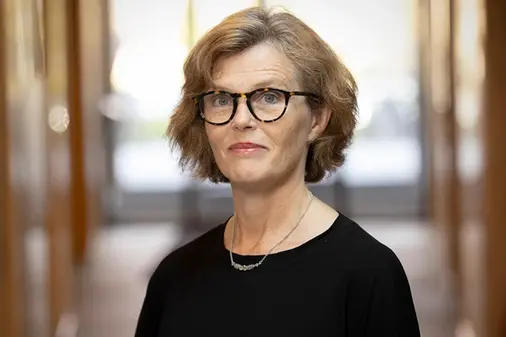
Karin Stålberg is chair of Sweden's national care programme for endometrial cancer, as well as Senior Lecturer at the Department of Women's and Children's Health. Photo: Mikael Wallerstedt
More women could keep their ovaries
Surgery for endometrial cancer involves removing the uterus and often the ovaries as well. For a younger woman, this means that the body’s own production of oestrogen stops and menopause begins much earlier. According to Karin Stålberg, there are two possible approaches.
“One option is to preserve the ovaries, which can be done in women aged 45 or younger,” says Karin Stålberg.
However, this is not possible for everyone. There may be a risk of metastases in the ovaries, and not all risk factors are known before surgery. In some cases, it may therefore be safer to remove the ovaries and provide oestrogen treatment afterwards.
This is also where Karin Stålberg sees the greatest need for change.
“The other option, and the one that above all needs to become more common, is for us to be bolder and more proactive in providing oestrogen treatment after surgery to younger women. If there is uncertainty about preserving the ovaries, it may be better to remove them and then provide oestrogen treatment afterwards.”
Early menopause also carries risks
For younger women, oestrogen treatment is not only about relieving hot flushes or other menopausal symptoms. Entering menopause before the age of 45 is associated with increased long-term health risks.
“It is important not to confuse this younger group with women who enter menopause at the age of 50–55. Younger women may need oestrogen even if they do not have menopausal symptoms, because of the risks of conditions including osteoporosis, cardiovascular disease, depression and, as some studies indicate, dementia as well.”
Studies have also shown an association between very early menopause and shorter life expectancy.
At the same time, both physicians and patients have often been cautious about hormone treatment following a cancer diagnosis. The focus naturally tends to be on avoiding recurrence, while the consequences of long-term oestrogen deficiency risk are receiving less attention.
“When you have a cancer diagnosis, the focus is often on preventing the cancer from returning. I meet many women who are afraid to take hormones, and it can be difficult to weigh the risk of recurrence against the risks of long-term consequences. I think that, at least in the past, there has been somewhat excessive concern about recurrence,” says Karin Stålberg.
New recommendations in the national care programme
The findings of the study will now also have implications for Sweden’s national care programme for endometrial cancer, which is chaired by Karin Stålberg.
The recommendation will be clearer in the forthcoming version. Women who develop endometrial cancer before the age of 45 and have a low risk of recurrence should be offered oestrogen treatment, regardless of whether they have menopausal symptoms.
“It gives physicians greater confidence when the same recommendation applies throughout Sweden. Not everyone is familiar with the latest studies, so we need clear national recommendations that give clinicians the confidence to do this.”
For women under the age of 45, treatment is recommended until the usual age of menopause, around 50–52. After that, any continued treatment can be assessed based on symptoms.
For Karin Stålberg, the findings are also a reminder that the care of younger women with endometrial cancer needs to involve more than treating the tumour itself.
“The most important thing is not to focus solely on the cancer, but also to consider quality of life and the long-term risks of oestrogen deficiency. We need a broader, more holistic perspective, in which the cancer diagnosis is of course one part, but where these women are also followed over time,” she concludes.
Robin Widing
Publication
Ehn, P, Ioannou, C, Malmsten, C, Holberg, E et al. Menopausal hormone therapy prescription and ovary-sparing surgery in women with pre-menopausal endometrial cancer: a Swedish PremEnCa study July 2026;
DOI: 10.1016/j.ijgc.2026.104776