
Brandon Berryhill
Viruses that kill bacteria are being revived as a treatment, often alongside antibiotics. Brandon Berryhill studies how bacterial populations evolve when facing both, and what that means for resistance.
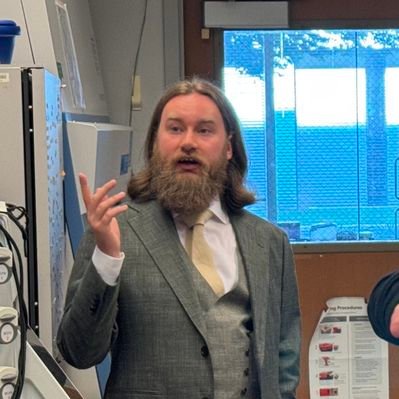
Postdoctoral Researcher
Department of Medical Biochemistry and Microbiology at Uppsala University
Research focus and interests
I am a population and evolutionary microbiologist with an interest in antibiotics, bacteriophage therapy, and the joint use of antibiotics and phage to treat infections. My current research focuses on the in vivo condition which favor the evolution of antibiotic heteroresistance using the Galleria mellonella model system and on understanding the population and evolution dynamics of bacteria when exposed to both antibiotics and phage.
Research expertise and methodologies
My laboratory techniques are primarily low throughput (but high thought) methods for looking at populations of bacteria and phages. My in vivo experiments use the larvae of Galleria mellonella—a truly amazing system which I am happy to help anyone adopt. Besides these experimental methods, I do a bit of mathematical and computer-simulation modelling.
Ongoing research projects
Heteroresistance is an under-researched and often undetected form of antibiotic resistance in which a bacterial isolate harbors a resistant subpopulation that can rapidly replicate in the presence of an antibiotic. Unfortunately, our understanding of heteroresistance is limited to observation and mechanistic reports of this phenomenon. However, at this juncture, the conditions under which heteroresistance evolves in populations lacking this trait and the selective pressures maintaining this unstable form of resistance across time are nearly completely unexplored. I aim to investigate whether the innate immune system constitutes a selective pressure driving the evolution of heteroresistance by gene duplication. During treatment, the innate immune system constrains the emergence of resistance by controlling infrequently arising variants. Could it be that heteroresistance is able to evolve in populations where the innate immune system would otherwise constrain the evolution of prototypical resistance? To address this question, I will first develop a mathematical and computer-simulation model which can make both qualitative and quantitative predictions about gene-duplication-mediated heteroresistance and its treatment with antibiotics in the presence of the innate immune system. Next, I will experimentally test the predictions of the mathematical model in vivo using the larvae of Galleria mellonella. Last, I will test the conditions when heteroresistance and prototypical resistance will be able to increase in frequency when rare, that is, when they can evolve in vivo.
Key Publications
- Berryhill BA, Gil-Gil T, Witzany C, Goldberg DA, Vega NM, Regoes RR, Levin BR (2025) The role of innate immunity, antibiotics, and bacteriophages in the course of bacterial infections and their treatment. Proceedings of the National Academy of Sciences. https://doi.org/10.1073/pnas.2507914122
- Gil-Gil T, Berryhill BA, Manuel JA, Smith AP, McCall IC, Baquero F, Levin BR (2024) The evolution of heteroresistance via small colony variants in Escherichia coli following long term exposure to bacteriostatic antibiotics. Nature Communications. https://doi.org/10.1038/s41467-024-52166-z
- Berryhill BA, Gil-Gil T, Levin BR (2025) The joint action of antibiotics, bacteriophage, and the innate immune response in the treatment of bacterial infections. Frontiers in Microbiology. https://doi.org/10.3389/fmicb.2025.1632267
Publications
-
Part of Proceedings of the National Academy of Sciences of the United States of America, 2021
- DOI for Evaluating the potential efficacy and limitations of a phage for joint antibiotic and phage therapy of Staphylococcus aureus infections
- Download full text (pdf) of Evaluating the potential efficacy and limitations of a phage for joint antibiotic and phage therapy of Staphylococcus aureus infections

-
Part of Nature Communications, 2026
- DOI for The dynamic distribution of genetic tandem amplifications in a heteroresistant Escherichia coli population revealed by ultra-deep long read sequencing
- Download full text (pdf) of The dynamic distribution of genetic tandem amplifications in a heteroresistant Escherichia coli population revealed by ultra-deep long read sequencing
-
2025
-
Part of Proceedings of the National Academy of Sciences of the United States of America, 2024
- DOI for Theoretical considerations and empirical predictions of the pharmaco- and population dynamics of heteroresistance
- Download full text (pdf) of Theoretical considerations and empirical predictions of the pharmaco- and population dynamics of heteroresistance