CoMaDe Science on the Island
The Baltic University Programme (BUP) and Uppsala University proudly present CoMaDe Science on the Island, a winter school on the island of Gotland, where the participants will travel through the past, present, and possible futures of Baltic Sea coasts.
The winter school will take place from 31 January to 6 February 2027 at Uppsala University, Campus Gotland, Sweden. Using Gotland as the classroom, the participants will explore how people and coastal environments have shaped one another over time. The winter school targets students at the bachelor’s or master’s level, as well as PhD students, from BUP participating universities.
The winter school is the final event connected to the Swedish Institute-financed project 'CoMaDe - Coastal and Marine Development through Collaboration and Interdisciplinary Learning'. The project aims to foster connections among students across the region and deepen their understanding of sustainability challenges along the Baltic Sea coastline.
The event will begin by looking into the past and how people have lived with and used the coast. From there, it will move into the present to explore some of the complex challenges facing the Baltic Sea and its coastal communities today, from environmental degradation and biodiversity loss to changing livelihoods, competing uses of the coast and the difficult choices involved in sustainable development. Finally, it will turn towards the future. What might the Baltic Sea coasts look like in the decades ahead? What futures do we want, and how can we contribute to shaping them?
This is not a traditional lecture-based event. During the week, Gotland itself becomes part of the classroom. Through excursions, field activities, interactive workshops, and encounters with different perspectives, participants will explore coastal sustainability through natural science, social science, and transdisciplinary approaches.
Participants will work together with students from different academic backgrounds and countries around the Baltic Sea Region. Throughout the week, they will also take part in a storytelling challenge, bringing together discoveries during the journey through the past, present, and future and finding creative ways to communicate the story of a changing Baltic coast.
Come prepared to explore, question, collaborate, and see the Baltic Sea from new perspectives.

Photo: Niklas Jonasson
Preliminary program
Sunday, 31 January is the arrival day, and Saturday, 6 February is the departure day.
Preparatory online meetings (mandatory)
- 30 November 2026, 10:00 CET/11:00 EET
- 11 January 2027, 10:00 CET/11:00 EET
On-site event days
Monday 1 February–Saturday 5 February
Selected program points:
- Travel into the Past – Gotland Through Time
Explore how people, landscapes and the sea have shaped one another over time, including a visit to Gotlands Museum – Fornsalen and perspectives from archaeology and environmental history.
- The Baltic Sea Today – Environment and Society
Explore some of the environmental and societal challenges facing the Baltic Sea and its coastal communities today, and discover how natural and social processes are interconnected.
- Coasts Through Time – Field Excursion
Let Gotland become your classroom. During a field excursion, we will explore coastal environments and ask: What happened here in the past? What is happening today – and what might happen in the future?
- Environmental Governance
How are decisions made when environmental challenges involve different interests, values, and perspectives? Explore the complexities of governing Baltic Sea and coastal environments.
- Imagining Coastal Futures – Futures Thinking Workshop
Turn towards the future and explore what Baltic Sea coasts could look like in the decades ahead. Working across disciplines, we will investigate possible futures and how choices made today could help shape them.
Quick information
- Dates: 31 January–6 February 2026
- Place: Uppsala University, Campus Gotland, Sweden
- Open for all students and PhD students at BUP participating universities
- Held in English
- Free of charge
- The maximum number of participants is 38 students + 5 PhD candidates
- Application deadline: 26 October, 23:59 (CEST)
Target group
Applications are open to students at the bachelor’s or master’s level from BUP participating universities. A maximum of 38 students will be selected.
We will also welcome a maximum of 5 PhD students. The PhD candidates will participate in the full program alongside students, while also practicing teaching and mentoring skills. They will support students in contextualising their work, particularly during case study conduction. Please note that there is a separate application link for PhD candidates.
Students from all study programs are welcome; no prior knowledge of the Baltic Sea environment is required. At the time of the event, you must be enrolled at a BUP participating university.
Selection of students
After the application deadline on 26 October 2026, participants will be selected based on motivation, field of study, and background. Selected students will be offered a place, and an additional group of the remaining applicants will be placed on a waiting list. Notification of selection will be sent by 6 November 2026.
PhD student selection will be completed by 6 November 2026, following interviews with suitable candidates.
Only applications written in English will be considered.
Practical information
Conference cost and location
The winter school is free of charge and will take place on Gotland, Sweden. Travel expenses to and from Visby, Gotland, must be covered by the participants. Participants are required to cover their travel costs to Stockholm on 31 January and from Visby on 6 February. Students are encouraged to explore funding options through their home universities, such as Erasmus+ mobility grants.
Please note, this event is not a Blended Intensive Programme (BIP).
Accommodation and food
Accepted students will stay in shared rooms in Visby. Meals will be provided from Monday afternoon (1 February) until Thursday evening (5 February).
Certificate of attendance
Students who complete the winter school will receive a certificate. Participation in the event, including the preparatory online meetings, is equivalent to 3 ECTS credits. The BUP does not award ECTS credits; however, we encourage the participants' home university to recognise and award the credits.
Cancellation policy
Participation is free, funded by The Baltic University Programme. However, if a student does not attend or cancels after 30 November 2026, we reserve the right to charge the participant or their university the cost of participation (€320). Late cancellations are only accepted due to illness, family emergencies, or force majeure, with supporting documentation (e.g., a doctor’s certificate).
Accessibility
If you have questions regarding accessibility of the event or venues, please contact us.
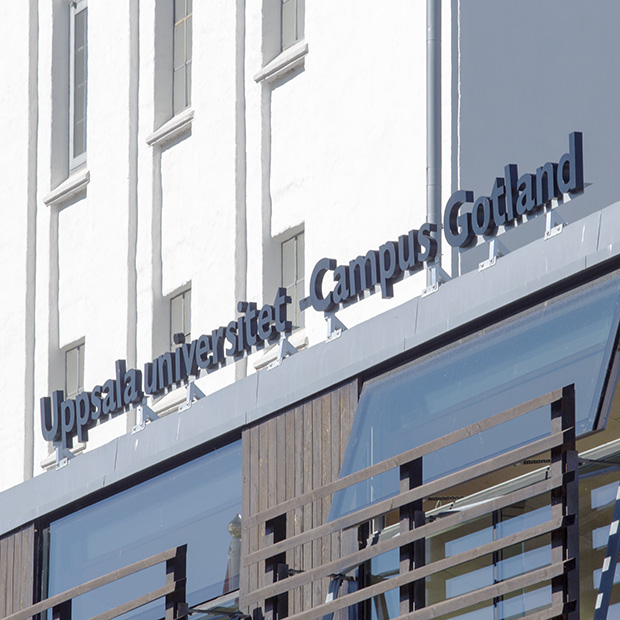
The event will take place on Uppsala University's Campus Gotland and around the island. Photo: Mikael Wallerstedt
Marketing material
We welcome you to share information about the winter school and invite you to download and use our marketing material:


Photo: Niklas Jonasson
Contacts and more information
If you have any questions or want more information about the event, you are most welcome to contact the organising team.

Pontus Ambros
Project coordinator
The Baltic University Programme's Coordinating Secretariat at Uppsala University
Phone: +46 18 471 1786

Lina Mtwana Nordlund
Associate Professor in Environmental science
Uppsala University, Campus Gotland