
People & partners in Mind the Risk
Mind the Risk united researchers with a wide range of competencies and took a cross-disciplinary approach to identifying ethical issues, exploring philosophical concepts, and investigating the consequences and ethical challenges of emerging gene technologies.
Over 20 researchers, senior and junior, worked on the project, including psychologists and game developers in Milan, philosophers and ethicists in Göttingen and Uppsala, health economists in Manchester, rheumatologists and clinical psychologists in Birmingham, risk sociologists in Nijmegen, and clinical geneticists and midwives in Stockholm.
- Uppsala University – Centre for Research Ethics & Bioethics (CRB)
- Georg-August-Universität Göttingen – Institute for Ethics and History of Medicine
- Università degli Studi di Milano – The Interdisciplinary Research Center on Decision-Making Processes
- University of Manchester – The Centre for Health Economics, Institute of Population Health
- University of Birmingham
- Sandwell & West Birmingham Hospitals NHS Trust
- University of Stavanger – Department of Safety, Economics and Planning
- Karolinska Institutet & Sophiahemmet University, Stockholm
Uppsala University
Uppsala University's Centre for Research Ethic & Bioethics contributed expertise in bioethics, genomics policy, and risk communication. Their work within Mind the Risk focused on analysing how individuals understand and interpret genetic risk, mapping the uncertainties inherent in genomic information, and developing ethical frameworks to guide responsible communication and governance of genetic findings.

Mats Hansson coordinated the Mind The Risk project as professor of biomedical ethics and director of the Centre for Research Ethics & Bioethics. Currently operating as Senior Professor and has conducted extensive research in biomedical ethics as principal investigator in several multi-disciplinary research projects dealing with issues ranging from ethical, social and legal aspects of the implementation of genetic diagnosis in clinical practice and the use of human tissue materials in research, to clinical and medical ethics. He holds an undergraduate degree in biology (1974) and a doctoral degree of theology (1991). Mats Hansson is Professor of Biomedical Ethics.

Ulrik Kihlbom is Professor of Medical Clinical Ethics in the Stockholm Centre for Healthcare Ethics, Department of Learning, Informatics, Management and Ethics (LIME), KI. Before then, he was senior lecturer at the Centre for Research Ethics & Bioethics.

Jessica Nihlén Fahlquist is associate professor of practical philosophy and a senior lecturer in biomedical ethics at the Centre for Research Ethics and Bioethics. She received her PhD in Philosophy at the Royal Institute of Technology in Stockholm in 2008 and has conducted two postdoctoral projects at Delft University of Technology. She has been a visiting scholar at Yale Law School and a visiting professor at the Department of Philosophy at Queen’s University, Canada. Her research focuses on moral responsibility, public health and technology.
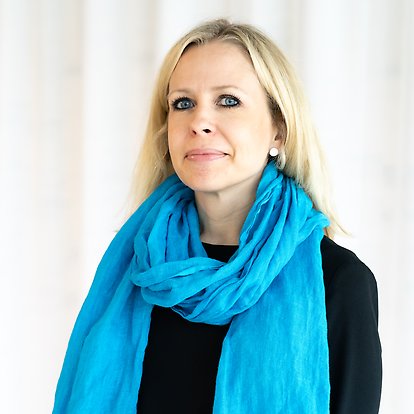
Jennifer Viberg Johansson is associate professor in medical ethics, with a research focus on methods that investigate people’s preferences and how to balance preferences against other ethical values; artificial intelligence and digital health information. Jennifer Viberg Johansson's research focus lies in devising methods to gauge people’s preferences and attitudes and balance them against ethical values like integrity, privacy, and utility—a field known as empirical ethics. Utilizing a diverse methodological toolkit encompassing qualitative and quantitative approaches, she explores people’s understandings, opinions, values, attitudes, and preferences.

Karin Schölin Bywall is associated researcher at the Centre for Research Ethics & Bioethics and Senior Lecturer in Publuc health at the School of Health, Care and Social Welfare, Division of Public Health Sciences, Mälardalen University. Her work is mainly focused on advancing public health through research, education, and the implementation of health technologies. She is interested in applying ethical reflections to public health research and education in order to strengthen the evidence base in societal decision-making.

Georg-August-Universität Göttingen
In Mind the Risk, the University Medical Center Göttingen examined ethical issues regarding the communication of genetic risks, the perception of responsibility in the context of genetic diagnostics as well as lay people’s attitudes towards the possibilities of genetic diagnostics and direct-to-consumer genetic testing. Including a cross-national and cross-cultural comparative study of lay perspectives on genetic diagnostics in Germany, the UK, Israel, and the Netherlands, interviews with representatives of patient organizations, and an ethical analysis of communication content on websites of direct-to-consumer genetic testing providers.
This work has inspired further research on risk communication such as the PREPARE project focusing on the role of primary care for Alzheimer’s disease risk communication and the project “Dilemmas of Predictive Dementia Diagnostics” developing ethical orientation and concrete criteria for clinical communication and educational resources.
People at Georg-August-Universität Göttingen

Silke Schicktanz is Professor of Bioethics and director of the Department of Medical Ethics and History of Medicine at the University Medical Center Göttingen, Germany. She researches and teaches ethical issues of biomedical innovations (e.g. genomics, AI and digital health care, dementia research) and has specialized in cross-cultural and empirical bioethics. She has led more than 15 international research cooperations. In 2022 she was elected president of the Academy for Ethics in Medicine (AEM), the German Professional Association for Ethics in Healthcare.
%20schicktanz23.jpg)
Sabine Wöhlke is Professor of Health Sciences and Ethics at the Faculty of Health at the Hamburg University of Applied Sciences (HAW Hamburg). Her research interests focus on ethical issues in personalized medicine in close relation to clinical practice. She continues to focus on the systematic, theoretical, and practical analysis of ethical issues related to healthcare professions; forms of public participation in ethical aspects concerning medicine, nursing, and healthcare; as well as new technologies and digitalization in healthcare. Sabine Wöhlke is chair of the Ethics Committee at HAW Hamburg and vice-chair of the Ethics Committee for Nursing Professions.

Manuel Schaper worked on Mind the Risk as a research associate, where his work centered around lay perspectives on direct-to-consumer genetic testing and its ethical implications. He has since worked as an online editor at an independent radio station and as a lecturer at the Hamburg University of Applied Sciences (HAW Hamburg) and the University of Hamburg (UHH) with a focus on digital transformation in healthcare.
Julia Latting Perry is a sociologist and medical ethicist. She is a postdoctoral researcher at the Department of Medical Ethics and History of Medicine, University Medical Center Göttingen, Germany. Her research focuses on implications of genetic testing and prediction, dementia and research ethics. She is also interested in the improvement of clinical communication between physicians and patients. Julia is currently working on a research project funded by the German Federal Ministry of Research, Technology and Space (BMFTR): Preparing Primary Care for Alzheimer’s Disease Risk Communication: Ethical Implications of Early Detection (PREPARE). She is an appointed member of the Clinical Ethics Committee at the University Medical Center Göttingen.
%20julia-latting-perry.png)
Università degli Studi di Milano
Università degli Studi di Milano contributed psychologists and game developers from their Interdisciplinary Research Center on Decision Making Processes.
People at Università degli Studi di Milano
Gabriella Pravettoni is is Full Professor of General Psychology at the University of Milan, Director of the Psychoncology Division at the European Institute of Oncology in Milan, Coordinator of Doctorate in Medical humanities at the European School of Molecular Medicine (SEMM), Milan, and scientific advisor of We Will Care NPO. She is member of various prestigious academic associations, and editor of several renowned scientific journals. Her research activities are almost entirely conducted at the European Institute of Oncology, both at national and international level. Gabriella Pravettoni's main interest is cognitive processes, decision-making, error prevention and health psychology with particular attention to personalized medicine, patient empowerment and e-health in oncology on which she authored several international publications and books. Her research activities especially focus on cognitive processes, decision-making and error prevention. With particular attention to the medical field, medical humanities, health and centrality of patient.
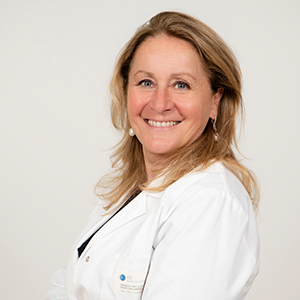
Serena Oliveri is Assistant Professor at the Department of Health Sciences, University of Milan, Psychotherapist and Cognitive Psychologist with high specialization qualification at San Paolo Hospital in Milan, and research collaborator at the Psycho-oncology Division at the European Institute of Oncology (IEO), Milan. Her main research interest is in the field of psychological implication of genetic risk information, investigation of epigenetic risk factors underpinning oncological and neurodegenerative diseases and application of artificial intelligence and machine learning in disease prediction and prevention. Her scientific expertise deals with medical decision-making, patient empowerment, patients’ preferences assessment and doctor-patient communication. She has been involved as PI or co-Investigator in a large number of national and international projects (ERAPERMED Joint Transitional Call-IMAGene, IMI-PREFER, IMI-UNIFIED). Serena Oliveri has authored more than 60 international publications in peer-reviewed journals, focusing on Psycho-Oncology, Cognitive Science, Neuropsychology.
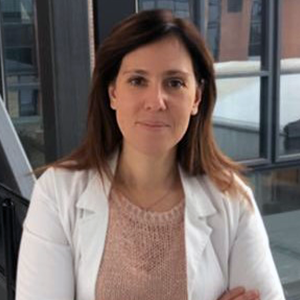
Ilaria Cutica is a psychologist and psychotherapist. She holds a PhD in Cognitive Science from the Università degli Studi di Torino and a master’s degree in Cognitive Psychotherapy from the Italian Society for Behaviour and Cognitive Therapy. Since 2011, she has been an Associate Professor of General Psychology at the University of Milan, where she teaches courses in Cognitive Psychology and Cognitive and Personality Factors in Health-Related Behaviours, and serves as Head of the Master Programme in Cognitive Science and Decisional Processes. Her research interests are concerned with pragmatics of communication in healthy adults, in brain injured patients and in deaf individuals, and with communication in medical settings, patients empowerment and medical decision making.
University of Manchester
The Manchester Centre for Health Economics at The University of Manchester develops and applies economic methods to evaluate and value healthcare interventions.
The Centre has specific expertise in the design and use of discrete choice experiments to understand peoples’ preferences for healthcare interventions. Discrete choice experiments are a survey-based method used to measure how people balance between the different elements (or attributes) when choosing a healthcare intervention.
For Mind the Risk, their focus was on how to frame risk within a DCE and understand the balance between risk and benefits for different examples.
People at University of Manchester

Katherine Payne is Professor of Health Economics with 30 years of applied and methodological research experience in economic evaluation (using RCT and decision-analytic models) and valuation (using discrete choice experiments and contingent valuation) of health care interventions, and specifically precision medicine and genomics. She is a registered pharmacist and her 2016 contribution to the profession was recognised by the award of Fellow of the Royal Pharmaceutical Society. In April 2023, she was awarded a National Institute for Health and Care Research (NIHR) Senior Investigator award, recognising her as an outstanding leader of people-based research within the NIHR research community. She has a particular interest in the use of economic evidence to inform decision-making in practice and was a member of a National Institute for Health and Care Excellence (NICE) Technology Appraisal Committee between October 2003 and 2012. Katherine is a current member of the UK National Screening Committee Research and Methodology Group.
%20Katherine%20Payne.png)
Caroline Vass, research fellow in health economics (now at RTI Health Solutions) has over 10 years of experience as a health economist in consulting and academic environments. Her area of expertise is preference elicitation, including the design and implementation of survey-based methods, and her research has informed the state of practice in preference-elicitation studies. Caroline Vass’s research has elicited preferences of patients and other health care decision makers in oncology, autoimmune disorders and genetic conditions. Before joining RTI‑HS, Caroline worked as a Research Fellow in Health Economics at the University of Manchester. She has over 30 peer-reviewed publications in journals such as the Journal of Choice Modelling, Medical Decision Making, PharmacoEconomics, and Value in Health, and she sits on the editorial board for The Patient journal.
Stuart J Wright, research fellow in health economics, has worked as an academic health economist at the University of Manchester for over 10 years. His methodological interests focus on how to incorporate and quantify the impact of imperfect implementation, uptake, and wider service delivery issues (such as information provision) of interventions into economic evaluations. He has a particular interest in implementation issues in cancer screening and is currently supported by a 5-year Wellcome Trust fellowship titled ”Providing Economic Evidence to Inform and Improve the Implementation of Cancer Screening Programmes”. His work in preference research focuses on understanding how services, such as screening programmes, could be best designed to improve uptake in order to maximise gains in health for the population. He is also an advocate of open research practices and has been named an Honorary Research Fellow of the Office for Open Research at the University of Manchester. Stuart J Wright is a current member of the UK National Screening Committee Adult Reference Group.
Garima Dalal, research associate in health economics, has worked as an academic health economist at the University of Manchester since 2018. Her methodological interests lie in the elicitation of stated preferences, eye tracking and decision-analytic modelling. She is currently supported by a NIHR Doctoral Fellowship titled ”Inclusivity in uptake - impact on the cost-effectiveness of a targeted lung screening programme” which aims to understand the role of validity checks in discrete choice experiments (DCEs) and how results from DCEs could be used to quantify predicted uptake to be used in economic evaluations while accounting for variations in uptake from different subgroups of the target population.
Niall J Davison, research associate in health economics (now at Maple Health Group)
University of Birmingham
The University of Birmingham contributed rheumatologists and clinical psychologists. Their work within Mind the Risk focussed on understanding the perspectives of patients, healthcare professionals, and at-risk individuals on predictive testing and preventive treatment of rheumatoid arthritis.
This work is actively informing patient-centred development of predictive and preventive interventions and risk communication resources for those at risk of rheumatoid arthritis and their families. It also informed the development of a related clinical case study for the IMI-PREFER project, and the PREFER recommendations on the integration of patient treatment preferences into decision-making during drug development, shaping international regulatory policy.
People at the University of Birmingham
.png)
Marie Falahee is a psychologist and Lecturer in Behavioural Rheumatology. Her research focuses on the assessment and incorporation of patient perceptions and preferences in the development of new treatment approaches for immune-mediated inflammatory disorders. She is also interested in the development of psychological/educational strategies to improve clinical outcomes. She leads the University of Birmingham Rheumatology Research Patient Partnership (R2P2), which facilitates patient involvement and engagement across the Rheumatology Research Group.
%20DSC_1844%20b.jpg)
Karim Raza is Professor of Clinical Rheumatology and has an active clinical practice, having worked as an Honorary Consultant Rheumatologist at Sandwell and West Birmingham NHS Trust until September 2023 and from October 2023 as a Consultant Rheumatologist at Hywel Dda University Health Board, based in Aberystwyth. His research focuses on rheumatoid arthritis, in particular its earliest stages, and addresses disease mechanisms, management pathways, predictors of outcome and patient perspectives on their disease and its treatment.
%20DSC_2076-4%20-%20Karim%20Raza.jpg)
Karolinska Institutet & Sophiahemmet University
Karolinska Institutet and Sophiahemmet University contributed empirical research on the future use of prenatal genetic testing. Their work examined how prospective parent, represented by young people nearing reproductive age, understand, value, and respond to non-invasive prenatal testing (NIPT). By investigating attitudes, knowledge, and preferences, the research illuminated how individuals engage with early-life genetic information and what they expect from counselling and support.
People at Karolinska Institutet & Sophiahemmet
Susanne Georgsson is a nurse and midwife and professor of nursing currently at Swedish Red Cross College, during Mind the Risk at Sophiahemmet University. Since she graduated twenty years ago at the Karolinska Institutet in Stockholm with her thesis “Women's experiences of fetal screening for Down's syndrome by means of an early ultrasound examination”, she has continued with research and teaching on prenatal examinations with a special focus on information, informed consent, risk information and women's reactions and experiences of prenatal examinations. In addition, she has participated in several other projects within women's and children's health, for example about long-term pain after pregnancy and childbirth and giving birth in water. In addition to research, Susanne has worked with nursing and midwifery education for the past twenty years and is now the president of the Swedish Red Cross College.
%20Sk%C3%A4rmbild%202025-12-15%20155928.png)
Erik Iwarsson is associate Professor of Medical Genetics at Karolinska Institutet (KI) and senior consultant doctor at the Department of Clinical Genetics, Karolinska University Hospital. He holds a PhD in medical genetics (on Preimplantation genetic testing - PGT) from KI. Both clinical and research work have focused on Prenatal Diagnosis and PGT. Present research focus on new molecular tools for prenatal diagnosis including cell-free DNA (NIPT), prenatal genomics and screening for chromosome aberrations.
%20Erik%20Iwarsson.jpg)
Universitetet i Stavanger
The University of Stavanger contributed expertise in risk analysis. Their work within Mind the Risk focused on developing a decision-support framework to guide how genetic testing and genetic risk information should be evaluated and governed. This included clarifying the distinctive features of genetic risk, addressing uncertainties inherent in emerging technologies, and outlining principles for ethically robust and publicly acceptable decision-making.
People at Universitetet i Stavanger
Frederic Bouder is a professor at the Centre for Risk Management and Societal Safety (SEROS) at the Faculty of Science and Technology, University of Stavanger. He is also affiliated with the King’s Centre for Risk Management in the United Kingdom. Since 2003, he has developed policy-oriented research on risk communication and risk regulation across several sectors, such as pharmaceuticals, biotechnology, and health and safety. From 2009 to 2010, he served as a national expert at the European Medicines Agency.
Sanja Mrksic Kovacevic is a researcher at the Centre for Risk Management and Societal Safety at the University of Stavanger. She has specialised in evaluating and addressing risks. Her master’s thesis focused on risk and smart homes. Another area of interest for her is economics.