
Master's Programme in Great Transformations: Past, Present, Future
120 credits
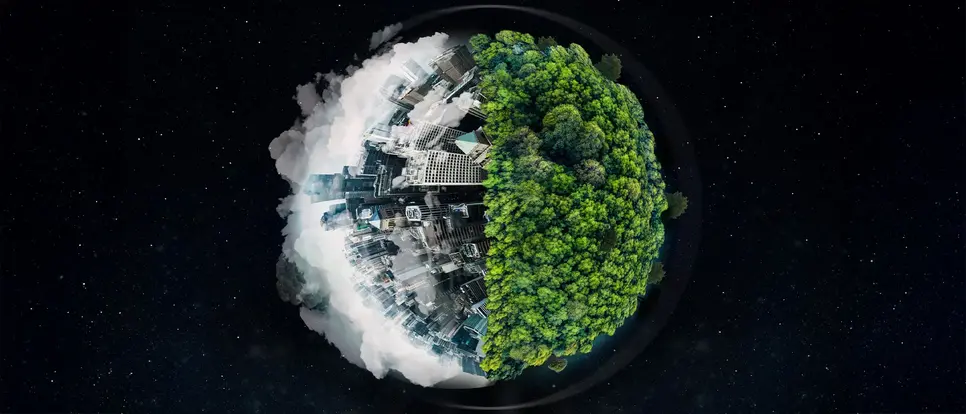
Ours is a time of “wicked problems”: formidable challenges at once economic, social, political and ecological. Applying a historical approach to the current situation, this programme builds the skills and knowledge necessary for analysing these complex issues and playing an active role in addressing them. These abilities will be crucial for everyone: citizens, educators, civil servants, business leaders, and activists alike.
Application and entry requirements
Expand the information below to show details on entry requirements, programme-specific documents, selection criteria and tuition fees.
Autumn 2027 Autumn 2027, Uppsala, 100%, On-campus, English
- Location
- Uppsala
- Pace of study
- 100%
- Teaching form
- On-campus
- Instructional time
- Daytime
- Study period
- 30 August 2027–3 June 2029
- Language of instruction
- English
- Entry requirements
-
Academic requirements
A Bachelor's degree, equivalent to a Swedish Kandidatexamen, from an internationally recognised university. Also required is 60 credits in a social science subject or in history.
Language requirements
Proficiency in English equivalent to the Swedish upper secondary course English level 2/English 6. This requirement can be met either by achieving the required score on an internationally recognised test, or by previous upper secondary or university studies in some countries.
- Selection
-
Students are selected based on an overall appraisal of previous university studies.
Tuition fee-paying students and non-paying students are admitted on the same grounds but in different selection groups.
- Fees
- If you are not a citizen of a European Union (EU) or European Economic Area (EEA) country, or Switzerland, you are required to pay application and tuition fees.
- First tuition fee instalment: SEK 57,000
- Total tuition fee: SEK 228,000
- Application deadline
- 15 January 2027
- Application code
- UU-M2001
- Supporting documents
-
Check the application guide for information on how to apply and what supporting documents you need to submit. For this programme, you only need to submit the general supporting documents, as no programme-specific document is required.
About the programme
The Master's Programme in Great Transformations is a programme for people set on understanding the complex nature of economic and social change. Taken together, the courses offered in the programme will provide tools for analysing interactions between economic systems, energy regimes, political structures and social conditions. Over this two-year programme, you will be encouraged to explore these dynamics and their various outcomes.
The programme offers:
- advanced insights into debates about the prospect of economic, social and ecological sustainability;
- a uniquely historical perspective on today’s challenges; and
- rigorous training in social scientific methods and debates.
Throughout the programme, you will explore the relationship between different phenomena. Phenomena such as social development, economic growth and policy regimes on the one hand, and ecological sustainability, institutional path-dependency and political trade-offs on the other.
As artificial intelligence becomes ever more powerful, public agencies, international organisations and corporate headquarters will become increasingly reliant on its human counterpart for truly original solutions. They need people with the capacity to look with fresh eyes at the dynamic relationship between humans, their societies, and the natural environment.
Career
The in-depth training that this programme provides in social science methods means that you will be a competitive candidate for several well-qualified jobs in both the public and private sectors.
Several of our alumni at the Department have enjoyed careers in different public agencies and government departments. They work as managers and researchers within higher education, development cooperation, international affairs and transport. Some have established themselves as academics, researching topics such as income inequality and the sustainability of the auto industry.
With a degree from the programme, you will be eligible to apply for graduate studies in economic history, history or any of the programmes requiring the equivalent of a Master's degree in social science. The Department faculty has extensive national and international networks, providing great assets for students developing their thesis ideas and possible future research directions.
Content
The programme is built around seminar-based courses led by active researchers, examination tasks that focus on independent writing, and ultimately ends with an individually written degree project. You will develop your ability to critically and systematically integrate knowledge and learn to analyse, assess and deal with complex phenomena and issues. As a student on the programme, you will train in planning and executing qualified tasks with adequate methods within given time frames.
Year 1
The first year contains mandatory courses that provide you with different perspectives on issues related to the interaction of politics, economics and sustainability. The course content is well anchored in research and taught by active researchers. During the year, you will also study a course on research design, preparing you early on for the task of writing a Master’s thesis.
Year 2
During the second year, you will acquire in-depth methodological knowledge through two methods courses. The courses help you plan, execute and defend an individually written Master's thesis. During this year, you can take elective courses or do an internship. If you choose to do an internship, you need to organise it yourself.
Learning experience
The core of the programme will be taught by teachers at the Department of Economic History. They are pedagogically experienced, typically actively researching the topics they teach, resulting in courses shaped by current, state-of-the-art research.
All courses and modules are geared towards student activity. Starting out, there is a combination of traditional lectures and seminars. Over time, the balance will shift to more seminars where written papers or presentations prepared by the students will be in focus, rather than discussing selected literature.
Possible themes and ideas for your thesis will be discussed already during the first semester. During the method courses, especially during semester three, you will have the possibility to relate the taught methods to possible themes for your Master thesis.
The main pedagogical focus of the teaching staff is to help you learn and develop your skills, based on your own competences and interests. The underlying notion is that the teacher is more a supervisor guiding you, than an examiner assessing right and wrong.
Examen
The programme leads to the degree of Master of Social Science (120 credits) with Economic History as the main field of study.
Contact
- Director of Studies Olle Jansson
- olle.jansson@ekhist.uu.se
- 018-471 73 14
Student at Uppsala University
As a student, you will find information about your studies in the Student Gateway.