Action Plan for Young People’s Mental Health: Regional Action Research on Gotland
Grundinformation
- Period: 2025-08-01 – 2027-12-31
On Gotland, six in ten lower and upper secondary school students have moderate or low mental wellbeing. At the same time, many of them show no clear signs of mental health problems. Good mental wellbeing is important for coping with life’s challenges, developing and thriving. Young people who do not experience optimal mental wellbeing are at increased risk of both mental and physical ill health.
Strengthening young people’s mental wellbeing requires effective initiatives that young people themselves perceive as meaningful. In a previous project, completed in June 2026, researchers worked together with a group of young co-researchers to develop research-based knowledge about young people’s views on what needs to be done in the community to promote their mental wellbeing, as well as the initiatives already being implemented across Gotland.
The current project builds on this evidence through further action research, with the aim of developing a co-produced action plan for young people’s mental wellbeing on Gotland.
Evidence underpinning the project
Preliminary study in preparation for an action plan on young people’s mental wellbeing.
Project studies and main activities
The project comprises three sub-studies and two main activities:
- Sub-study I: To develop an action plan for young people’s mental wellbeing in the Gotland community and monitor its implementation during the first six months.
- Sub-study II: To investigate how co-produced development work involving children and young people is conducted in Swedish regions.
- Main activity 1: To build support for and embed the action plan within relevant organisations and services.
- Sub-study III: To investigate how the co-production process in Sub-study II worked in practice.
- Main activity 2: To develop practical guidance for municipalities and regions on co-producing development work with children and young people.
Work plan
The work will be conducted in three phases: 1) 1 August 2026–31 January 2027; 2) 1 February–30 June 2027; 3) 1 July–31 December 2027
Phase 1 – Preparation, 1 August 2026–31 January 2027
The project will be initiated, and the evidence produced in the previous project will be presented to and discussed with relevant interest holders. Discussions will also address how these interest holders can contribute to the forthcoming action plan. A working group and a reference group will be recruited.
Phase 2 – Action research to develop the action plan and study the co-production process, 1 February–30 June 2027
A working group comprising researchers, the young co-researchers and representatives from the public sector, academia, the private sector and civil society on Gotland will work together for ten weeks, from February to April 2027. The group will develop and build support for proposed activities to be included in an action plan for young people’s mental wellbeing. It will meet weekly throughout this period, while a reference group will follow the work.
The collaborative process of developing the action plan will be studied through sub-study II.
Phase 3 – Monitoring implementation of the action plan and developing guidance for co-produced development work, 1 July–31 December 2027
Researchers and young co-researchers will monitor the implementation of the action plan. A practical guide for co-produced development work with children and youth will be developed based on the results from sub-studies I and II.
Project team
Veronica Hermann, affiliated researcher at the research group CHAP, Uppsala University and Public Health Strategist at Region Gotland
Georgina Warner, Associate Professor and researcher at the research group CHAP, Uppsala University
Tove Törnqvist, Development Officer at Region Gotland
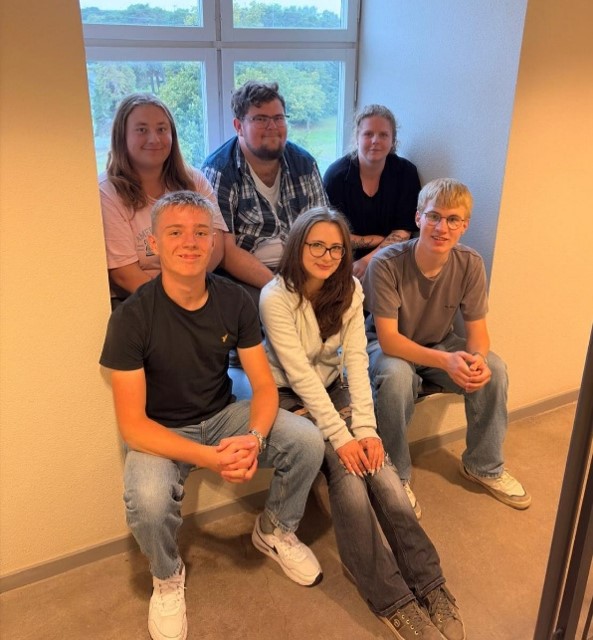
Seven young co-researchers aged 13–22
Contact
Please contact Veronica Hermann if you have any questions.
Collaborative partners
Collaborating partners: Region Gotland, Uppsala universitet, MAXI ICA Stormarknad Visby, GEAB, Länsförsäkringar Gotland, Coop Gotland, Svenska kyrkan: Visby Domkyrkoförsamling, Gotlands Stadsmission, Röda Korset and RF-SISU.
Funders: Region Gotland, Uppsala University, MAXI ICA Stormarknad Visby, GEAB, Länsförsäkringar Gotland and Coop Gotland
This regional, research-based development project is led by Region Gotland. The CHAP research group is responsible for conducting the research within the project.
